

















A Canberra plastics recycling startup has raised $100 million in a Series A+ as it looks to take its technology to Asia.
Samsara Eco, a spin-out from Australian National University, launched in late 2021 as a partnership between the ANU and CSIRO-backed Main Sequence Ventures.
It set out to address the fact that less than 10% of plastic waste is currently recycled, using enzymes to break down waste into its raw materials. It’s especially looking to deal with the plastics in fashion as part of “infinite recycling”. Currently only 1% of all recycling is fibre-to-fibre.
Nylon and polyester created by the process is being used in clothing for Canadian activewear brand lululemon, which has invested it the latest raise.
The startup previously raised $54 million in a Series A in 2022 with backing from the likes of the Woolworths VC fund W23, the Clean Energy Finance Corporation, ANU and Breakthrough Victoria.
Existing investors Main Sequence and the Singapore sovereign wealth fund Temasek led the Series A extension with California’s DCVC also tipping in follow-on funding. New to the cap table are Tim Bishop’s Wollemi Capital (not the similarly named Denholm family fund), lululemon, Japan’s Hitachi Ventures, and Titanium Ventures, which rebranded from Telstra Ventures this week as the telco looks to sell out of startup funding.
Main Sequence has now built up a 25% stake in Samsara – a Sanskrit word for “flowing around”, referencing the continuous cycle of life and death – with Temasek holding 12% and W23, 10%.
The startup has a proof of concept facility in Canberra and has been building a $25 million R&D plant in Queanbeyan, just outside the ACT, which is due to come online by the end of the year.
The company is now looking to build a large-scale recycling plant in South-east Asia to be up and running by 2026. Its goal is to recycle 1.5 million tonnes of plastic annually by 2030, with the ambition to infinitely recycle all forms of plastics to be reused in industries such as automotive, electronics, and consumer packaged goods.
Also on the cards is ramping up the headcount of chemists, engineers and technicians, as well as increasing its library of plastic-eating enzymes.
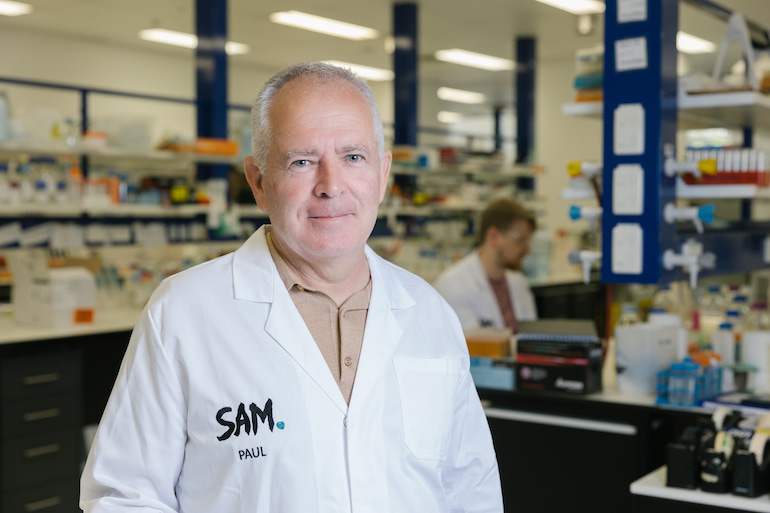
Samsara Eco founder and CEO Paul Riley said almost all plastic is reusable and recyclable with the right technology.
“Our enzymatic recycling technology makes it easy for brands in almost every industry to meet their sustainability and decarbonisation goals by creating a circular loop for plastics,” he said.
“We’ve already made significant traction in the textile space but this is just the beginning. We’re creating a first-of-its-kind infinite recycling process that is genuinely better for our planet.”
Main Sequence partner Phil Morle said:“Samsara Eco demonstrates how science can deliver a real solution to huge problems — in this case, the accumulation of plastic waste and the continued need to produce new plastics from fossil fuels.”






Daily startup news and insights, delivered to your inbox.