














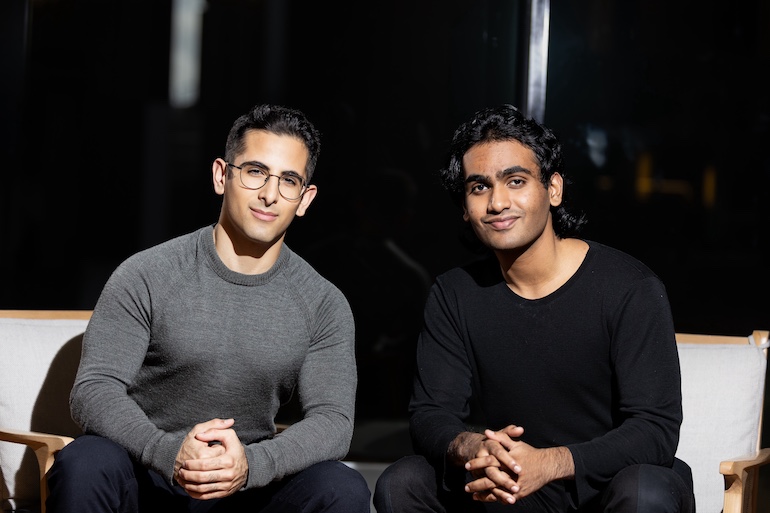
A startup that checks in on how well university students are learning has been accepted into the University of California, Berkley’s SkyDeck accelerator program, banking US$200,000 (A$305k) as part of the deal.
Sindy Labs is the brainchild of former University of Melbourne medical student Benjamin Arya, Taha Ansari and Oliver Cucanic. They founded their startup last year after speaking to hundreds of educators about their concerns in the age of generative AI and online courses that students simply don’t want to engage with, with up to 76% of them don’t interact with their online course materials.
So the trio built a new form of AI-driven conversational assessment they called Sindy. It engages students in tailored “check-ins” about their coursework and learning, while the data collected from those automated conversations helps educators track student progress against course objectives to provide personalised feedback at scale.
Arya, Sindy’s CEO, said that with 89% of students admitting use ChatGPT to write their assignments, the platform also ensures academic integrity by flagging students unfamiliar with their submission content, addressing issues such as contract cheating and an over-reliance on generative AI.
“Universities and learning institutions can’t do this alone. They are underprepared for the incredible shifts that will occur in teaching and learning as a result of the unprecedented pace of AI development,” he said.
“If we solve this problem, we can both improve the learning experience for students while saving educators time and helping universities improve career outcomes for their graduates.”
Arya, met Cucanic at the University of Melbourne Startup competition in 2021. In early 2023, fter working on various projects together, they teamed up to cofound Sincidium, now Sindy Labs, and won the startup comp they’d been rivals in.
“We believe there’s no way to make teaching and learning great again than by changing the economic incentives,” he said.
“By making 1-1 student interaction and engagement affordable, high quality and scalable. Not by replacing teachers, but by acting as a digital extension to perform more labor than they could have ever imagined.”
Now they’re ready to take Scindy to the next level as part of the Berkley SkyDeck accelerator.
Arya says he “was a bit teary-eyed” when SkyDeck Fund managing partner Chon Tang, to them they’d been selected from more than 20,000 applications.
“We were struggling to raise capital in a pessimistic funding environment. It was the peak of the global venture capital funding slump due to high interest rates, and LPs were withholding capital from VC funds,” he said.
“And just when we needed it most, we were told we had made it to the final round of interviews for the prestigious Berkeley SkyDeck Accelerator program”.
Chon Tang told him not to worry about how other VCs see the edtech startup, saying it’s “a great looking product with functionality that just makes sense” and “easy to be optimistic about [Sindy’s] future” as the join the program.
“Combined with the natural advantages of partnering with UC Berkeley on a product like this, both in terms of technology and product reputation, I really think we can do some amazing things over the next 6 months, and set your team up for massive success,” he said.
The MVP the trio developed has been part of a pilot in the Faculty of Science at the University of Melbourne, and they’re now preparing for larger scale pilots at Melbourne, UC Berkeley and several other large universities.
“Our team of six engineers have completed a fully functional enterprise software stack, allowing us to secure our first paid trials in the US, New Zealand and Australia,” Arya said.
“We’ve also begun discussions with a large international educational services company to streamline their online assessments.”
The next step in their ambitions for Sindy is the transition to work.
“We plan to partner with the world’s largest employers of graduate students. Tech companies like Apple and Tesla, and financial institutions like Morgan Stanley and JP Morgan,” Arya said.
“This is by far our biggest opportunity. We can help these employers hire students better, faster and more efficiently. For companies and large enterprises, it is incredibly valuable to have complete transparency into their talent pipeline from the best engineering, tech and finance schools across the country.”
After a scoping visit to California earlier this year, the team are now setting up their base in San Francisco.






Daily startup news and insights, delivered to your inbox.