


















The annual Cicada x Tech23 event returns to Sydney on August 7, and in the coming weeks, in partnership with the team from Cicada, Startup Daily will profile the 23 deep tech startups selected to be part of the day.
They span five key themes – systems, Cicada CEO Sally-Ann Williams calls them – and the first up we’re diving into “Shifting the Mindset on Medicine, which asks the question: “How can emerging deep tech innovations transform our understanding and practice of healthcare?”
Emerging deep tech innovations are poised to revolutionise healthcare by emphasising prevention over cure.
Historically, the economic clarity of curing diseases has overshadowed the long-term benefits of prevention. However, the pandemic and an ageing population is shifting this mindset, making both patients and doctors more receptive to new technologies and proactive health measures.
Innovations in medicine, such as advanced diagnostic tools, robotic systems, personalised treatment technologies, and next-generation drug delivery methods, are paving the way for more patient-centric and effective treatments.
So what if we shift our thinking to address the root cause of our problems – from sick care to health care, from treating diseases to preventing them, from cure-alls to health for all – we might just transform the healthcare system to one that truly focuses efficiency, accessibility, and one tailored to individual needs.
Meet the companies featuring at Cicada x Tech23 who are helping make that shift.
Roam Technologies
ShanShan Wang, founder
Founded: 2014
Roam Technologies founder ShanShan Wang
The idea
We have developed a new way of producing oxygen to give freedom back to people with respiratory disease – no more cylinders!
How it happened
I witnessed a young girl unable to be pushed on a swing due to being tethered to an oxygen cylinder. Thought – surely there is a better way to do this??! There has been no innovation in oxygen technology for more than 20 years. They are cumbersome, heavy, bulky oxygen cylinders.
What makes it unique
You can take JUNO with you anywhere. It is a new way of producing oxygen = smaller, lighter, more portable solution. Gives quality of life back to people with respiratory disease, removes the stigma/weight of cylinders from their lives!
What it changes
We could be the next ResMed. millions in funding, developed in a garage next to St George hospital. The true Aussie startup success story – female leadership, too.
The best part so far
The teams work with COPD sufferers and to understand just how much they want the product, and to see the increase in their quality of life from using it.
Tetratherix
Dr Ali Fathi, founder and CTO
Founded: 2015
Tetratherix founder Dr AliFathi
The idea
We disrupt targeted therapeutic delivery and regenerative medicine, enabling novel and minimally invasive routes of administration for cost effective and rapid deployment of therapeutics.
The problem
We have constant engagement with leading pharmaceutical companies, developing therapeutics for both developing and developed countries.
Through these engagements, we have validated the unmet need and that nearly 30% of vaccine doses are wasted per year due to their stringent storage condition requirements and logistical challenges.
During Covid-19 pandemic, even Australia faced logistical challenges in deploying mRNA based formulations in regional areas. This problem caused significant health access issues in developing countries.
How it’s solved
Our technology eliminates the need for sub-zero storage and allows nasal delivery of therapeutics, offering a rapid and effective solution for vaccine deployment in both developing and developed countries, preparing for future pandemics.
What makes it unique
Our smart biomaterial is not just a concept – it has progressed beyond pilot clinical trials and is backed by over 40 granted composition of matter patents in key markets.
We provide the only solution globally that enables ambient storage conditions for mRNA formulations and provide a carrier vehicle for their nasal delivery.
I invented the technology during my PhD at the University of Sydney. Over the course of a decade, we have meticulously crafted this library of synthetic polymers with similar chemical compositions, addressing numerous unmet needs in mRNA delivery and regenerative medicine.
This deliberate design allows for parallel development programs, leveraging a solid foundation of safety and efficacy data, robust IP portfolio, and efficient manufacturing and quality systems.
The long-term impact
Our team has done this before and with our proven track record in commercialisation of biomedical technologies, we are confident that we will execute on our mission to utilise our smart technology to change the lives of millions of people.
The best part so far
It’s hard to name one; starting the journey nearly 10 years ago, raising funds from angel and VC investors to establish our own cleanroom production facility in Sydney. Thereafter, completing our first in human trial, generating the first revenue and first commercial licensing with leading med-tech/ pharmaceutical companies. Continuing the grind and having the mission to change the lives of millions soon.
Lessons learned to share
Do not overlook courage, endurance, balance, fairness, knowledge and self-reflection in your entrepreneurial journey.
Convergence Medical
Dr Chris Jeffery, CEO
Founded: 2022
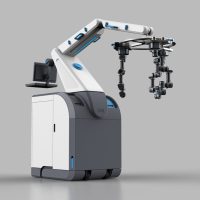
Convergence Medical’s V01-Arthroscopic Surgical Robot
The idea
At Convergence we are building the world’s first arthroscopic surgical robot, improving minimally invasive joint surgery.
The problem solved
Arthroscopy (minimally invasive, keyhole joint surgery) is essential to current and future healthcare, however procedures are difficult (30% surgeons doubt their abilities), problematic (errors in over 40% of cases) and current technology is unreliable (failing in 1 out of every 10 cases).
These barriers impact 50 million patients per year, limit surgeon capabilities and restrict improvements. Convergence has developed a world first surgical robot to provide a platform, realising never before precision and capabilities, that provides a foundation to address past limitations and transform practices.
How they found it
The team is made up of doctors, engineers and researchers with longstanding commitment to the provision of care and global transformation of practice.
Over the past 15 years the team has founded, globally commercialised and exited two prior medical technology companies, designed and released more than 2000 devices, as well as publishing more than 30 practice changing research papers.
The idea of changing the way arthroscopy is performed, by using advanced technical solutions (such as surgical robotics) was identified from the culmination of this more than a decade of experience.
The problem of addressing this fundamental issue within minimally invasive surgery was selected due to the significant impact it has on current and ongoing practice, as well as the deep personal commitment the team has to this field and longstanding dedication to be leaders for meaningful change.
Why it’s unique
Current (competitor) devices are manual head held tools that connect with cords to 5 to 8 different devices. These traditional devices are disconnected from each other and need 3 to 5 healthcare workers to coordinate the various functions by pressing numerous buttons and changing connections. This equipment is mostly the same as what has been used for the last 50 years.
The disconnected form, simplistic function and limited capabilities creates significant distractions, disrupts the operation, impacts response time and in summary creates a situation that is high risk of error.
The V01 surgical robot developed by Convergence is a world-first solution that addresses these issues by transforming surgical practice. The V01 robot incorporates all the technology features needed for care, provides highly integrated and advanced management of this technology, and delivers this control at the figure tips of the surgeon.
How it changes healthcare
Convergence and the V01 are examples of world leading innovative change. Just like other countries the need for a solution to address the significant impacts related to minimally invasive surgery are just as relevant to Australia.
Convergence and the V01 provide this solution for the long desired transformation. However, in addition to the clinical and commercial benefits the V01 will provide to Australia healthcare, due to the fact Convergence is an Australian based innovator and robot manufacture there is also an exciting opportunity for national transformation.
The company already has well established collaborations with many external research groups and also provides much of its technology as OEM or research solutions to assist other groups to accelerate unrelated innovation, and the use of robotic solutions in other areas.
The success of Convergence provides an exciting opportunity for the mutual advancement and success of Australia as a nation, by accelerating the national growth of the robotic sector and the use of this technology for many other solutions in numerous other industries.
Lessons learned to share
Development is a journey and things can and should change along the way. Problems only become unsolvable when you stop being willing to change.
Also if your solution isn’t changing during development you probably are not asking the right questions or you probably are not engaging the sector enough.
DermR Health
Stefan Mazy, CEO & founder
Founded: 2022
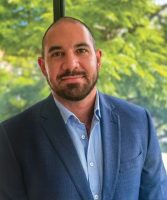
DermR founder Stefan Mazy
The idea
DermR Health aims to prevent 1 billion skin biopsies by using a world-first, non-invasive microneedle patch technology combined with genomics to address the global challenges and inefficiencies of skin cancer diagnoses, where 40% of biopsies are benign and could be avoided.
Why it matters
Skin Cancer is the single largest cancer cost to the Australian healthcare system, costing $1.7 billion annually.
In the EU, melanoma ranks as the sixth most common cancer. Yet, when we include all types of skin cancer, including the underreported basal and squamous cell carcinomas, skin cancer stands as the leading global cancer, a statistic no one is talking about.
Our research has found that 40% of skin cancer biopsies are benign, translating into more than 600,000 avoidable procedures last year in Australia alone, costing the healthcare system $400 million. Additionally, on average, it takes 11 biopsies to detect one melanoma.
Despite these staggering figures, the methods for diagnosing skin cancer have not evolved – so I wanted to do something about it. Fuelled by personal experience, my goal is to replace traditional biopsies as a first-tier approach for skin cancer detection with a less invasive, more efficient screening method.
How it works
We’ve discovered that while biopsies are the standard method for diagnosing skin cancer, many patients delay testing due to fear of pain, similar to the reluctance often seen with dental visits. This delay exacerbates the problem.
The DermR Patch addresses several critical issues: Reducing biopsies by even 5% will prevent millions of avoidable procedures annually. 63% of adults globally are affected by needle phobia, resulting in patient avoidance and poorer health outcomes.
Our solution addresses this. 22% of benign biopsies lead to complications like infections and scarring.
Using the DermR Patch as a preliminary step can eliminate these risks. Currently, only GPs and dermatologists can perform skin biopsies in many countries. DermR Patch can be used by nurses and allied health professionals, facilitating earlier detection and reducing skin cancer testing costs by 30%.
Our patient-focused design and storage stability brings diagnostics to remote and underserved areas, benefiting millions without basic healthcare access. We imagine a future where self-collection will be possible just like the at-home bowel cancer screening tests.
How it changes healthcare
Over 600,000 avoidable skin cancer biopsies were performed in Australia just last year; there is no other method to diagnose skin cancer and only doctors can perform these procedures. So how can a patch the size of a freckle change the healthcare system?
We often hear about the need for more doctors and the need to invest billions of dollars in new infrastructure to reduce GP wait times.
But can you imagine what the Australian healthcare system would look like if 600,000 GP appointments went to people who really needed them, and all that would be required is one simple adjustment of incorporating the DermR patch, which can allow nurses and allied health to triage patients with suspected skin cancers – no longer requiring an initial GP appointment?
What would that look like? What could that look like? How many lives do you think that would save?
This is how I believe we make a meaningful difference in the lives of a billion people – one pain-free patch at a time.
Your advice to deep tech founders?
This stuff is hard, harder than your average startup. There is a high probability of failure.
You will meet the right people; you will meet the wrong people. You will be pushed to your limits and then pushed further… and then even further, discovering just how strong-willed and capable you are.
You will constantly worry about your team and the future and experience imposter syndrome (a lot more than you think).
The alternative: do nothing, play it safe, work for someone else, and spend your life wondering what if. What will you choose?
OminiWell
Dr Sylvia Chien, CEO & cofounder
Founded: 2020
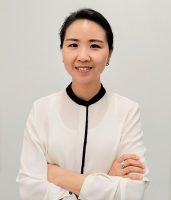
OminiWell cofounder Dr Sylvia Chien
The idea
We develop a BioTwin Chip that facilitates the growth of complex tissues for rapid drug testing for use in personalised medicine.
The problem solved
Conventional two-dimensional (2D) cell culture lacks the intricate 3D tissue architecture necessary to accurately replicate cellular interactions. This limitation hampers the integration of personalised medicine into clinical practice, posing a significant challenge.
Despite ongoing efforts in Europe and the US to advance 3D organ tissue culture, aimed at bridging the gap between 2D cultures and animal models, progress remains slow in integrating patient-specific data into clinical decision-making.
Why it’s unique
Our BioTwin chip takes the key elements of a person’s biological system to recreate a ’biological twin’ of disease models for the purpose of preclinical drug discovery validation, and ultimately used as an in vitro diagnostic device for selecting personalised treatments.
This innovative technology precisely positions cells in vitro, promoting uniform growth into complex tissues.
Unlike current methods, the chip’s design enables streamlined manipulation, enhancing the viability of patient-derived microtissues and expediting drug testing protocols. This integrated platform promises significant advancements in predicting therapeutic outcomes, toxicity studies, and the realisation of personalised medicine.
How it changes healthcare
The innovative BioTwin Chip is poised to revolutionise drug toxicology and preclinical testing assays within Clinical Research Organizations (CROs), offering a non-animal model solution.
This advancement marks a significant step towards its ultimate goal: becoming an In Vitro Diagnostic Device (IVD) in clinical practice.
Once implemented, the BioTwin Chip will streamline cancer diagnostics, treatment strategies, and patient care. By enabling personalised medicine approaches, it promises to deliver patient-centric services, enhancing the precision and effectiveness of cancer treatments.
This technological leap holds the potential to redefine how cancer is diagnosed and managed, offering hope for improved outcomes and quality of life for patients worldwide.
The inspiration
I have a strong background in bioengineering and biomedicine. During my doctoral research, I focused extensively on utilising animal models to pioneer high-resolution x-ray imaging technologies for studying tumours in vivo.
Recognising the limitations of animal models in translating findings to human biology and the ethical imperative to reduce animal experimentation, I shifted focus towards developing advanced in vitro tumour models. This work laid the foundation for creating sophisticated in vitro models aimed at advancing cancer research and personalised medicine.
I cofounded OminiWell in 2020, aiming to harness my expertise to drive innovation in personalised medicine.
- Cicada x Tech23, on Wednesday, August 7, at Jones Bay Wharf in Pyrmont, Sydney, is the country’s biggest deep tech gathering, featuring investors, scientists, entrepreneurs, academics, industry head, and government representatives.





Daily startup news and insights, delivered to your inbox.