

















The annual Cicada x Tech23 event returns to Sydney next Wednesday, August 7, and in partnership with the team from Cicada, Startup Daily is profiling the 23 deep tech startups selected to take part.
They span five key themes – systems, Cicada CEO Sally-Ann Williams calls them – and this time we’re diving into “Forging Industrial Futures, which asks the question: “How can emerging deep technologies create the blueprint of tomorrow’s industrial landscape?” So we asked the startup founders to explain their ideas, and ambitions
Australia’s industrial landscape is at a crossroads.
COVID-19, geopolitical instability, and years of underinvestment in manufacturing have underscored the urgent need to develop sovereign capabilities in critical sectors such as medtech, biotech, renewable energy, and climate tech.
As we move beyond reliance on raw material exports, it’s crucial to diversify and enhance the complexity of our industrial base.
Embracing advancements in automation, data analytics, and innovative manufacturing can transform Australia’s industrial future.
By integrating Australian-made solutions into global supply chains and recognising the value of First Nations knowledge, we can build a resilient and prosperous economy. Emerging technologies can drive this transformation and secure Australia’s place as a leader in the industries of tomorrow.
Meet the companies at Cicada x Tech23 who are forging that future.
Crest Robotics
Dr Clyde Webster, founder & CEO
Founded: 2023
 The idea
We’re on a mission to end workplace injury, and free people from the bonds of damaging and demeaning physical labour.
Why the problem is critical
Injury costs the Australian economy billions of dollars a year, and is associated with immeasurable human suffering, combined with labour shortages, tightened WH&S regulations, and the decline of our ageing infrastructure, decreasing risks to workers whilst increasing productivity has never been more critical.
How this solution tackles it
Intelligently designed robotic tools are the only way to both reduce risk to workers whilst increasing productivity.
Most importantly, designing the robot to be an agent that acts on behalf of a person to increase their agency and capabilities ensures retention of their experience and executive intelligence, adding value to both industry and individuals.
What long-term impact
A massive reduction in injury and a shift in mindset for how work is undertaken and managed. Gone will be the days of rationalising risk as “just a part of the job”, everyone should have the right to a feeling of safety and comfort at work, and we intend to enable that.
The most rewarding part so far
Getting to come to work everyday with a feeling of purpose, and having that purpose justified with each additional partner we collaborate with, all seeking to contribute to or secure the value we’re adding.
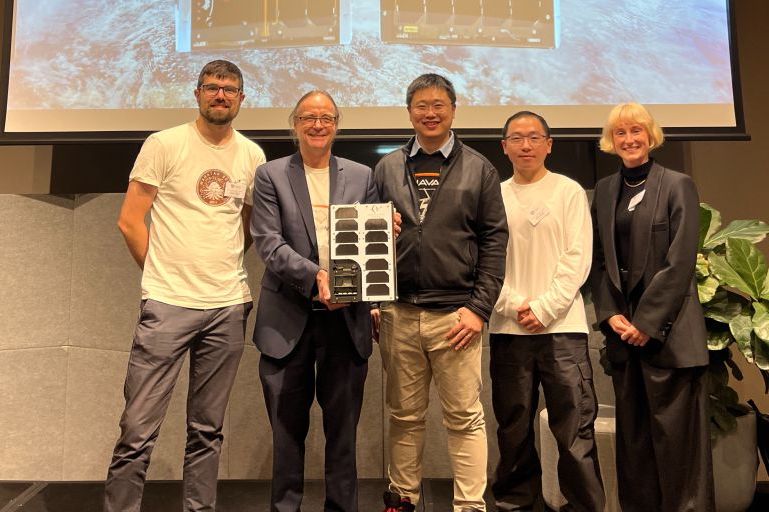
Deneb Space
Anne Bettens CEO and cofounder
Founded: 2022

Crest Robotics cofounder Anne Bettens
The idea
Keeping satellites on track through autonomous navigation.
How they found the problem
With a decade of satellite-building experience, we discovered a troubling fact: 1 in 3 satellites fail because of inadequate positioning, revealing a stark lack of autonomy.
Driven by a refusal to accept this norm, we embarked on a mission to make satellites smarter and autonomous to keep them on track. Deneb Space was born out of the need to revolutionise satellite technology for greater reliability and pave the way for future mission success.
What makes the solution unique
Deneb Space’s on-board autonomous technology integrates with any satellite, offering 5x rotational force at 100x efficiency, empowering satellites with enhanced reactivity and agility.
How it will space Australia’s space industry
Everyone in the Australian space industry needs the ability to maneuver in space accurately and efficiently. Our technology supports and integrates with any satellite, benefiting the entire ecosystem.
What inspired them
Currently, billions of lives are dependent on space infrastructure, from disaster monitoring to GPS and telecommunications.
Everyone on earth deserves accurate data to make informed decisions and ensure a sustainable future.
Dilji Labs
Kado Muir, founder

Dilji Labs founder Kado Muir
Founded: 2023
The idea
Our vision is to bridge the past and present by bringing the rich tapestry of Indigenous stories to the forefront of primary school education across Australia, we aspire to grow an interactive learning experience that combines ancient wisdom and languages with modern scientific knowledge and cutting-edge technology, fostering a deeper appreciation and understanding of Indigenous cultures among today’s youth.
The problem it solves
We see loss of Aboriginal and Torres Strait languages and culture as major contributors for excluding engagement, inclusive participation and completion at school.
These are intergenerational problems around equity, inclusion and justice in Australia. Closing the Gap indicators remind us of the urgency and currency of resolving these issues and so we have put our hands up to give it a go and see if we can make a difference.
What makes it unique
Our solution is unique in that it is a solution offered by the people directly impacted by the problem. We live with the problem and are best placed to solve it with support, not having outside third parties come to us with their solutions to our problems.
The core technology or innovation
The core innovation is our methodologies for engaging traditional knowledge holders, working with traditional artists and creatives and telling traditional stories using technologies that make these stories accessible to others, while also acknowledging and protecting our Indigenous Cultural and Intellectual Property rights.
The long-term impact
The inclusion of Aboriginal and Torres Strait Islander peoples, stories and culture in digital platforms aimed within the Edtech space will help elders discharge their cultural responsibilities and also help teachers deliver contextually relevant content within the curriculum standards.
Impact is to stop the loss of language and culture, engage and retain children in an environment where they feel included and share with the wider community so all may benefit and be part of the learning journey.
The end result is for more students to stay at school and complete their education experiences, whilst being digitally engaged.
What inspired them
I love technology, I am an elder with a cultural responsibility and I believe everyone should enjoy a quality and standard of inclusive education experience, I have the skills, knowledge, passion and networks to make it happen.
Ocius Technologies
Robert Dane, CEO
Founded: 1998
The idea
We develop innovative, autonomous solutions for persistent maritime surveillance.
The problem it solves
Ocius is addressing the challenge of enhancing maritime security and surveillance by developing innovative autonomous solutions that provide efficient, reliable, and cost-effective monitoring and data collection for the defence sector.
We believe it is critical to address maritime security and surveillance now due to rising global maritime traffic, increasing security threats, and the urgent need for more efficient, sustainable monitoring solutions.
Autonomous vessels powered by renewable energy offer timely, innovative responses to these challenges.
What makes it unique
Ocius Technology’s unmanned surface vessels stand out with autonomous, long-duration operations powered by renewable energy.
Our scalable, modular design integrates AI for real-time decision-making, ideal for persistent ocean surveillance and data collection at reduced costs compared to traditional methods. This eco-friendly approach addresses maritime security, defence, and environmental monitoring needs with reliability in diverse sea conditions.
The long-term impact
We are an example of Australian engineers designing, building, operating and owning a solution to a global problem. With the right ecosystem there should be more companies like Ocius.
Advice for aspiring innovators in deep tech?
Identify and address what bothers you or seems lacking. Dive in with one foot in action and your head in the clouds.
Be prepared for failures, learn about barriers, and stay agile.
We started with ‘green ferries for blue highways,’ driven by fuel prices. We pivoted to ‘platforms for indefinite sea navigation,’ a unique selling point.
PlasmaLeap Technologies
Adel Rezaeimotlagh
Founded: 2019

PlasmaLeap Technologies founder Adel Rezaeimotlagh
The idea
We are building accessible, sustainable technology for fuel and chemical production, applicable to the largest chemical markets in the world.
What problem are you solving?
The chemical production industry is a major contributor to GHG emissions. Ammonia production for example accounts for 2% of GHG emissions, and the application of nitrogenous fertilisers on farms accounts for up to 10% of GHG emissions. Without addressing the emissions intensity of chemical production, there is no chance of reaching net zero by 2050.
How does your solution address the problem?
As opposed to existing chemical production methods, our CO2-free technology uses simple inputs of air, water and renewable energy. It is operated under ambient conditions, without pressure or heat, meaning it can be easily deployed adjacent to the end customer. While the core technology is relatively complex chemistry and physics, our process uses abundant atmospheric air, water and renewable energy.
What long-term impact do you hope your solution will have on the industry?
Large-scale adoption of our technology will mean decarbonisation of chemical production. At present, this industry is one of the hardest to electrify.
What has been the most rewarding part of your entrepreneurial journey so far?
The realisation that our technology has genuine potential to revolutionise the path to net zero. Beyond this, we can ensure developing countries have food security and equal access to vital chemicals.
What advice would you give to aspiring innovators in the deep tech space?
Ensure you are constantly expanding your network. Meet people, talk to everyone, but simplify your message – why should people care? Ask for help – nobody can do everything. Ensure you consider IP protection early in your process.
- Cicada x Tech23, takes Wednesday, August 7, at Jones Bay Wharf in Pyrmont, Sydney, and is the country’s biggest deep tech gathering, featuring investors, scientists, entrepreneurs, academics, industry head, and government representatives. Get your tickets here.






Daily startup news and insights, delivered to your inbox.