

















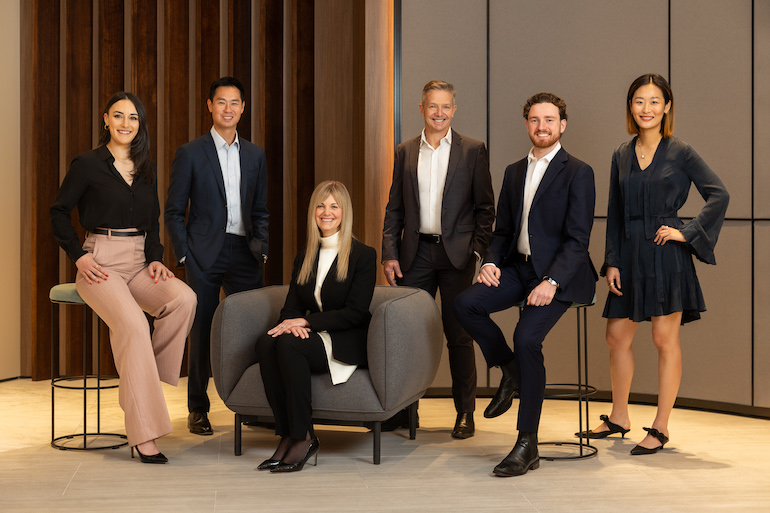
Buoyed by the sale of its stake in Employment Hero late last year and with more exits on the horizon, pioneering Sydney VC fund OneVentures says it will return around $100 million more to investors over the next eight months as it looks to raise a new $200 million fund.
OneVentures founding partner Dr Michelle Deaker said that Fund VII, a new growth equity fund aims to raise $200m to support the growth of later-stage technology companies.
“Fund VII will continue our strategy of partnering closely with a concentrated portfolio of companies to provide operational and strategic guidance to propel them to the next level. We have a successful track record of investing in visionary founders who have used our expertise to grow their companies and have a global impact,” she said.
“We delivered a 13x return on the sale of our Fund II investment in Employment Hero at the end of 2023, which returned 1.5x the fund. Fund II has an impressive current multiple of 5x. Our first fund, Fund I, closed earlier in 2024, with a 10x multiple for our private investors.”
The Employment Hero exit last December turned an $8.8m investment in 2018 into a $116m return for $75, OneVentures Growth Fund II.
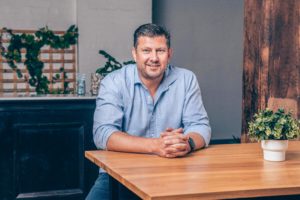
Employment Hero founder Ben Thompson
The sudden influx of returns in venture is whetting the appetite of those prepared to be a part of a patient risk-reward investment strategy.
Dr Deaker says that with capital turning over, they’re looking to redeploy and flagged a “significant exit” shortly for a OneVentures portco.
“I think investors feel the market has stabilised now, so they’re much more open and they are starting to get some capital returns. We’ve been giving quite a lot of capital back and we’ve got about another $100 million coming back to our investors in the next probably eight months,” she said.
“We’ve had a very good response from investors to Fund VII. They’ve had a positive experience with us and seen us delivering results multiple times.”
Fund VII will invest between $10m to $30m per round in technology companies. And in a demonstration of market size and demand, Dr Deaker said her team have already been looking at between 60 and 90 companies for the new fund, which she hopes to have a first close on by the end of 2024.
Incentives return
OneVentures will celebrate 15 years in 2025 and the new fund will take the total funds under management past $1 billion.
Fund V, which closed in May 2022, is now near full deployment. A year ago, Dr Deaker saw startup valuations back at 2015 levels and now, with interest rates moving beyond their peak, investors are looking for new opportunities.
“It’s a great time to invest in growth equity, which is an underserved segment in Australia and provides attractive risk-adjusted returns,” she said.
“The market has gone through a correction, valuations have reset, terms are more favourable for investors, and companies have become more efficient and disciplined in the current climate. In combination, we believe these factors could support this fund to become a high-performing vintage fund.”
There’s also the appeal of a maturing Australian venture market accelerating its returns, Deaker adds.
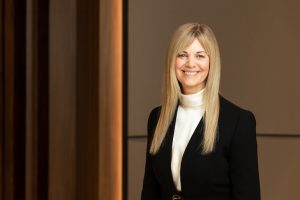
OneVentures founding partner and MD Dr Michelle Deaker
“I think the industry is seeing results. So that’s definitely positive to get investors recycling capital back into the industry. I think people also see that in the growth segment, you’re coming in slightly later than very early stage venture,” she said.
“So you will expect to get – and you should get – capital returns more quickly. When you look at our Growth Fund V, it is profitable now, which is quite early in the venture capital cycle. Usually, you know, these funds go negative for quite a long time and improve out the other side around year seven or maybe even five.”
The OneVentures managing director said that anecdotally, they think about 50% of startups are coming back to market looking for capital.
“Quite a lot of them delayed their capital raising rounds in 2022 and ’23. And they’ve typically become more capital efficient as well,” Dr Deaker said.
“It’s better for investors to come in when companies are being capital efficient and thinking hard about how they’re using their money.”
Nonetheless, she believes that “the market probably feels quite tight for capital” from a founder perspective.
“A lot of the funds even if they’ve raised a bit more money, they’re saving quite a lot of money for follow-on rounds, now just to support their own portfolio, and they’re doing some new activity, but are very selective,” Dr Deaker said.
“So for a lot of companies, it’ll feel harder to capital raise this year, even though there’s going to be more money raised and there’s going to be more people deploying.
“I think next year, the capital market may correct a bit and we may start to see that there are more funds with new capital looking to deploy. Our Fund VII will be a new fund – it’s not a follow-on fund. It’s really about making great new investments where we feel we can leverage our hands-on operational experience to accelerate those companies.”
The fund, which potentially will have as many as 20 investments or as few as 7, will primarily target technology companies across major growth thematics such as the ongoing digitisation of the economy and industries; AI disruption and automation, the trend to net zero and energy transition; tokenisation of assets and improving health outcomes, given the depth of both technology and healthcare expertise in OneVentures, following a similar investment mandate to their previous funds.
AI as icing
While artificial intelligence is the new Web 3.0 (remember that?) for VC funds, Dr Deaker said OneVentures has avoided the hype to bolster valuations and sort the AI wheat from the augmented chaff.
“For some companies, it’s like sprinkling the icing. So we have a good look at what AI means to a company when they come in,” she said.
“When I look at all our portfolio companies in the tech space, almost all of them are leveraging AI to do any number of things: make their customer experience better or improve their implementations, which obviously makes them more profitable more quickly. Maybe even speeding up development using AI tools to make their businesses better.
“Then you will have the AI-native companies who are really starting from the grassroots and building an AI-native solution. That’s probably closer to being an AI company, rather rather than being an AI-augmented one.
“There’s nothing wrong with augmented. I just think we’ve been in a bit of a hype curve where anyone has said they were AI got ridiculous valuations. We tend not to play that game.”
M&A OK
Canva’s buyout of emerging AI startup Leonardo last week turned attention once again to mergers and acquisitions (M&A) as a growth strategy, with several startups announcing they were setting aside part of recent raises to go shopping for rivals and complementary companies.
Dr Deaker believes that trend will continue as a core part of growth strategies for a range of reasons, including an inability to attract additional venture funding.
“I look at companies in our growth portfolio, and they’re out acquiring smaller companies who may be fine, but they can’t raise money or they can’t execute on their strategy because they need access to market and they’re now looking around,” she said.
“We helped one of our portfolio companies in Growth Fund V do an acquisition of a small company of private equity last year, and now they’re rolling that out across their blue chip customer base.
“We’re seeing it in the debt portfolios as well: leveraging debt to do M&A. As they’re becoming more advanced companies, they’re buying up smaller companies. I think the market is very active at all levels in terms of M&A.”
Investing in women
While debate continues to rage on investing in female founders and the need to have more women on the investment side, Dr Deaker is proud that OneVentures has always been one of Australia’s most diverse VC teams.
In 2022, she teamed up with Andrea Gardiner, founder of Jelix Ventures and Ingrid Maes, founder of the Woolworths venture fund W23 to launch WinVC to encourage more women onto the investment side.
“I think it’s improved a bit in the venture end of the market, but truthfully, probably not further up the capital stack,” Deaker said.
“Obviously, we’d like to attract more women into the industry. I think it’s a very rewarding place to work.”




Daily startup news and insights, delivered to your inbox.