


















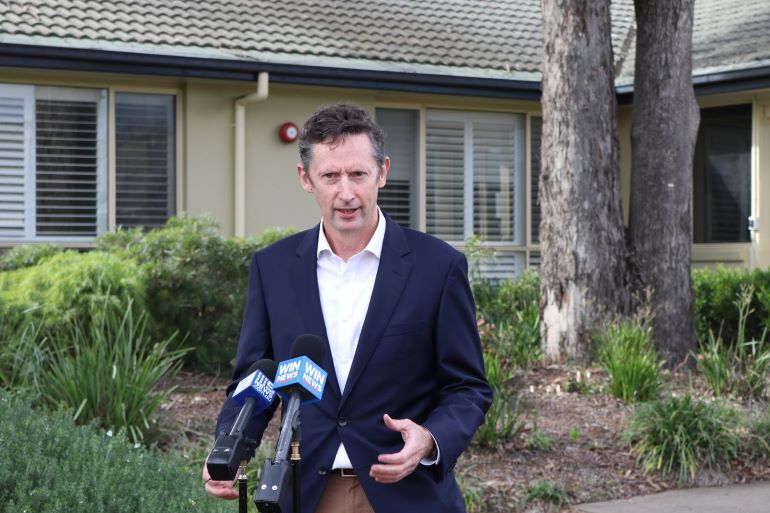
The federal government says it will “reset” the Consumer Data Right (CDR) after three years to improve its uptake and make it cheaper to access.
Assistant treasurer Stephen Jones is going back to the drawing board, opening a month-long consultation process, with Treasury releasing a paper on proposed changes to the consent and operational rules of CDR.
Submissions will close on September 9.
Jones also released the Consumer Data Right Compliance Costs Review, report written by Heidi Richards last year, which identified a key complaint from the fintech sector as a barrier to entry the high regulatory costs of its implementation.
He argues four things “are obvious”:
- The regulatory burden and compliance costs are too high.
- The innovation has not come forward – businesses are not incentivised to use CDR data for key use cases like lending and energy switching.
- Restrictions on using and holding CDR data is a barrier to uptake.
- The consumer take‑up has been low.
“You can’t look at these outcomes and think that if we do more of the same, we’ll get a different outcome – we won’t,” Jones told CEDA.
The Richards report reflected many of the concerns raised by the industry lobby group, the Australia Banking Association last month, in a review commissioned from consultancy giant Accenture,
The fintech sector disputed many of the claims in the ABA report. Data aggregator startup Basiq issued its own report on Open Banking’s performance and adoption with founder Damir Cuca arguing the data offers of more optimistic perspective.

Basiq founder and CEO Damir Cuca
“While Open Banking is far from perfect, the highly critical views circulating do not reflect the reality we see. Our platform data and customer feedback tell a very different story – one of growth and success,” he said.
The Richards report more closely follows the ABA view, saying: “the costs of the CDR appear to have far exceeded original regulatory estimates. Industry participants have expressed significant concerns about the continued pace of change and the resulting costs. Although this review did not focus on quantifying benefits of the CDR, it was evident that many participants question the cost-benefit justification of ongoing changes to CDR rules and CDR data standards, based on the very low level of usage that they observe among their customer base”.
Poorly executed
The assistant treasurer and financial services minister returned to his complaints about CDR 14 months ago in a speech to the Committee for Economic Development of Australia in his address to the same forum today taking a swipe at the former Coalition government for how it implemented CDR as open banking in 2020.
“I recognise that the implementation of the CDR by my predecessors was poorly executed,” Jones said.
“Costs are high. Uptake is low. It’s a good idea, poorly executed. And so we need to reset.
“We need to be purposeful and focus our efforts where we know there is consumer benefit. The government believes in the CDR and the opportunities it offers to drive greater competition in our economy, protect user data, and foster innovation that benefits consumers.”
CDR began in Australia in July 2020 as “open banking”, allowing consumers to consent for their data from banking to be used and analysed to help the better manage their finances and find better deals. It then expanded to energy sector, but by May 2023, things ground to a halt when Treasury announced the Labor government had paused its expansion into superannuation, insurance and telecommunications.
“This will allow time to focus on ensuring that the CDR in banking is working as effectively as possible, extending into the non-bank lending sector and continuing with the energy rollout as planned,” Treasury said at the time, adding that “the government also plans to undertake a strategic assessment of the CDR towards the end of 2024.”
A slow burn
Jones said today that the government’s intention is to expand CDR to non-bank lending in early 2025, “making it operational by mid-2026 to provide a sufficient transition period”.
In September 2022, the newly elected Labor government released an independent statutory review into the CDR framework, and its implementation, which found it has been “broadly effective” thus far.
But now it’s a mess, Labor says – albeit one that’s dragged on for some time.
Legislation for amendments to the Consumer Data Right for action initiation reform were introduced to parliament in November 2022. The Senate is meant to vote on them next week. The Senate Economics Legislation Committee handed down its report into the issue 15 months ago.
Many of the concerns now on the government’s radar were being raised by the fintech sector when they came to power more than two years ago.
Jones argues the government wants to reduce friction within the CDR to improve cost effectiveness, takeup, and deliver better financial outcomes for consumers.
“The Albanese government is focussed on getting the existing CDR framework on more sustainable footing. After passage of the action initiation bill, the Government will not rush to declare new action types until the CDR is back on track,” Jones said in a media release today.
Clarity improved
In response to the government’s announcement, FinTech Australia CEO Rehan D’Almeida described it as ” the most clarity we, as an industry, have had on the CDR” over the past year.

Rehan D’Almedia, FinTech Australia
“Not only will it help the sector maximise the impact of their policy for consumers and eventually cost of living pressures, but it also gives investors in fintechs tied to the CDR some certainty,” he said.
“This week WeMoney revealed that Australians using its platform — powered by the CDR — are saving on average $333 per month from bespoke financal and budgeting guidance offered by its platform. This is just one clear example of how the CDR can help the everyday Australian.”
D’Almeida said cross-party support for the way forward was needed, along with a “a firm timeline from government indicating their agenda for different parts of the CDR” to deliver momentum for the fintech industry.
“We believe in simplifying data rights for the benefit of all Australian consumers, however, would like to urge both sides of Parliament to approach the CDR with the spirit in which it was introduced: A bipartisan series of policy aimed at benefitting all Australians,” he said.
Sherlok founder and CEO Adam Grocke said they welcomed the minister’s commitment and support of CDR to drive innovation, competition and savings
“Resetting the CDR framework to focus on high value, bang-for-buck use cases like Sherlok’s is welcomed news and a win for consumers. The future success of the proposed ‘reset’ will ultimately come down two things:
1. Listening to and engaging with data recipients and Fintech’s who are on the front line, building use cases to increase competition.
2. Executing changes at pace so they can resolve the issues with consumer consent flows and the plethora of basic data quality issues with data holders.
“We look forward to working closely with the government and Treasury to improve CDR and advance Action Initiation,” Grocke said.
NOW READ: Why the Consumer Data Right matters and you need to tell Australian politicians what you think









Daily startup news and insights, delivered to your inbox.