


















A New Zealand startup revolutionising the way the bicycle parts are bought and sold globally has raised NZ$2 Million in a Seed round.
Rotorua-based Bike Matrix offers a B2B compatibility solution that allows users to “select a bike and see what fits.”
The startup declined to name its investors saying they came from inside the industry and brought invaluable market validation, experience, and expertise to the table.
Bike Matrix has developed a proprietary method to assess the compatibility of any component as a replacement or upgrade for any bicycle. The technology is designed for various applications, including online stores, retail software systems, workshop portals, wholesale B2B and ERP systems, fleet management platforms, and even bike design processes.
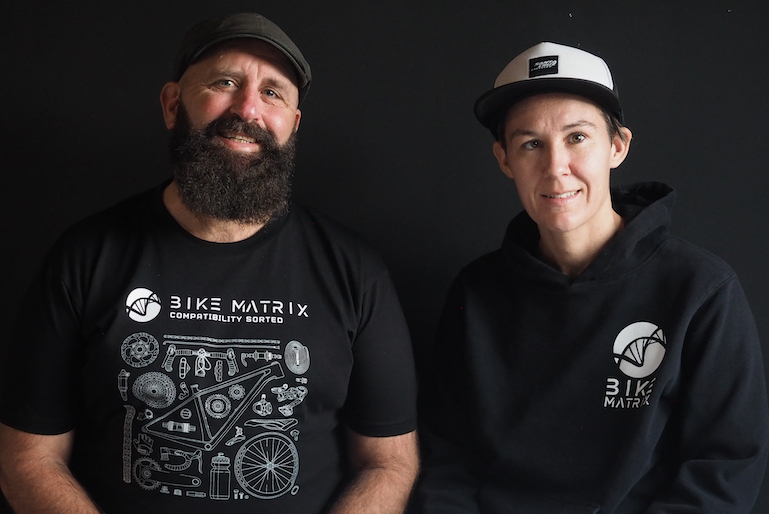
Cofounder Adam Townsend is a a veteran bike mechanic and the architect of the Bike Matrix compatibility system.
He said that in contrast to the automotive industry, where parts are systematically indexed by vehicle, cycling has relied on physical inspections for the correct parts on a specific bike.
“This funding will enable us to expand our dedicated founding team and take Bike Matrix to the next level,” he said.
“With a full battery, a clear roadmap, our toolbox, and strong industry support, we’re ready to move forward.”
His cofounder Lyndal Bailey, also a bicycle mechanic, said the capital will boost their capacity “to deliver what the bike industry clearly demands”.
The growing problem for the cycling sector is that rapid innovation and a growing number of fitment standards (how wheels fit within wheels) have made this process increasingly complex and confusing, leading to buyer hesitation, and costly returns or waste.
“In five years, this will be the go-to method for finding bike parts, just like it is in the automotive industry,” she said.
Adam Barnes, the tech lead who turned the concept into code: “We’ve built a robust and scalable foundation that can support numerous apps, widgets, and custom integrations, enabling us to connect with existing software platforms and serve the entire bike industry”.
The platform now has 80 component brands providing product information as well as agreements with major global bicycle brands, and customers already planning Bike Matrix integrations into their roadmaps.
Townsend said collaboration with the bicycle industry is key to Bike Matrix’s business model, as is supporting the existing distribution and dealer network. They’ve designed it so manufacturer data is protected and its free for brands to list their products.
“With the vast number of bikes and components to be added to the database, the task can seem daunting for a small team,” he said.
“However, with brands supplying information directly to Bike Matrix, the process is becoming more efficient and accurate.”
Last year the team also enjoyed surprise success heading to Eurobike, the world’s largest bicycle industry trade event, with just a spreadsheet and a handful of business cards, yet winning a Eurobike Award for their idea.









Daily startup news and insights, delivered to your inbox.