

















As taxpayer investments go, the NSW government is on a winner with the National Space Industry Hub, launched in 2021, with every $1 invested in the project resulting in the startups involved attracting $74 in external funding.
Cicada Innovations and Investment NSW marked four years of the hub this week with a showcase of the technology involved, noting that more than 80 startups have taken part and gone on raise more than $56 million in funding collectively, as well as creating 160 high-value jobs.
The startups involved range from satellite platforms, robotics, quantum sensing, and autonomous systems.
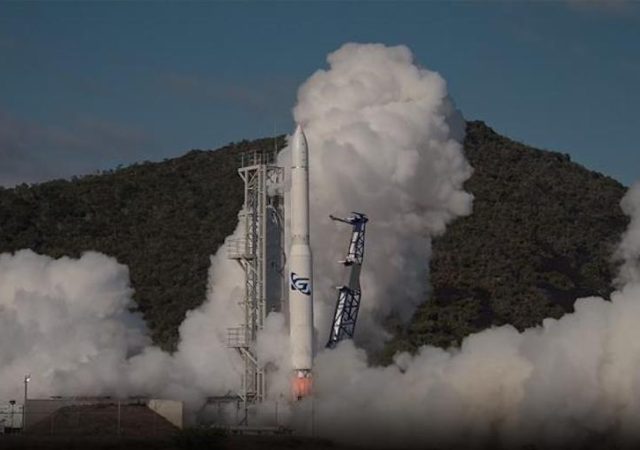
Among them is Waratah Seed, Australia’s first commercial ride-share mission, which headed to space last year aboard the SpaceX Falcon 9 rocket with an Australian-built 6U CubeSat, WS-1, containing payloads from six local startups now in Low Earth Orbit (LEO).
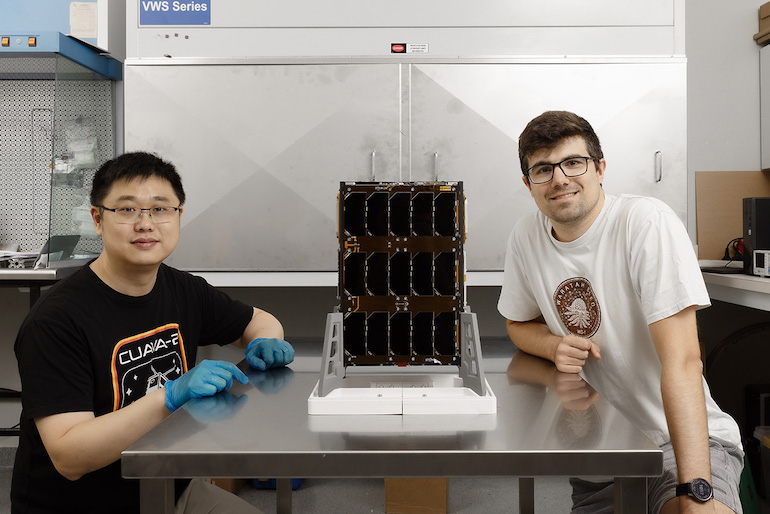
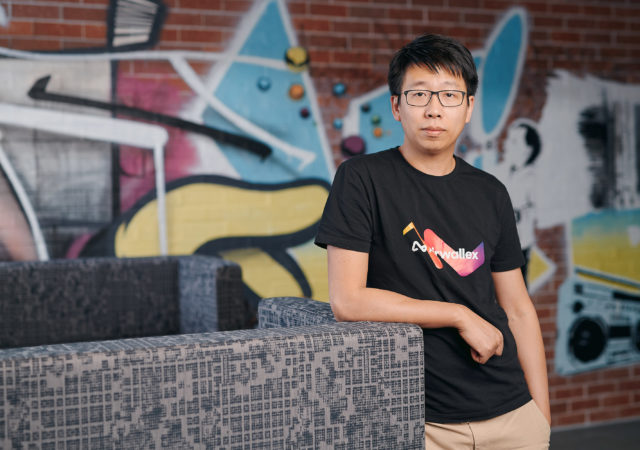
CUAVA Training Centre engineer Dr Xueliang Bai, with Waratah Seed Satellite System engineer Patrick Oppel, and the WS-1 6U CubeSat spacecraft.
Waratah Seed’s mission was partly funded by the NSW Government through their Space Industry Development program, and is a consortium includes CUAVA (the Australian Research Council Training Centre for CubeSats, UAVs, and their Applications, the University of Sydney, the Australian Space Engineering Research Centre (ACSER) at the UNSW, (UTS), Macquarie University, Delta-V Space Hub, and Saber Astronautics.
Cicada Innovations CEO said they see space not as a destination, but as an enabler – “a platform to solve some of the most pressing problems here on Earth, from connectivity to climate resilience”.
“The Space Hub has shown what’s possible when you back ambitious founders with the right support: creating high-value jobs, delivering sovereign missions, and deploying technologies that strengthen Australia’s position in the global space economy,” he said.
Investment NSW executive director Maroun El Khoury said the National Space Industry Hub has created a melting pot for space activity in NSW, where entrepreneurs can collaborate and advance their cutting-edge technology.
“The NSW Government is committed to fostering a thriving environment where space-related companies can innovate, scale, and commercialise their ground-breaking products and services. Initiatives like the National Space Industry Hub are ensuring businesses and entrepreneurs are empowered to reach their full potential,” he said.
“With the IAC being held in Sydney for the first time later this year, we have an incredible opportunity to showcase the best of NSW ingenuity on the global stage. This is an event that’s expected to pump $21 million into the local economy and create both immediate and future investment, trade, and export opportunities for our businesses.”
Other Space Hub startups include:
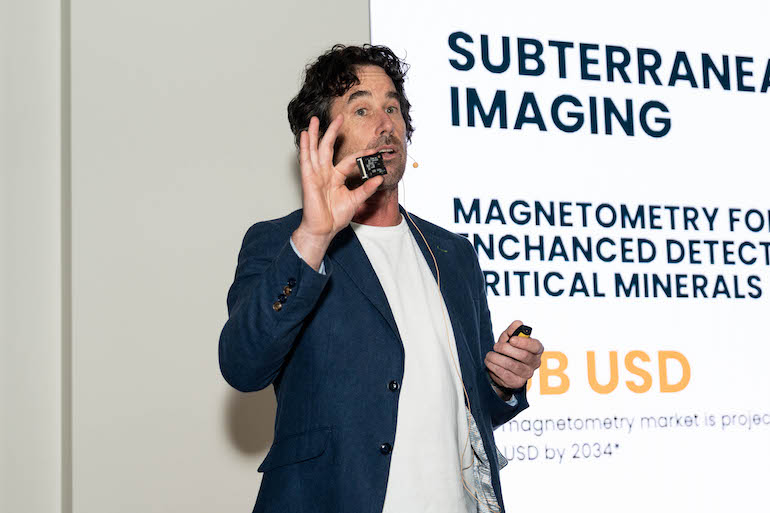
DeteQt which is building quantum-enabled magnetic field sensors for next-generation navigation and mapping. The Sydney-based startup has secured a $3 million contract with the Australian Defence Force and raised $750,000 in pre-seed funding from Main Sequence Ventures and the ATP Fund. Its diamond-on-chip quantum sensors are also being explored for mining and portable medical imaging applications.
Spiral Blue, an onboard AI computer for satellites, enabling real-time processing of Earth observation data. Their SE-1 is Australia’s first operational edge computer in space, with multiple missions onboard SpaceX Transporter launches.
Deneb Space, which is developing technology to make it easier and less expensive to move satellites in space. Their technology has gained space heritage through deployments on the Waratah Seed-1 and CUAVA-2 missions.
Aquila, a long-range wireless power systems that keep drones flying without landing. Successfully completed Australia’s first in-flight drone charging trial in regional Victoria at a distance of 50 metres.
Crest Robotics, which is building robots designed for high-risk industries such as energy, construction, and defence. The Gorilla Mk1 system was trialled by Transgrid for transmission tower maintenance, reducing the need for workers to climb dangerous infrastructure.
ANT61 which is creating autonomous systems for in-orbit satellite servicing and repair. The Beacon device, described as a satellite “defibrillator,” was successfully tested in space to restore communications with unresponsive spacecraft.
MP Space, founded by former Tesla engineers, who are redesigning satellite power systems for scalable, affordable deployment. Their Pack2 battery and EPS deliver high performance, with the first spaceflight planned for 2026.



Daily startup news and insights, delivered to your inbox.