

















When Halter raised a $155 million Series D last month, turning the Kiwi agtech scaleup into a unicorn, Icehouse Ventures was once again among the investors.
Now the New Zealand VC is gearing up to back the next wave of Kiwi tech startups and has already secured NZ$15 million in commitments towards a new $30 million fund.
Seed Fund IV is the firm’s fourth flagship early-stage fund, built to back 30 of New Zealand’s most promising up and coming startups over the next three to four years.
The VC kicked off 2025 by raising NZ$122 million (A$111m) for its second growth fund to back later-stage scaleups like Halter.
Icehouse Ventures CEO Robbie Paul said the enthusiasm for the new early-stage fund reflects Aotearoa’s talent for creating high-value startups over the last decade.
“If Funds 1 and 2 were thanks to the aspiration of investors for New Zealand, Funds 3 and 4 are thanks to entrepreneurs delivering on those aspirations,” he said.
“It’s hard to ignore the export revenue, high value jobs, technical triumphs, and cash returns delivered by companies like Halter, Crimson, Dawn Aerospace, Tradify, and Tracksuit.”
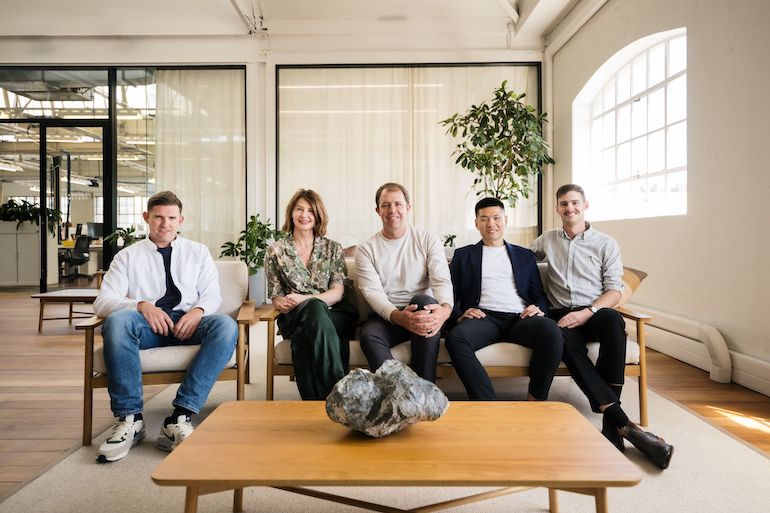
Seed Fund IV’s is already deploying capital. Its first investment is Harth, an AI-powered platform for collaborative building design, cofounded by Scott Barrington, founder of Modlar; and Tom Batterbury, cofounder of Auror and New Zealand EY Entrepreneur of the Year.
Batterbury said they were not only impressed by the speed and conviction Icehouse Ventures brought to backing them, but also the value they’ve already added.
“The NZ venture ecosystem has come a long way since Scott and I raised our first rounds with our previous startups over a decade ago,” he said.
“It’s exciting to see a new generation of startups scaling faster, many with early support from Icehouse Ventures. Producing more world class technology companies is a great thing for New Zealand.
The NZ$15m first close for Fund IV took one month and 80 investors, more than half of whom had invested in previous Seed funds, and others, including Sir Stephen Tindall, have backed all four.
By contrast, the original Seed Fund I, which launched in 2016, required 12 months and the support of 220 investors to raise $11m.
Fund I invested in now-unicorn Halter, Tradie software Tradify, which sold last year at a 23x multiple on their initial investment, Dawn Aerospace, and Sharesies. Based on data from the 2024 Carta report, Seed Fund I is in the top decile for cash returns and total value relative to >2,000 firms, globally.
Fund II followed in 2018 and invested in Mint Innovation, Vessev, Partly, Basis, and Open Star. Most recently, Seed Fund III was among the first investors in New Zealand’s fastest growing startup, Tracksuit, Sean Molloy and Sean Simpson’s stealth energy startup, Ternary Kinetics, Watchful, Ideally, Starboard, and Zincovery.
“Investing in and supporting early-stage startups is what we know and what we are known for. We have been rewarded for sticking to our knitting and that is what we are doing with Seed Fund IV,” Robbie Paul said.
“The difference this time is we are investing in an ecosystem with significant tailwinds including greater connectivity with international investors, the inflow of talent and capital from offshore, and most importantly, the recycling of talent.”
But you can’t be a venture investor without having some misses among the hits.
Alongside seeing 14 startups Icehouse backed fail, Paul’s regrets include declining or missing several great startups, such as Kami and Batterbury’s Auror.
“Our mistakes since 2016 have been as formative as our successes. The good news is the same team who celebrated our successes and learned from our mistakes are back again for this fund,” Paul said.
“Relative to the first fund we are also advantaged by the largest deal team in the country, a proprietary tech platform, and 2,500 more investors in our community.”
Now they’re working at both ends of a company’s growth. In the same week Icehouse investment NZ$45m investment in Halter’s Series D of Halter – a company with 200 team members, $50m+ in revenue, and operating in three countries, they also backed Harth, a team of 2 with a concept and no revenue.
Robbie Paul says “vertical integration” in the funding journey is a key strength for the firm, where the flywheel effect of the later stage and early stage investments support one another.
“The seed funds are advantaged because growth funds bring extra fire power in the later rounds. Our growth funds are advantaged because of the deal flow from our seed funds,” he said.
The Icehouse CEO said Seed Fund IV will remain open for investment over the coming months as they secure the remaining NZ$15m.
The minimum investment is $50,000, paid in 25% tranches. The fund is open to wholesale investors only.
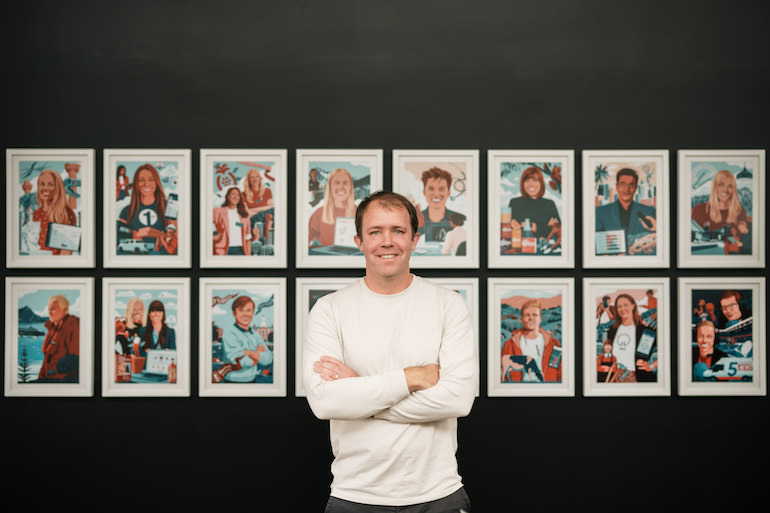
Icehouse Ventures CEO Robbie Paul in front of the VC’s founder wall




Daily startup news and insights, delivered to your inbox.