



















The Australian government incidentally commissioned one of the country’s largest studies into the matter… and it wasn’t even focused on gaming.
Such is the case in Australia, where the country’s Interactive Games & Entertainment Association (IGEA) has pushed out several reports on the size and shape of the trend.
Significant effort goes into ensuring the validity of this data. Pouring through their methodology of the latest Australia Plays report (PDF), it is statistically valid, university-backed research that provides a lot of useful granular data on not only how many Australians game, but how they go about it too.
But despite all of this, an outsider to the trend could assume there’s an agenda at hand. Of course a report from a gaming peak body is only going to talk up the size and shape of Australia’s gaming population, or more cynically, potentially omit any data that compromises that narrative.
Well, now a fresh report commissioned by the Australian Competition and Consumer Commission (ACCC) as part of their Digital Platforms Services Inquiry has not only reinforced this data, but should put to bed any doubt about the size and scope of gaming in Australia.
For their final report, the regulator tapped Lonergan Research to survey Australians on their interactions with digital platforms. Gaming was part of the scope of the research. The firm pulled together a representative sample of over 3000 Australians of all ages, and went about asking questions on how they engage with digital platforms.
For context, these studies typically only canvass 1000 or so Australians for statistical validity. That’s the same methodology that is used by political monitors which create polls that shape national policy and political decisions.
It was a wide-ranging survey, canvassing everything from dealings with the Google and Apple app stores to views on how easy it is to remedy disputes with Amazon. But Lonergan Research committed a whole section of it to gaming platforms, and produced some interesting results.
Here are the most fascinating findings from the research:
1. Gaming isn’t gendered
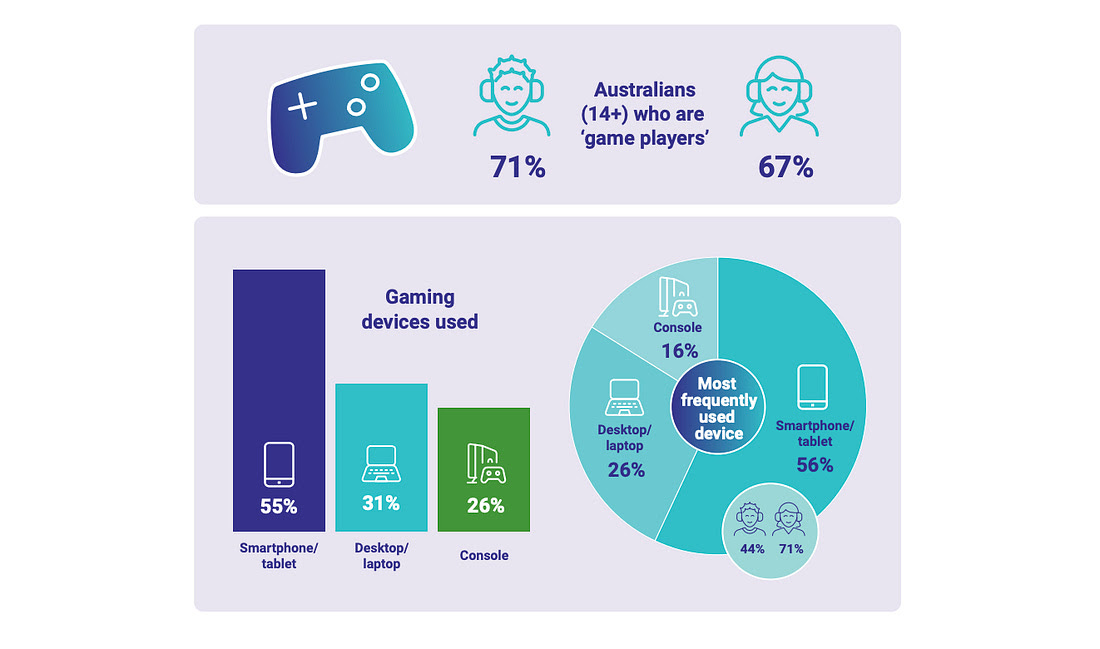
Source: ACCC Digital Platform Services Inquiry final report
2. Most popular platforms
Sony is actually more popular than Nintendo and Microsoft in Australia as the console maker of choice. Steam also leads the Epic store here too. But again smartphones and Apple are the platform of choice for this market.
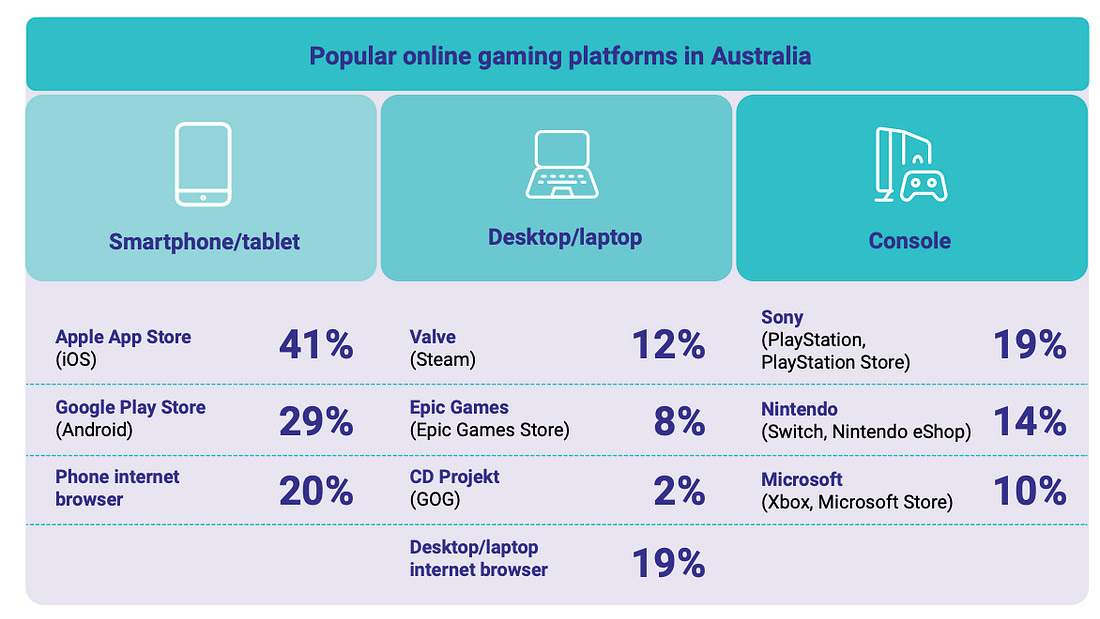
Source: Digital Platform Services Inquiry final report
3. Avatar skin spending
Australians like to customise their avatars. More broadly, when we indulge on in-game purchases, the majority of them are add-ons in the forms of character cosmetics or in-game equipment.
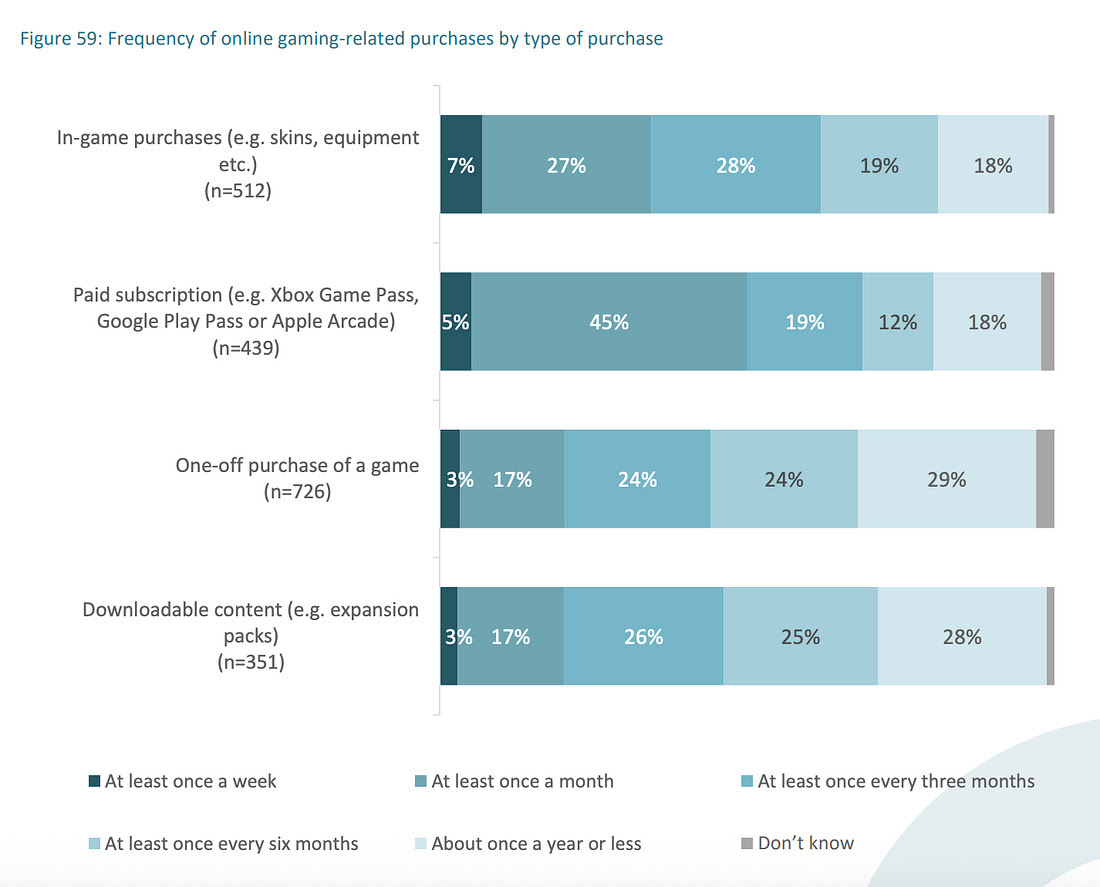
Source: Lonergan Research
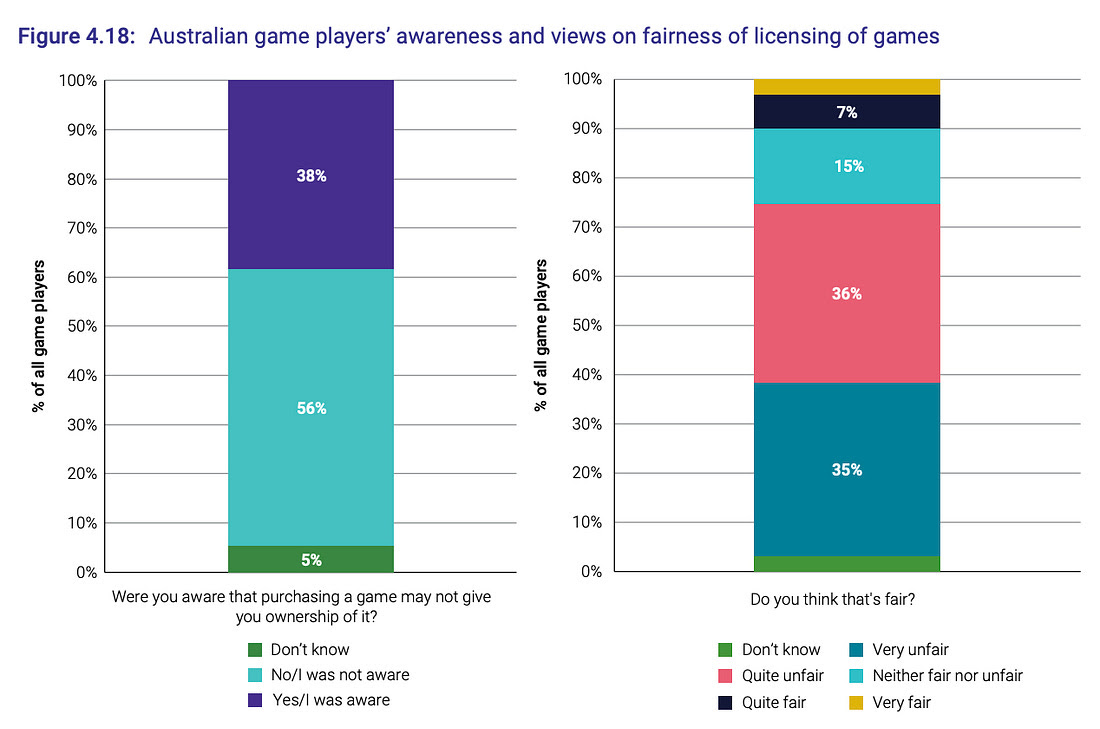
4. Access rather than ownership
The majority of Australian gamers are also not aware that when they buy a game digitally, they are purchasing access to it rather than owning it. And most think this is unfair.
More research to come
Meanwhile, IGEA intends to publish the next edition of its report into Australia’s gaming population later this year, which will likely reinforce the findings from Lonergan’s study.
Just this week however, it released another proxy for this trend: video game consumer sales data. Last year, Australians spent $3.8 billion on video game-related software and hardware, albeit in a sign of the times, 3% less than in 2023.
There’s always the question that if IGEA doesn’t publish this data, who else will? And it’s a valid one, considering that data is instrumental in pushing for policy recognition and political support for Australia’s game development industry.
Perhaps the better question: As the pool of data and evidence on the number of Australians who game grows, will attitudes towards it change? Compared to other hobbies of its scale, like film, music and even sports, gaming still feels niche and underrepresented.
- Harrison Polites writes the Infinite Lives newsletter. Follow him here.
Sign up for his newsletter below:
- Infinite Lives is a reader-supported publication. It’s free to sign up and read the latest piece, but as of July a subscription will be required to read Harrison’s backlog of over 70 unique articles. Each subscription goes towards improving his Substack, supporting the broader Substack gaming community and funding more independent games journalism in Australia.







Daily startup news and insights, delivered to your inbox.