


















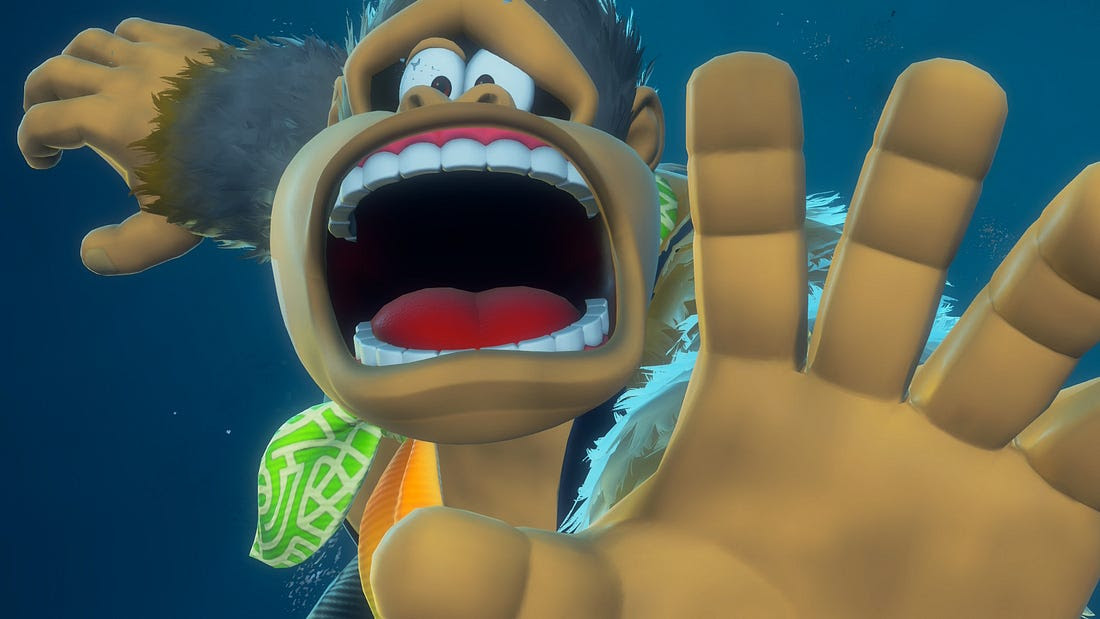
No spoilers here, but a tough time initially learning to play as DK gives way to one of the best closing segments of a game that I’ve played.
The bananas are stacked against Donkey Kong Bananza. This is a fantastic platformer, up there with the highs and delights seen in Super Mario Odyssey—possibly even surpassing them. It’s yet another Nintendo home run.
But here’s the rub: the best part of the game are its final few hours. The worst? Its crunchy beginning, where controlling Donkey Kong takes a bit of getting used to. That’s a problem because, on average, most players struggle to get through the first third of any given game. We see this reflected in trophy and achievement data. Narrative-based games tend to perform a little better in this regard—the story ushers people through. Platformers, on the other hand, require some tenacity.
Game developers know this. In fact, in most games, the best ideas are often crammed into the first third to ensure they’re seen by the player. That’s not the case here — and Bananza is better overall for it. Like most fruit, Bananza requires some time to ripen, and for those not used to platformers, some time for you to adjust.
A rocky start
The game starts with DK mining for crystal bananas, as you do. Then out of nowhere, a trio of sinister-looking monkeys appear, identifying themselves as Void Co. They steal DK’s banana hoard and cause a cave-in, trapping the ape and all his monkey pals underground. Amid all this, DK encounters a lost talking rock that joins him for the ride.
It’s soon revealed this rock happens to be a junior version of Pauline, another character from Nintendo’s long history. (Fun fact: she’s the character trapped atop Donkey Kong in the original arcade game.) Apparently, her singing voice is special and essential for reaching the centre of the planet – just go with it. What ensues is a game about digging toward Earth’s core, collecting bananas along the way and thwarting Void Co’s efforts to bar the duo’s path.
This is where we encounter the first major pain point of Bananza. The game’s initial opening hours are by far its clunkiest, and that’s primarily down to just how much DK can do. He’s a pretty talented gorilla—he can climb almost everything, dig up, dig down, roll, grab parts of the environment, throw them, and use them as surfboards.
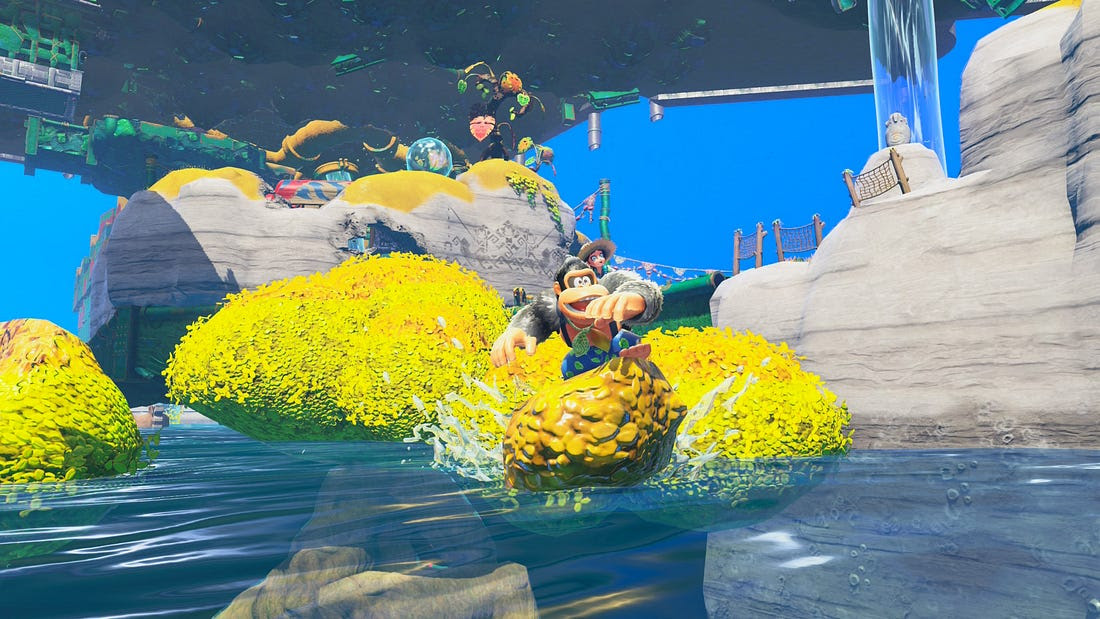
It’s a bit tricky to master but turf surfing, where you ride a chunk of earth, is a heap of fun.
The problem: Bananza presents the player with a lot of mechanics very early on. Navigating how to use them all effectively is a challenge in itself, a short-lived one but still a difficulty. What’s worse, the main gimmick of this game compounds matters. Given this is a game about digging, most of the environment can be destroyed or manipulated by DK. He smashes his way through layers of dirt with ease, creating tunnels and openings. The real unspoken genius here, though, is that the game still works despite this freedom. There are enough guardrails in place that, despite being able to tunnel through everything, you still need to complete the main objectives and boss fights in each level to proceed.
Further complicating matters, just as you’re getting a handle on playing as DK, the game introduces timed transformations known as Banazas. Peppy songs—sung by Pauline—morph DK into new and slightly terrifying forms, each with their own moveset and abilities. Most are fairly simple, but again, it’s more for the player to learn.
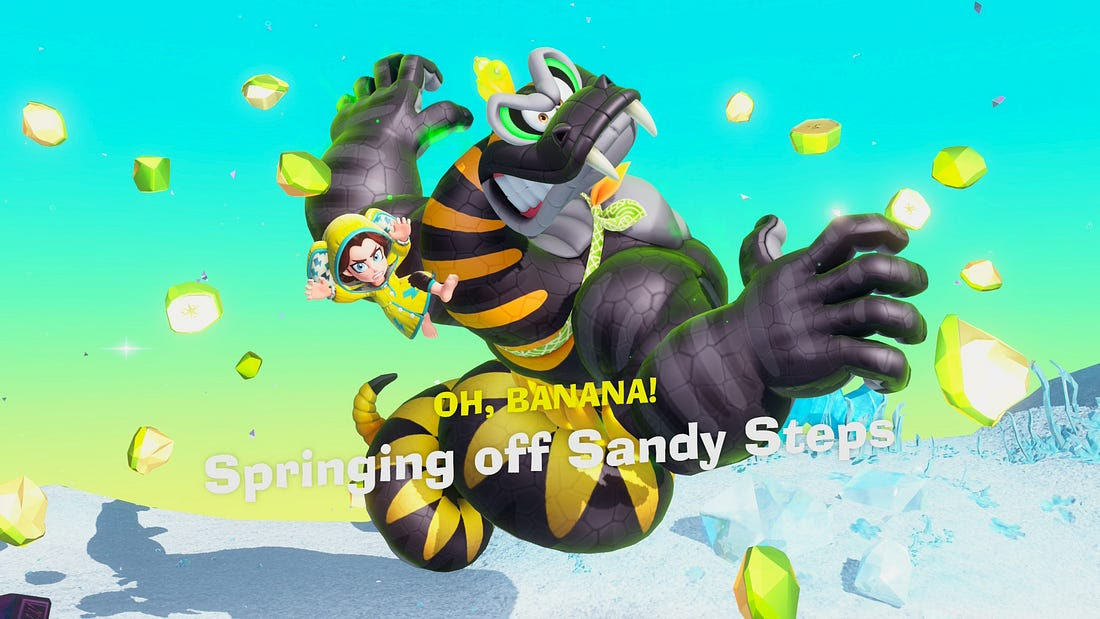
Is Nintendo making a move into horror? This snake gorilla hybrid is particularly scary.
Super Mario Odyssey had a similar level of complexity across all the enemies you could control. But it was cleverly drip-fed to the player over the course of the game. Thankfully, the Bananza transformations are spaced out. But it’s a steep learning curve, even for platformer veterans. It’s telling that post-game, most of the bananas I had left to find were located in the earlier stages where I was still grappling with how to play.
Why I still dig it
This is all to say it’s not insurmountable. The game’s gentle early difficulty accommodates newcomers, and the punishment for dying is minimal at best, usually taxing you some gold that you find in the world. But I couldn’t help but feel while playing these first few hours that this kind of control-based friction turns some players away.
That would be a shame. Some of the early areas in Bananza are its least creative. As you dig deeper, newer, more fascinating environments start to emerge: crystal-lit caverns with enemies that react to light, a beautiful beach resort littered with giant floating fruit, and a theme park dedicated to fast food with hot oil vats serving as the major obstacle. These are just a few examples, and they’re all rendered stunningly, showing off the power of the Switch 2.
Cleverly, unlike the last Donkey Kong platformer game (Donkey Kong 64), your progress is not gated by the number of crystal bananas you collect. They are more or less optional, but without them the game becomes significantly more difficult as they are the primary currency for upgrading DK’s health and abilities. This allows you to really clear the game at your own pace. You can rush through with tougher boss fights, or take your time on each layer hunting banana’s down.
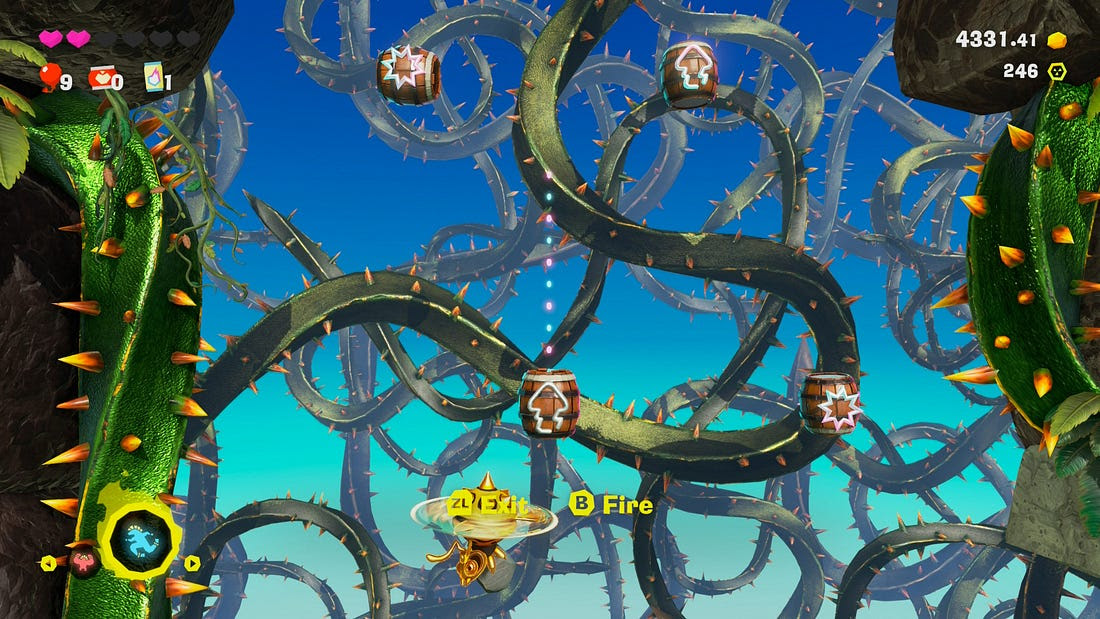
A tribute to one of the more creative levels in Donkey Kong Country 2: Diddy Kong’s Quest.
Bonus rooms containing some of these bananas are scattered across the levels also pay tribute to the series’ heritage. I spotted one early that was a like-for-like copy of the classic level from Donkey Kong Country 2, Bramble Blast. So much love for Rare’s original work on the series has gone into this game, and it shows.
This all culminates in some of the most memorable final few hours of a game I’ve experienced. Absolute fan service for those who love the original Donkey Kong Country franchise—enough so that it’s painful for me not to spoil it here.
Worth your bananas?
There were concerns with early previews that as DK smashed through the earth, the game’s frame rate would drop. This is evident, but not at all a cause for concern. The dip is minimal—especially compared to what we saw with Pokémon Scarlet and Violet—and hardly a hiccup for gameplay.
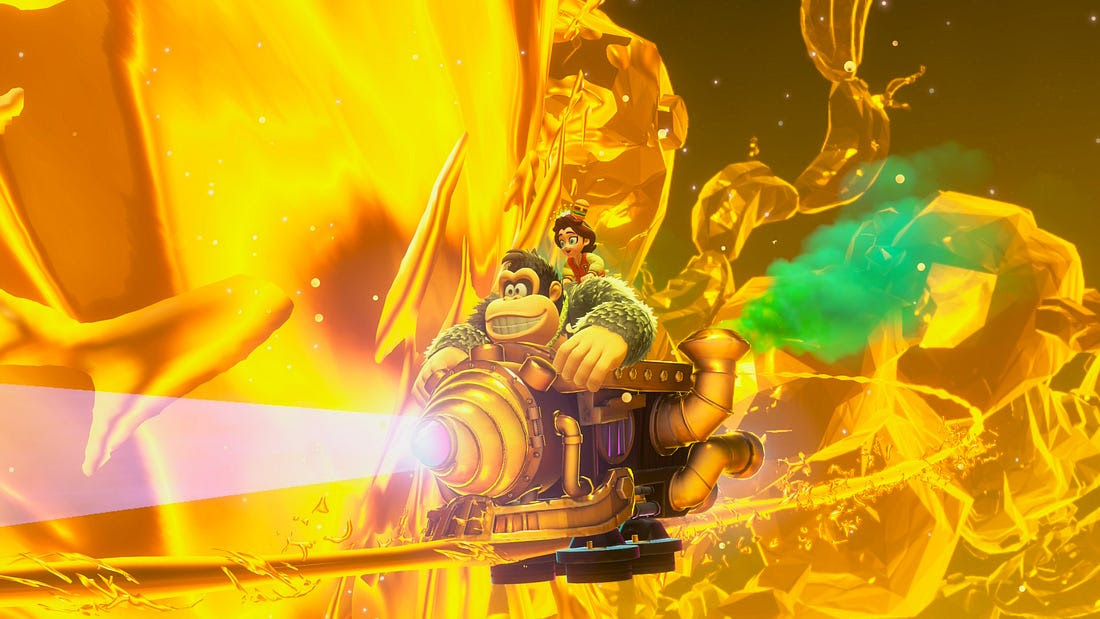
Early friction aside, its well worth your gold.
Given the depth of the game (no pun intended) and the quality of presentation, I’d say it justifies its $110 AUD (around $70 USD) price tag. Though, this being said, for those picking this up as a two-player game, the second player’s involvement is marginal. Bananza is best treated as a single player adventure, with support from a second if wanted. Put it this way: You’ll likely want to take turns playing as DK instead of Pauline.
Bananza takes about 15 hours to clear at a moderate pace, but there’s heaps of fun to be had post-game hunting down the countless bananas you missed. It’s my goal to collect every last one, and it will keep me busy between other major games for months. Well-designed and challenging endgame content is locked behind your total banana count, so there are rewards for putting in the extra effort.
The challenge, of course, is getting to that point. If you’re playing this game and struggling to control DK, or learn all of the mechanics, persevere. I promise, it’s worth it.
Reviewed on: Switch 2
Worth playing if you like: Super Mario Odyssey, Donkey Kong 64, Banjo Kazooie.
Available on: Switch 2.
- Harrison Polites writes the Infinite Lives newsletter. Follow him here.
Sign up for his newsletter below:
- Infinite Lives is a reader-supported publication. It’s free to sign up and read the latest piece, but as of July a subscription will be required to read Harrison’s backlog of over 70 unique articles. Each subscription goes towards improving his Substack, supporting the broader Substack gaming community and funding more independent games journalism in Australia.







Daily startup news and insights, delivered to your inbox.