


















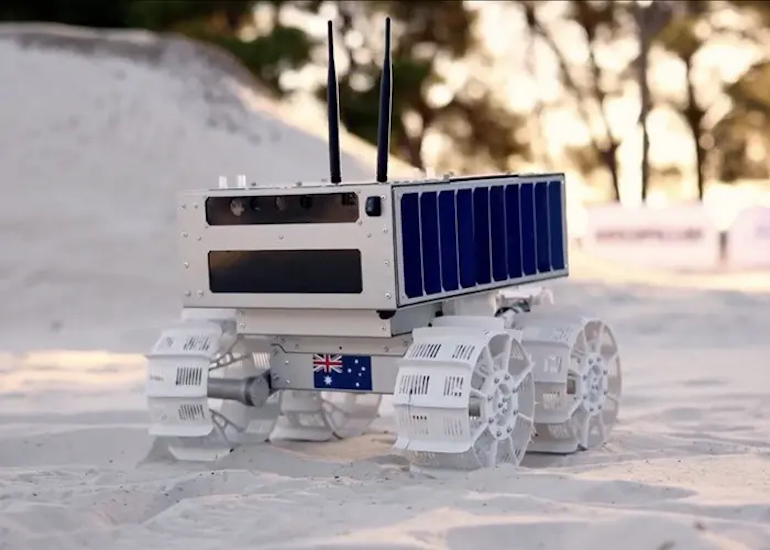
A $42 million project to put an Australian-designed and built lunar explorer on the Moon will be realised by the end of the decade.
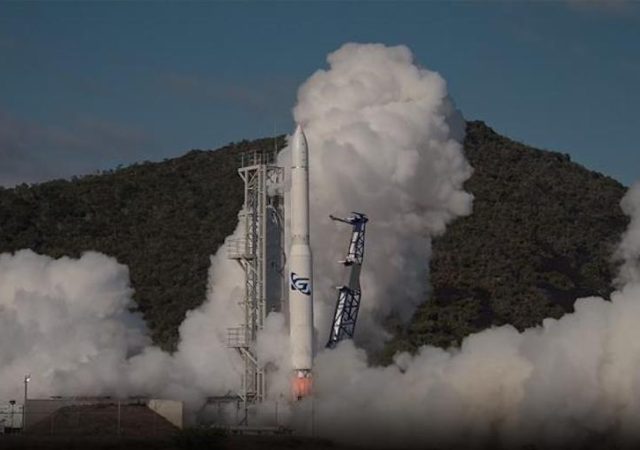
NASA has confirmed the Roo-ver will make the 384,000km trip from Earth as part of its Artemis Moon exploration program, via NASA’s Commercial Lunar Payload Services by 2030.
The Roo-ver, 20kg semi-autonomous rover around the size of a cabin baggage suitcase, is charged by the US space agency with collecting new data about the surface of the Moon to support international space science and exploration goals, including taking soil samples as well as containing an integrated NASA payload on extracting oxygen.
Roo-ver’s explorations is part of a broader efforts to establish possible sustainable human presence in space.
The project, led by the Australian Space Agency and the ELO2 consortium, is backed by $42m from Australian Government to develop, design, build, and operate of the semi-autonomous rover.
Australian Space Agency head Enrico Palermo said Roo-ver demonstrates the cutting-edge capability Australia can offer to major global space exploration.
“Establishing a sustainable human presence on the Moon and Mars is a key focus of the international space community over the coming decades, and the work we’re doing with Roo-ver centres Australia in that foundational work,” he said.
“This is also another chapter in our long and valued partnership with NASA in space – a partnership as important today and for our future as it was when it first began almost 70 years ago.”
The ASA tipped $4 million into initial development of the project.
Melbourne startup Lunar Outpost Oceania, founded in 2023, is technical lead of the ELO2 Consortium. The team spent 15 months developing and testing four rover prototypes and successfully demonstrating its remote operations in Adelaide from Colorado, USA, to replicate communications delays between the Moon and Earth. The company was named Startup of the Year at the Australian Space Awards last year.
The ELO2 consortium is a mix of startups, universities, and resource sector tech experts. The name was chosen by the public. The winning prototype was announced late last year.
Alongside Sydney, Tasmania, Melbourne, RMIT, Edith Cowan and Monash universities, Swinburne’s Space Technology and Industry Institute (STII) will provide space radiation and lunar dust mitigation technology for the rover to protect it from the extreme environment.
The project is also expected to create tech for Australia to terrestrial use, spanning advanced manufacturing to novel materials, extreme environment robotics, AI and autonomous systems, advanced sensors, power systems, communications, human-machine interface for remote operations and thermal management.





Daily startup news and insights, delivered to your inbox.