


















It often takes an incoming government a full electoral term to figure out which bits of policy it should never have thrown out.
But on an unseasonably warm September Monday in Sydney, the Minns government wasn’t about to repeat that habit.
In a full-throated sales pitch as to why it wants both the local and global tech sectors to stay put in New South Wales, the offers of regulatory relief hit the sophisticated investment catwalk harder than a rent rise in San Francisco, all courtesy of the Tech Council’s annual show-and-tell shindig in Sydney’s grimy downtown Central locale.
Orbiting around lower Surry Hills and the rapidly redeveloping surrounds of Sydney’s Central Station, the big promise is essentially that the commitment of the previous government to create a buzzing tech-hub by reclaiming moribund inner-city space will continue at pace.
The crown of the precinct is the 39-storey Atlassian Central development that its developers, Built Group, bill as “the world’s tallest hybrid timber and steel building constructed adjacent to Sydney’s Central Station and over the existing heritage listed Parcel Shed and former YHA.”
Fairly large parts of the tech sector have been waiting around 18 months to see if the Minns government would double down on the progress of the previous government to embed a trendy tech precinct that would expand out of Surry Hills, which is now infested with hipster digital marketers.
And it has.
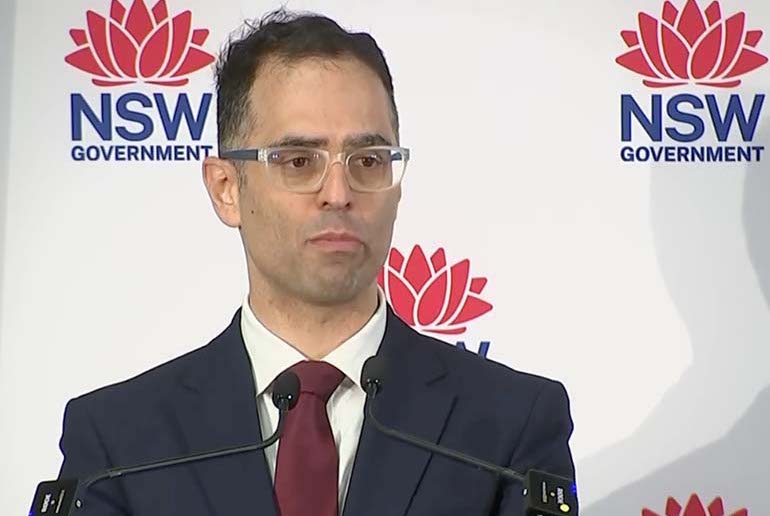
A full year after NSW Premier Chris Minns backed in the commercial property sector with new presence workplace rules, the state’s treasurer, Daniel Mookhey, reassured the cashed-up and sometimes giddy Australian tech sector that it’s disruption as usual.
“My mum was very excited when I told her I was going to the Tech Summit. She always wanted me to have a career in IT. Politics, not so much. She does approve of me being treasurer now, but she’s really just hoping it helps my CV when I go into tech like my older brother,” Mookhey confessed.
“So, on behalf of my mother, thank you, Damian Kassabgi, Scott Farquhar, and the Tech Council for having me here today.”
Perhaps the most illuminating part of Mookhey’s speech was the acknowledgement that the wheel of progress need not be reinvented after his predecessors’ success.
Politically, it can work; at an industry level, not so much.
“I also acknowledge former minister Victor Dominello, here today, and the excellent work he did as innovation minister, Mookhey said.
“I spent eight years in opposition throwing sand in his gears, and I’ve spent the past three years taking credit for his work. So, thank you, Victor!”
Mookhey said scaleups contributed disproportionately to growth and jobs.
“They punch above their weight. Sydney already leads the country. Nearly half of Australia’s scaleups are here — 619 out of 1,299. They’ve raised almost half the capital, too — $14.7 billion out of $28.5 billion nationally. That’s an enormous base to build from.”
The deliverable to industry wasn’t cash, but subsidies in kind were there.
“When I was told that a data centre is competing with a granny flat for assessment, that’s when I thought that perhaps we can do a better job, and perhaps we can make a change. That’s when we realised we needed to fast-track the projects that mattered.”
“That’s why, in the budget, I announced we would create an Investment Delivery Authority as a new gateway for projects worth more than $1 billion. Today, I can announce that the IDA is off the drawing board and ready for work.
“Those criteria make it clear that the first opportunities we want to seize are those that build the digital infrastructure that will power the second quarter of this century, Mookhey said.
“If you’re building a data centre or a wind farm, the IDA will provide specialist government support to fast-track those initiatives.”
Therein lies the price of the ticket to the dance.
Pony-up, tech peeps.
- This story first appeared on The Mandarin. You can read the original here.



Daily startup news and insights, delivered to your inbox.