

















The research and development tax incentive (R&DTI) is only growing in value and scope, with a new Australian Taxation Office (ATO) transparency report detailing $16.2 billion in claims recorded over the 2022-23 financial year.
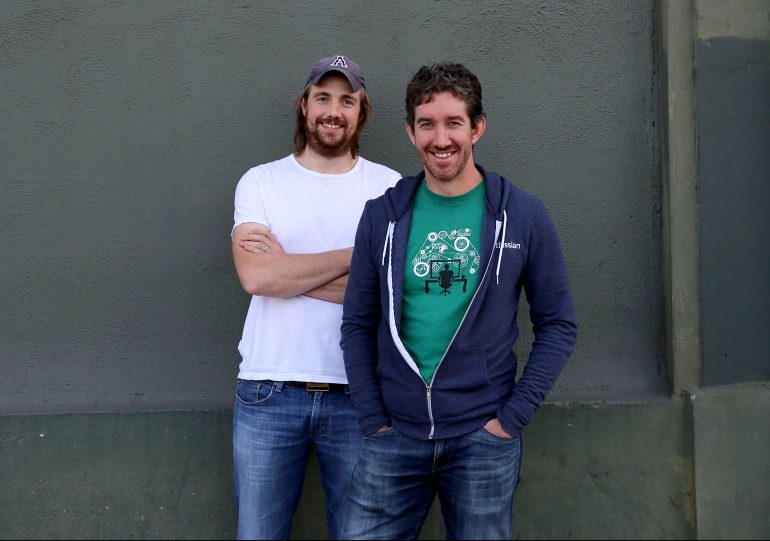
And for the second year in a row, software giant Atlassian is the nation’s top claimant, reporting more than $220 million in eligible R&D expenditure.
The R&DTI provides refundable offsets for small businesses and non-refundable offsets for larger companies, encouraging research and development activities that may not have taken place without tax support.
The new data, released by the ATO last Thursday, shows 12,956 companies claimed the incentive through 2022-23, compared to 11,545 in last year’s inaugural transparency report.
Those businesses combined claimed $16.2 billion, a considerable increase from the $11.2 billion listed in the prior report.
But the latest data includes approximately 850 businesses with substituted accounting periods that were not included in the 2021-22 report.
Subtracting those businesses, the real increase in claims by value was closer to $1.6 billion.
“It is promising to see strong engagement from businesses across so many different industries taking up
the opportunity to invest in R&D activities,” said ATO deputy commissioner Louise Clark, in a statement accompanying the report.
Top 20 companies by total R&D expenditure (notional deductions, less feedstock adjustments) (Source: data.gov.org)
- ATLASSIAN AUSTRALIA 1 PTY LTD: $220,184,724
- FORTESCUE LTD: $150,753,868
- COCHLEAR LIMITED: $136,678,581
- GOTW PTY LTD: $118,126,096 (amended to $117,672,586)
- CSL LIMITED: $111,543,007
- RESMED HOLDINGS PTY LTD: $106,731,383
- CHEVRON AUSTRALIA HOLDINGS PTY LTD: $95,768,477
- LANAI (AU) 1 PTY LTD: $80,945,334
- RIO TINTO LIMITED: $73,157,842
- GRINDING MEDIA PTY LTD: $68,814,589
- SHELL ENERGY HOLDINGS AUSTRALIA LIMITED: $68,583,930
- WOODSIDE ENERGY GROUP LTD: $64,004,860
- TECHNOLOGY ONE LIMITED: $63,710,582
- SEEK LIMITED: $62,708,628
- MERCK SHARP & DOHME (HOLDINGS) PTY LTD: $60,321,123
- SONIC HEALTHCARE LIMITED: $54,898,662
- BOEING AUSTRALIA HOLDINGS PROPRIETARY LIMITED: $54,781,261
- TELIX PHARMACEUTICALS LIMITED: $50,558,597
- COLES GROUP LIMITED: $45,211,722
- GLENCORE INVESTMENT PTY LIMITED: $44,828,103
Those figures do not reveal how much of the tax incentive each business actually received, only how much was claimed.
Unsurprisingly, public and multinational businesses were the biggest beneficiaries by dollar value, with some $8.7 billion in benefits claimed.
But small businesses — which can struggle to divert the funds needed today for forward-looking research — made up the greatest proportion of claimants.
Some 6,016 small businesses in that cohort made a claim, making up 46% of the broader population.
Their average R&DTI claim was $403,232, overshadowed by public and multinational businesses, which claimed an average of $3.6 million.
The smallest non-zero R&DTI deduction claimed in 2022-23: $3,497, by Put A Lid On It Pty Ltd, a business creating sustainable servingware from recycled plastic.
Across the board, the most claimants came from the professional, scientific and technical services sector in 2022-23, followed by manufacturing and wholesale trade.
Tax office focused on compliance
The new transparency report is part of a years-long tax office campaign to build both awareness in, and compliance with, the multi-billion-dollar scheme.
While the vast majority of claimants do the right thing, both the ATO and the Department of Industry, Science and Resources, which co-administers the scheme, are wary of those exploiting the system.
The consequences for dodgy claims can be severe.
In August, the Tax Practitioners Board terminated the registration of a former PwC partner for his involvement in ineligible R&D tax claims, causing a tax shortfall of $11 million.
To ensure small businesses and their advisors are compliant, the ATO has shared eligibility criteria and common filing errors online.
R&D settings under review
The latest findings are backdropped by a federal government review of the R&D system, examining whether existing policies are doing enough to stimulate investment in R&D.
The review — helmed by an independent panel led by Tesla chair Robyn Denholm — asks what can be done to turn Australia’s research capabilities into economic benefits.
Despite the positive uptick in R&DTI claims, overall R&D expenditure is declining as a share of GDP, according to an issues paper released in February.
“The need for change is inarguable,” it says.
The panel is expected to table its findings by the end of 2025.
- This story first appeared on SmartCompany. You can read the original here.




Daily startup news and insights, delivered to your inbox.