


















Australia has launched the Australasian Space Innovation Institute to cut foreign reliance and speed up space commercialisation.
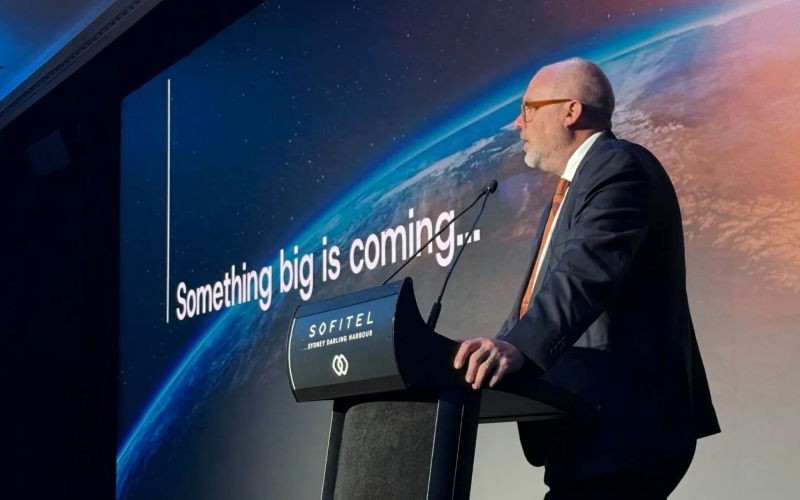
A new not-for-profit space organisation has launched at the International Astronautical Congress in Sydney. The Australasian Space Innovation Institute (ASII) aims to speed up the use of industry research, strengthen Australia’s own space capability, and deliver tangible benefits across the economy.
The launch comes as the federal government maintains its target of tripling the size of Australia’s space sector by 2030.
“There are 10,000 people now employed in the space sector in Australia, startups scaling up, $1.1 billion in turnover,” Industry and Science Minister, Tim Ayres, said at the ASII launch event this week.
“This is no small thing. The Australian space sector is of no small significance in strategic terms, in industrial terms, in science and research terms, in national interest terms.”
According to ASII, the sector remains under pressure to reduce its dependence on foreign satellites and data, with billions in global opportunities at stake.
Interim chief executive professor Andy Koronios said the country’s vulnerabilities are most visible in earth observation and satellite communications.
“Currently, millions of dollars are being diverted offshore instead of supporting the local space industry,” Koronios told SmartCompany.
“The Federal Government spends $100 million annually on purchasing earth observation (EO) data from third-party providers like multinationals and foreign governments, where local partners have no share or intellectual contribution.
“This heavy dependence on external sources exposes Australia to poor quality EO data and the risk of losing access entirely.”
He added that uplink and downlink services, as well as secure satellite communications, are “often foreign-controlled, exposing us to scarcity and pricing risks”.
ASII says its role will be to bridge defence, civil agencies, academia, and industry to co-design flagship sovereign missions in positioning, navigation and timing, earth observation, and communications.
“By pooling our nation’s access to prototyping, integration and test facilities, the ASII strives to lower the barriers for Australian companies to build, qualify and launch subsystems locally instead of overseas,” Koronios said.
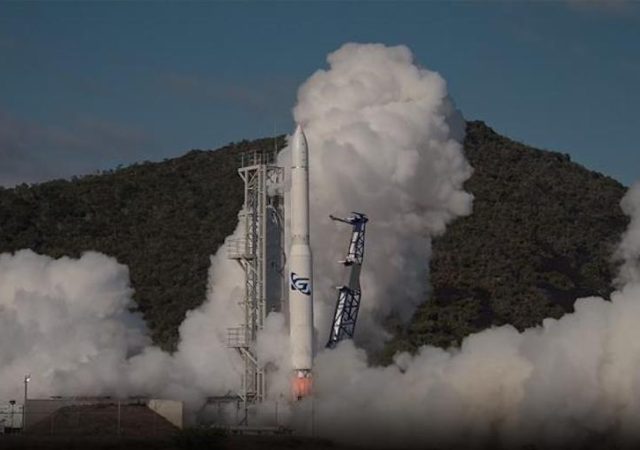
While startups such as Gilmour Space have been working to build sovereign launch capacity, ASII argues broader gaps remain in data access and infrastructure resilience.
Ayres also pointed to ASII’s roots in earlier government-backed programs, saying its launch represents a continuation.
“It is good to see an organisation emerge from our CRC funding rounds with all of the support that is provided by government but also from industry partners… and continue to play what I’m confident will be a powerful role in promoting the Australian space industry and innovation. I really do look forward to working with the new organisation.”
One example is the Takahē Project, a proposed sovereign satellite system for maritime domain awareness that has already completed a mission concept for Australia and New Zealand.
ASII says the project could enhance responses to illegal fishing, natural disasters and security risks across the Indo-Pacific.
Doreign satellite dependence scrutinised
Beyond sovereignty concerns, Koronios pointed to the “missing middle” – a structural weakness that ASII says has long hampered Australian commercialisation.
“A developing ecosystem and limited domestic demand are two key barriers to growth,” he said, citing Industry Innovation and Science Australia’s finding that the local market is perceived as “subscale reward relative to the risk profile”.
“In the US, for example, early government contracts were vital for the success of commercial players such as SpaceX and Planet,” Koronios said.
“Australia needs a model equivalent to the US for our innovation system to develop, in which the government has the ability to act as an anchor customer, which is an area we aspire to influence.”
According to Koronios, ASII is aiming to bridge the so-called mid-TRL gap where many innovations stall. It wants to act as a pipeline into the federal government’s National Reconstruction Fund (NRF) by curating and de-risking projects “ready for NRF funding by pulling together research, SMEs and primes into cohesive teams”.
The institute is also being pitched as a neutral connector in a crowded sector, raising questions about how it will balance independence with influence.
“The ASII doesn’t compete with its partners, but empowers them,” Koronios said.
“[It] will act as a neutral bridge between government agencies, private companies and academic and research institutions to strengthen the ecosystem as a whole.”
ASII will be governed by an independent, skills-based board, with flagship programs “co-designed with end-users at the table”. Examples of these end-users include farmers, emergency responders and defence.
“End-user needs drive our priorities, with researchers and industry then building those solutions,” Koronios said.
He also stressed the institute’s remit is designed to complement, not duplicate, existing national initiatives. The Australian Space Agency will continue to oversee policy and regulation, while ASII focuses on prototyping, translation and delivery.
Transparency, dual-use tech and future standards
For Australia’s space sector to grow credibility with government, industry and the public, clear accountability will be crucial. ASII says it intends to build that into its foundations.
“We will track and report on the growth of sovereign capability, the number of industry partnerships and startups we support, the talent we train, and the technologies that move from research to deployment,” Koronios said.
“Yes, we will publish regular performance metrics, because accountability builds trust.”
On the sensitive issue of dual-use technology, Koronios said “dual-use doesn’t mean military-first”.
Projects like Takahē, he said, are “about protecting lives, livelihoods and our environment, as much as it is about security”.
And while ASII will not act as a regulator, Koronios said it will provide an evidence base and technical expertise for government and industry as they grapple with new standards.
“As new technologies like AI in space emerge, the rules of the game matter,” he said.
“Our role is to ensure government and industry have the best research, foresight and practical insights to set safe, fair and future-proof standards.”
Koronios said ASII’s long-term effects will also depend on how it funds and governs itself, with its not-for-profit status central to its mission.
He emphasised “every dollar will go back into creating solutions for Australia and our wider region”.
The institute will draw on a mix of government support, industry partnerships and philanthropic contributions.
“Our motivation is the public good and the national interest. We do not have any pressures of delivering dividends to shareholders,” he said.
- This story first appeared on SmartCompany. You can read the original here.







Daily startup news and insights, delivered to your inbox.