

















This is part two of Christie Jenkins’ 5-part series on bravery. It is inspired by her chat with Crista Samaras, the founder of Brave Enterprises.
We want to be fearless. We want to feel confident. Instead, what we should seek is more bravery. Courage comes before confidence, and is the greater virtue.
“You’re so brave,” we say to a little boy climbing to the top of the jungle gym.
“You’re really courageous,” we say to the little girl who falls off the beam in gymnastics class, and gets up to try again.
Yet when was the last time you said this to an adult? When was the last time you thought this about yourself?
Over the past decade, Crista Samaras of Brave Enterprises has run over 500 bravery workshops with more than 10,000 participants. One thing she shared with me, which has really stuck is:
“Most people don’t know what bravery means. And they don’t know what they’d do with more of it. But if you ask people, ‘What would you do with more confidence?’ – they can answer right away.”
Somewhere in the transition to adulthood, we stopped using the word bravery. We stopped seeking courage.
And we started asking for confidence instead.
But they’re not the same.
And if you’re going to go after one – let it be bravery.
Courage beats confidence. Every time.
Bravery part 2
This is part two in my five-part bravery series:
- World-first research on bravery. 7 findings that will overturn your beliefs
- Bravery > confidence: Don’t fear less, brave more (this blog)
- Bravery is not a feeling, it’s a skill. 5 techniques to master it
- The only 3 questions you need to make brave choices
- Why I refuse to talk about impostor syndrome (and you should too)
Competence, confidence and courage. What’s the difference?
Before I delve into it, we need to take a moment to think about these definitions:
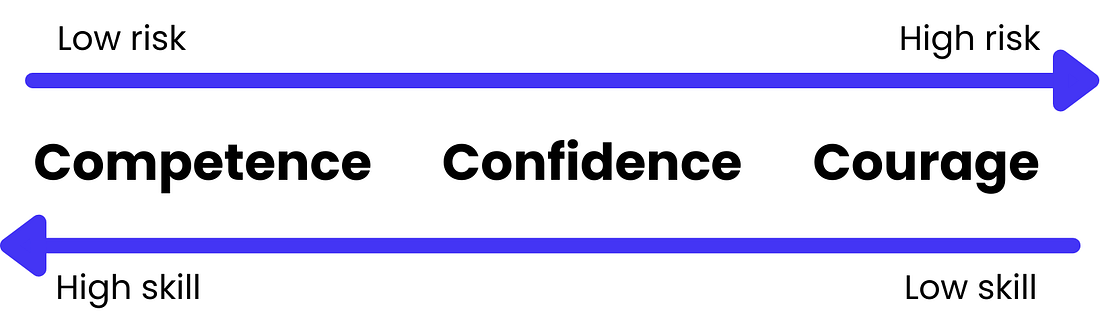
Competence is your comfort zone – “I’ve done it before, I can do it again.”
Confidence is your belief zone – “I’ve done some similar things, I’m pretty certain I can do this too.”
Courage is your fear zone – “I’m giving it a shot, but this could go terribly wrong.”
“We define confidence as belief in your skill, or ability, or capacity, or competency.” ~ Crista
“No one ever tells you that bravery feels like fear.” ~ Mary Kate Teske
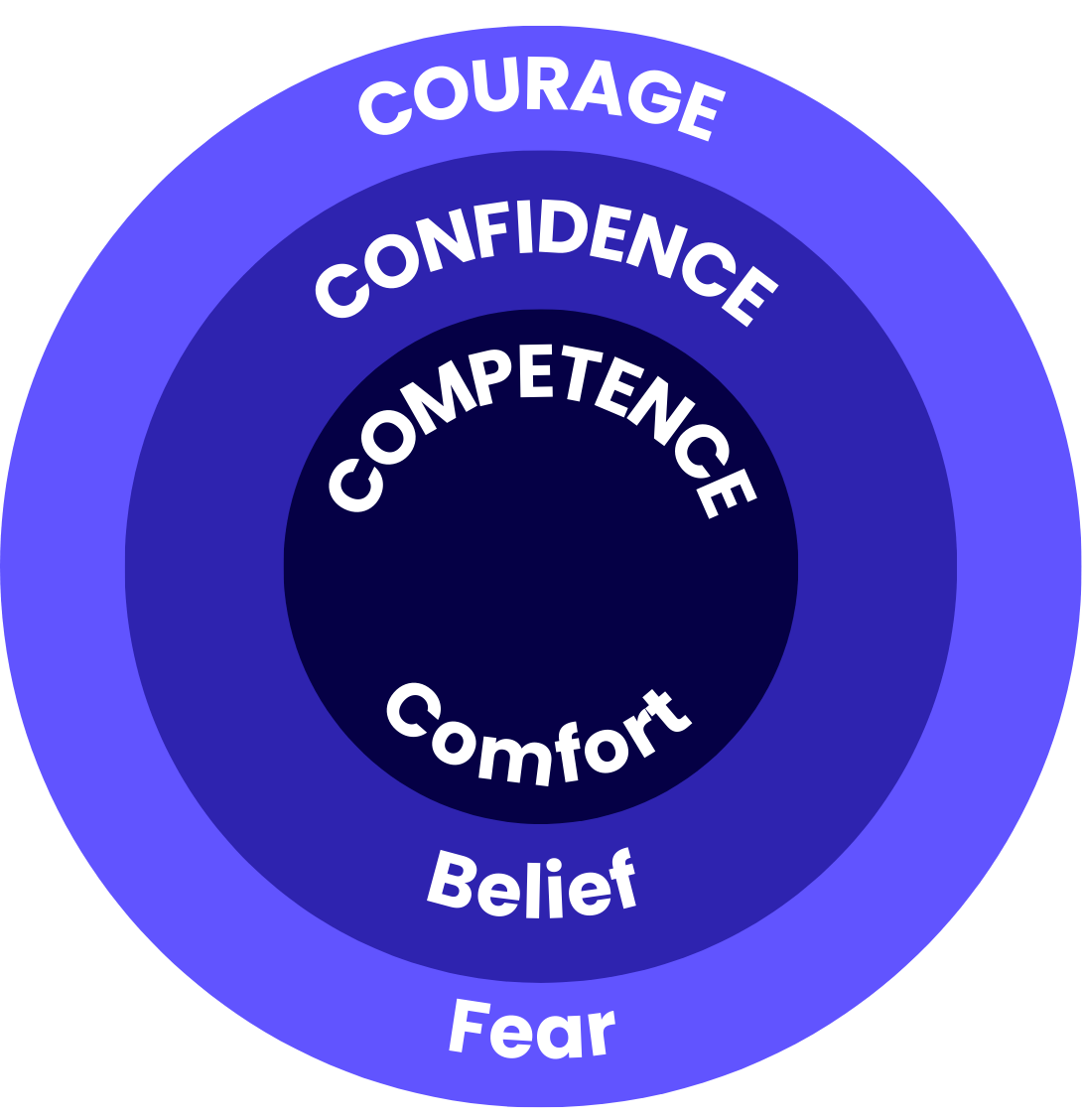
Risk and skill determine which zone you are in
“You’ve got this,” my coach said.
I was standing on the trampoline, ready to try a triple somersault for the very first time. He was holding the mat, ready to throw it under me in case the landing went wrong.
“Maybe we should do some more drills first …” I said. I was sweating. Scared of what might happen.
“You’re ready,” he said. “Be brave.”
I started jumping.
The fear I felt was because of the risk. If a triple somersault goes wrong, when you are 10 meters in the air … well, I knew the consequences. Injury, quadreplegia …
It takes courage to feel that fear, know the risk, and go for the trick anyway.

When I was 25, I got contacted by one of the largest companies in the world enquiring about speaking. They had read a blog post I’d written, and were looking for someone to speak to their board and the top 100 members of their executive team.
At that stage I’d done less than five paid speaking gigs, and I had just three years of work experience.
Back then I had no clue how to pitch for that opportunity, how to price it, or enough skill to deliver a world-class presentation for leaders at that level. The fear I felt was because of my skill.
I was terrified, but I got on the call, and did my best to pitch for the speaking gig (obviously I didn’t get it).
It takes courage to feel that fear, know your skills are probably inadequate, and go for the meeting anyway.
Today, after doing hundreds of speaking engagements globally, I have the skill, and thus no longer need courage.
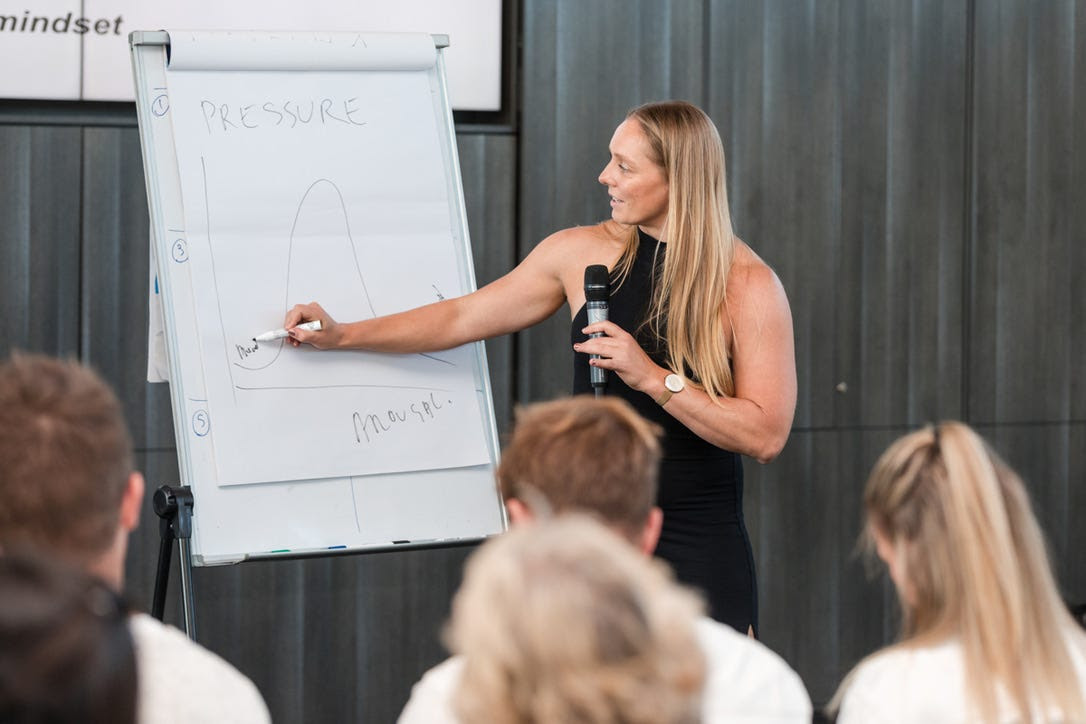
Whether something falls into your zone of competence, confidence or courage depends on two factors: risk and skill.
High risk, requires more courage.
Low skill, requires more courage.
Fear isn’t fun, but it is normal
Before we get back to bravery, a few insights on the prerequisite to being brave: Fear.
Remember, bravery = fear + taking action.
You can not be brave if you aren’t scared.
1. Fear is one of our core emotions
All humans share a universal set of basic emotions according to discrete emotion theory. Paul Ekman categorised these as anger, disgust, happiness, sadness, surprise and fear. Basically, you’re born with these core emotions and thus there’s no escaping the experience of fear.
‘The core of fear is the possibility of pain, physical or psychological.’ ~ Paul Ekman
‘At the root of most fear is what other people will think of us. It’s paralyzing. It’s skewing. It distorts the very fabric of our reality – makes us behave in such utterly insane and cowardly ways.’ ~ Ryan Holiday
2. Fear is not just in your head
We used to think fear was just an emotion, originating purely in your brain’s limbic system. That’s been definitively proven wrong. Fear is recognised in the mind, and felt in the body. Either of them can trigger fear, and either of them can be used to manage fear.
Imagine a huge, hairy spider crawling up your arm towards your face. Or the sound of a bullet cracking past your ear making you flinch. You have an instinctive, immediate fear response. Your body is driving your fear.
Imagine that you have to fire someone. Will they scream at you? Break down and cry? Smear your reputation in revenge? You worry about how they will react. Your thoughts are driving your fear.
Fear is both physiological and psychological, and can begin with either one. And it can be managed with either one too – a deep breath slows down your racing thoughts, remembering a happy memory can slow your racing heart.
‘As soon as you recognize fear, your amygdala (small organ in the middle of your brain) goes to work. It alerts your nervous system, which sets your body’s fear response into motion. Stress hormones like cortisol and adrenaline are released. Your blood pressure and heart rate increase. You start breathing faster. Even your blood flow changes — blood actually flows away from your heart and into your limbs, making it easier for you to start throwing punches, or run for your life. As some parts of your brain are revving up, others are shutting down. When the amygdala senses fear, the cerebral cortex (area of the brain that harnesses reasoning and judgment) becomes impaired — so now it’s difficult to make good decisions or think clearly.’ ~ The Dot Canada blog post
3. How you experience fear is genetic
Like most things – your genes matter (but they aren’t everything). How you typically respond to fear has been shown to have a genetic basis. Your genetics influence:
- The degree to which you feel fear and anxiety
- Your natural coping strategy – fight, flight or freeze
The good news is you might have a predisposition, but you can train how you respond to fear. In the military, they teach you to run towards danger. In sport, athletes tell themselves they are ‘excited’ not ‘scared’, even as they are sweating with anxiety. Hostage negotiators train themselves to act even more calmly when fear spikes.
‘Genes are the architects of our bodies, but we are the builders of our lives.’ ~ Siddhartha Mukherjee
4. The Affect heuristic means you are judging risk wrong
Logically, we should determine how risky something is and from there feel the appropriate level of fear. But often we do the reverse. We infer how risky something in the real world is by how we feel. Starting a business feels terrifying, even though the real level of risk is very manageable.
This is a cognitive bias that affects all of us – but knowing you have this bias helps you mitigate it.
‘Of all the liars in the world, sometimes the worst are our own fears.’ ~ Rudyard Kipling
5. Fear and anxiety are related, but differ by specificity
Fear is focused on a known and imminent danger – like what other people will think of you, getting injured, or disappointing your parents. Anxiety is a generalised response to an unknown threat. It’s worrying about possible danger or negative outcomes, without knowing exactly what that threat might be.
‘We are more often frightened than hurt, and we suffer more from imagination than from reality.’ ~ Seneca
The TLDR on fear: It’s not fun, but it is normal.
And we’re all in it together.
Bravery is an undervalued virtue
Most of us would choose to be fearless, rather than brave.
We’d rather have confidence, than courage.
Because bravery requires fear.
And we don’t like feeling fear. And we really don’t like admitting we feel fear.
Historically, that was not the case. Bravery was admired. Courage was a virtue.
“Bravery is half the victory.” ~ Norse Proverb
“Cowards die many times before their deaths; the valiant never taste of death but once.” ~ Shakespeare
At some recent point in time, fear became a shameful feeling to admit to.
- We began to admire fearlessness, above those who take action whilst feeling fear.
- We glorify achievements, arguing they are diminished if the person feels even a flicker of fear.
- We celebrate when our idols make hard things look easy, and see their achievements as ‘less than’ if they admit they were difficult
- We give accolades to heroes, and as we honour their acts we ignore that they must have felt doubt, uncertainty and fear.
What happened? When did we stop admiring bravery?
We should give MORE admiration the MORE fear someone feels.
Courage > confidence.
“Courage is the first of human qualities because it is the quality which guarantees the others.” ~ Aristotle
Don’t fear less, brave more
Let’s go back to the circle earlier in this post. You should seek courage over confidence because:
1. Courage comes first:
Bravery takes you into new territory, and if you succeed out there, you build confidence. You can’t be confident speaking on stage regularly, until you have courage to tackle it the first time.
“The only way to develop true confidence is to earn it. The confidence that you can bounce back from failure is earned by working through previous failures. The confidence that you can deliver the speech is earned by the previous speeches you have given. The confidence that you can perform on game day is earned by the previous performances in practice.
In the beginning, you need enough courage to practice even though it may not go very well. And over time, as your skills improve, courage transforms into confidence. Courage first, confidence later.” ~ James Clear
2. Courage goes further:
Courage is simply going even further than you can go with confidence alone. You might have the confidence to have a quiet word to a colleague about a misogynistic remark they passed off as a joke. Do you have the courage to call them out in the moment, in front of your peers?
‘You can choose courage, or you can choose comfort, but you cannot choose both.’ ~ Brene Brown
3. Courage requires more:
More character. More will. More conviction. We become the people we aspire to be by doing the hardest things. Don’t settle for confidence.
‘Don’t fear less, brave more.’ ~ Crista Samaras
Bravery requires fear.
Courage > confidence.
Don’t fear less.
Brave more.
- Christie Jenkins is the managing director of Techstars Sydney. This is the 2nd in a series of 5 essays on bravery. Read more at christiejenkins.com.au



Daily startup news and insights, delivered to your inbox.