


















Hello, welcome to this week’s (spooky) edition of Infinite Lives.
Each quarter, I ask writers across the platform to contribute to a piece around an idea or theme in gaming. With Halloween here, this article examine the evil figures and forces that define videogames. got a whopping 14 intriguing submissions this time around.
My take? It’s at the bottom! These pieces exist to showcase other writers.
Happy Halloween.
I’m no villain, but I’m not above iterating on a great idea.
Especially if it’s based on one of the best panels I’ve seen in a decade of attending the PAX Australia expo. The concept: a group of creators, journalists and broadcasters hosting a mock trial of gaming’s greatest villains.
Each panellist would take a turn pleading the villains’ case to creator and illustrator turned “judge” Ruby Innes. Then a slide would come up detailing their—often horrific—crimes. The event was the idea of former GamesHub editor Steph Panecasio. To summarise the court’s rulings: They basically got away with it if they were hot? Or had daddy issues? Possibly both? It was all a bit of fun, and a great way to cap off the first day at PAX 2024.
Given it’s Halloween, I’m running a bit of a variation of a theme here today. I’ve asked writers to delve into gaming’s greatest villains. We’re giving away some devious plots here. So keep in mind that there may be game spoilers in the copy below. They are marked where appropriate.
There’s a lot of great, and really diverse, names in the mix below. Plenty that I did not expect to see. Here’s what Substack’s writing community had to say:
The Nemesis System, The Shadow of Mordor
 |
By InGameScientist, Just One More Turn
Sometimes the greatest villain in a game is the one unique to you. The Nemesis system in the Shadow of Mordor, War games lets you do just that — every play through brings new enemies with randomly generated names and looks that will taunt you for falling victim to their weapons of choice.
You don’t always have to defeat them either — you can turn some of these villains to your cause, adding more depth to this relationship. But the feeling of finally besting that pesky rival is satisfaction at its peak. And the best part is, you’ll want to search for your next personal villain, just so you can have the satisfaction of defeating them in battle.
Khotun Khan, Ghost of Tsushima
 |
By Jack Dunn, Double Jump
When the Mongols storm the beaches in Ghost of Tsushima, it’s the beginning of the end of Jin Sakai as we know him. Khotun Khan, their leader, breaks down the society and social order of the samurai by ravaging villages, killing leaders with unsanctioned methods, and forcing the entire island to bend the knee. He is worth every ounce of cinematic buildup: Khotun is a bear of a man, clad in fur-lined armour but just as quick with a spear. He thinks nothing of the people of Tsushima, just another domino to fall in the conquest of the Khans.
But even more than physical damage, Khotun breaks Jin’s family, breaks his sense of security, and breaks him when he throws him off a bridge to his death. It forces Jin to confront the shortcomings of the samurai and destroy his own relationships and build new ones—all to come within striking distance of Khotun.
Inadvertently, Khotun transforms Jin into the Ghost. Was it worth it? Only the player can be the judge of that.
“Do you wanna know how I was prepared for today? I learned. I know your language. Your traditions. Your beliefs. Which village to tame and which to burn.”
The System as the Villain, Black the Fall
 |
By ROP, ROP’s Passions
What’s remarkable about Black the Fall is that it has no singular villain. There’s no monster to slay, no tyrant to face in a final boss battle. The antagonist is the world itself—the system. The machinery, the endless walls, the cameras that survey and the sirens that call mind-washed brutes to punish. All serve as a living entity built to suppress you, to make all comply with the system’s needs and wants.
It’s an invisible enemy, yet omnipresent in a suffocating atmosphere. A reminder of how oppression doesn’t always wear a face. Instead, it seeps into decaying architecture, into a cog-like routine and into the collective fear of standing out. In that way, Black the Fall succeeds not just as a dystopian game, but as a mirror… showing how systems, not people, can become the monsters of history.
Xehanort, Kingdom Hearts
 |
By Mike Liberale, Progress Not Perfection
Xehanort is a complicated guy. He’s technically first introduced in the original Kingdom Hearts game as Ansem, who we later find out is actually Xehanort’s Heartless form. His other half is his Nobody form, Xemnas, who we eventually find out is actually the possessed body of Terra.
Confused? I don’t blame you.
Xehanort’s a bit like Voldemort. He just keeps coming back. Like Horcruxes, Xehanort creates multiple forms/vessels of himself to achieve his dark goals.
Despite the confusing lore of Kingdom Hearts, I love the Xehanort Saga. Eventually, we learn that he originates from the same island as series protagonist Sora, and had similar dreams to see other worlds.
Xehanort is manipulative and cunning. The original trailer for KH3 showed a young Xehanort playing a chess-like game. And that’s exactly how I see his role in the series: a chess master, always thinking several moves ahead of his opponents.
Badeline, Celeste
 |
By Hugo Acosta, Visualytics
Badeline is the antagonist to Madeline in the indie gem Celeste. She embodies the sarcastic, angry, and fearful side of Madeline in her journey through the Celeste Mountain, in short, a classic evil version of our hero. What makes Badeline a compelling and interesting villain is how the game reframes this inner conflict: towards the end, she isn’t something to defeat, but to understand.
Through their struggle and eventual reconciliation, Madeline learns that strength doesn’t come from suppressing our negative feelings, but from embracing the parts of ourselves we find hardest to face and making them our own. In that moment of clarity, Madeline becomes more powerful, not because she destroyed her evil doppelganger, but because she finally made peace with it and claimed Badeline’s strengths as her own.
Goro Majima, Yakuza / Like A Dragon
 |
By OldScotland, OldScotland
Goro Majima isn’t evil — he’s what happens when loyalty collides with corruption.
In Yakuza 0, he begins as a man bound by duty and honour, running a nightclub with quiet dignity after being exiled from the Tojo Clan. What transforms him isn’t malice, but betrayal. Forced to commit brutal acts to regain his place, he becomes the “Mad Dog of Shimano”; a mask built from pain and performance. Beneath the eye patch and the grin lies a tragic truth: Majima’s villainy is the price he pays to exist in a system that rewards cruelty and punishes mercy.
Yet for all the tragedy, he’s wildly entertaining to play; unpredictable, stylish, and unhinged in the best way. Yakuza 0 gives us the full picture of how the legend began, setting up the larger-than-life character who would define the series for years to come.
Gaunter O’Dimm, The Witcher 3
 |
By Katya Ryabova, Playing This Week
The most insidious one of all is the evil that pretends to be friendly. When you meet Gaunter O’Dimm in The Witcher 3: The Wild Hunt, you think nothing of him. I bet you don’t even remember that it happens in White Orchard, not in the DLC Hearts of Stone. (Go ahead, start a new save if you don’t believe me.) He passes unnoticed, unseen, until he wants to be—and then, dear player, beware.
Maybe you buy into his bargain or just decide to play along. As you quest at his behest, when you’re already in too deep, you realize that you’re dealing with something truly frightening. The acronym of his name could give you a clue as to who he is. Will you ever know? Keep your wits and your blades sharp if you hope to live to find out.
Luca Blight, Suikoden II
*** Spoilers ahead ***
 |
By murderous_chalices, Mechanized Narrative
Suikoden II examines the tragedy of war, but Luca Blight embraces its horror and savagery with glee. He stalks the game like a slasher villain, his bloodlust growing until he sees others only as squealing pigs for the slaughter.
Beyond his menacing presence, Blight is a standout villain because he reveals the hypocrisy of his allies. Many of Suikoden II’s other characters hide behind false nobility and talk of a greater good. Blight’s brutality exposes these as nothing more than comforting lies.
His death midway through the game is an incredible set piece: an elaborate ambush with a multi-stage boss battle requiring three different player parties. In his death throes — stumbling through a burning forest, bleeding from a dozen wounds, yet still calling us pigs and hungering for more death — Luca Blight shows us that war will always be a matter of blood and steel.
JP, Street Fighter
 |
By William F. Edwards, The Warthog Report
While Street Fighter’s signature villains M. Bison and Akuma firmly exist within the genre they helped define, JP is a subversive newcomer to Street Fighter’s roster of villains who became my favorite. Rather than world domination or proving his strength, JP hosts a tournament to launder money at the expense of a third world country.
In a series where hero and villain alike seek to grow stronger, JP has no interest in self improvement, running counter to the ethos of the entire series. When the player defeats him in direct combat he simply doesn’t care. JP made his money from the tournament, sold the audience a good story, and got out alive, indulging in a bit of sadism along the way. He’s the most dangerous villain a fighting game could have, someone who can’t be defeated through fighting.
“This I impart unto you: Strength… is meaningless. You must be disappointed.”
Kessler, inFAMOUS
*** Spoilers ahead ***
 |
By Cat, Cat’s Controller Corner
The best villains have goals that we can relate to. Kessler, from inFAMOUS, is one of those villains. His goal is revealed in the last few minutes of the game when we find out that it was to make Cole, the main character, into the best version of himself so that he could save the world from The Beast. See, Kessler is Cole from the future that came back in time after The Beast of his timeline ruined the world and killed his wife, Trish.
Kessler went back in time to save the future. One of his methods is to remove all attachments from our Cole, including killing our Trish. Kesslers methods might be horrible but his purpose is pure. And as we see in the sequel, he was the key to saving the world. Kessler is one of the best villains in videogames because he is only a villain out of necessity. He just wanted to save people, no matter the cost.
Dr Robotnik, Sonic The Hedgehog
 |
By Peter Monks, Late to the LAN Party
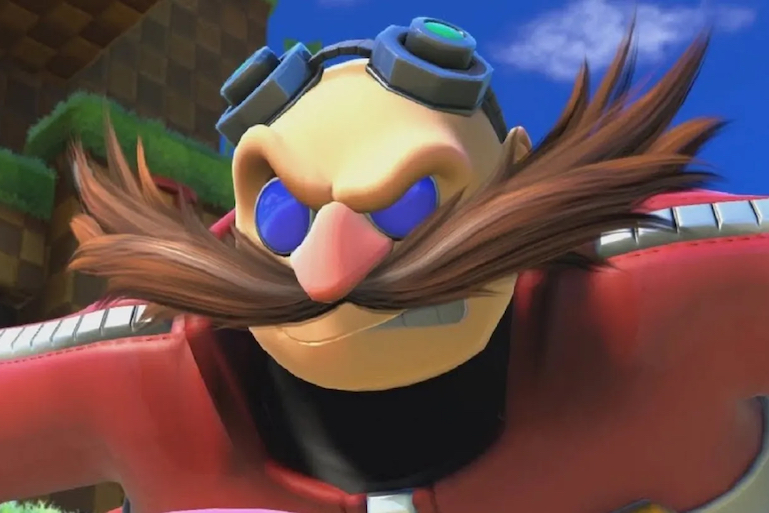
Dr Robotnik may appear to be a cartoonish buffoon and intellectual property thief (Death Egg, anyone?), riding around in his little floating contraptions ineffectually trying to bash his nemesis, Sonic, to smithereens. However, he represents humanity’s constant self-destruction of the environment we call our home. Someone with high intellect yet a complete lack of morals or ethics becomes a dangerous mix. Couple that with a burning desire to become master of all he surveys, and the means to achieve that in any way he chooses, and you’ve got a classic villain worth hating.
Robotnik will merrily entrap innocent animals and turn them into mechanical slaves, burn down forests, mine the ground he stands on, destroy history by building upon ancient ruins, and industrialise and pollute the natural world – and think nothing of it. Is he malevolently evil? Probably not. Is he detestable though? Absolutely.
Sand Pest, Pathologic
 |
By Jim Mander, I Play Games So You Don’t Have To
A killer stalks the streets of Pathologic. But it’s no monster or murderer. The enemy haunting this town is the most insidious and terrifying villain in videogame history – a transmissible disease known by many names, including my favorite, the Sand Pest.
After the outbreak, players are trapped in a city gripped by death itself. Quarantines, looting, purges, clouds of infectious dust, plague-ridden husks shuffling through ashen streets. What little is actually known mixes with suspicions and superstitions, and the Pest assumes as many forms as there are enmities between people. Did the plague blow in from the steppe, summoned by a pagan changeling or borne from the earth itself? Is it a curse on the ambitious, suffering heaped on the poor, or a literary device in a Russian play? The true horror of the Sand Pest is not the disease, but what it liberates people to do to each other.
Ridley, Metroid series
 |
By The Pneumanaut, The Pneumanaut
At 12, I borrowed a copy of Metroid: Fusion from a friend. I didn’t know it at the time, but I was bound to cross paths with that frozen space dragon I’d found deep in the bowels of the doomed BSL station many more times in the future. It’s not just Ridley’s cool design or his difficult boss encounters that make me love him. It’s how personal the conflict with him feels.
I’ve played nearly every Metroid game, and I always look forward to re-engaging with my old enemy. He gives true meaning to the idea of an archnemesis. In the lore, he murdered Samus’ parents and razed her homeworld. Also, the fact that he keeps coming back, again and again—as a clone, a cyborg—shows the hatred he has for her. Their grudge match is enough to bring him back from the grave. That’s the determination of a true villain.
Ravenholm, Half Life 2
 |
By Sam Shedden, The Melbourne Snap
Ravenholm isn’t a villain in the traditional sense. It’s not a maniacal, scheming character. It’s a place, a rusting mining town turned nightmare, but it embodies evil as effectively as any single antagonist. Once a quiet community, it was overrun when Half-Life 2’s inter dimensional invaders, the Combine, rudely dropped headcrab shells that turned its people into screeching, shambling husks.
What makes Ravenholm terrifying isn’t gore or combat but the jarring shift in tone. One moment you’re joking with Alyx and playing fetch with Dog, the next you’re alone, low on ammunition, surrounded by silence. The air feels thick. Bodies hang on spikes, and severed limbs litter the streets. But it’s the sound that truly unsettles. The zombies don’t roar, they scream muffled, reversed cries of human agony beneath the parasites controlling them. Ravenholm reminds you how inhuman the Combine really are. As the game warns, “We don’t go to Ravenholm.”
The High Prophets, Halo
**Spoilers ahead***
 |
By The Game Enjoyer, The Game Enjoyer
The High Prophets in Halo’s original trilogy all have somewhat ironic names; Regret pushes towards Earth with his own forces, and as a result he is killed unceremoniously without achieving any goals; Mercy begs for his life, to be assisted as he is being killed, and he is ignored; Truth lies and keeps secrets.
Throughout the story of Halo 2, we see the Prophet of Truth’s megalomaniacal takeover of the Covenant’s leadership, and his use of deception to further his own goals. He learns of the Forerunners’ true inheritors, but chooses to declare them heretics to continue his holy war. After learning of the true purpose of the Halo array, he chooses to hide the truth, so that he can use them to wipe his enemies out in the galaxy. At the climax of his story, he declares himself to be “the Voice of the Covenant”: a fitting statement for an alliance built on lies.
The Reapers, Mass Effect
 |
By Harrison Polites, Infinite Lives
Is there ever a more sinister villain than a routine galactic spring cleaner? The Reapers, the big bad of the Mass Effect series, were born out of an attempt to maintain order in the galaxy, which they believe is typically destabilised by the creation of inorganic life (or sentient robots).
Existing in the deepest reaches of space, they wait until a civilization hits their preordained tipping point, then swoop in to wipe the slate clean, leaving behind any up-and-coming species. In their eyes, they are preventing an inevitable disaster. But to those species on the receiving end, they are an apocalypse like no other. The rub: The Reapers actually help each civilization get to that breaking point, leaving behind key technology that speeds up their development. Each ‘clean’ is just another run of their grand experiment.
What makes The Reapers particularly insidious are their methods. They don’t just destroy, they ‘repurpose’ conquered civilisations. First through mind control, then using their advanced technology to create cybernetic hybrids to fight their wars. They are tactical, devious, and experienced at getting the job done. A five star service; too bad there’s nobody left to leave them a review.
- Harrison Polites writes the Infinite Lives newsletter. Follow him here.
Sign up for his newsletter below:
- Infinite Lives is a reader-supported publication. It’s free to sign up and read the latest piece, but as of July a subscription will be required to read Harrison’s backlog of over 70 unique articles. Each subscription goes towards improving his Substack, supporting the broader Substack gaming community and funding more independent games journalism in Australia.







Daily startup news and insights, delivered to your inbox.