
















Ahead of the TechStars Sydney ‘Demo the Future’ evening, tonight, December 8, Startup Daily is profiling the 12 startups and their founders in the 2025 cohort.
Our next profile is MuseAI – empowering music creators and harnessing human artistry.
MuseAI
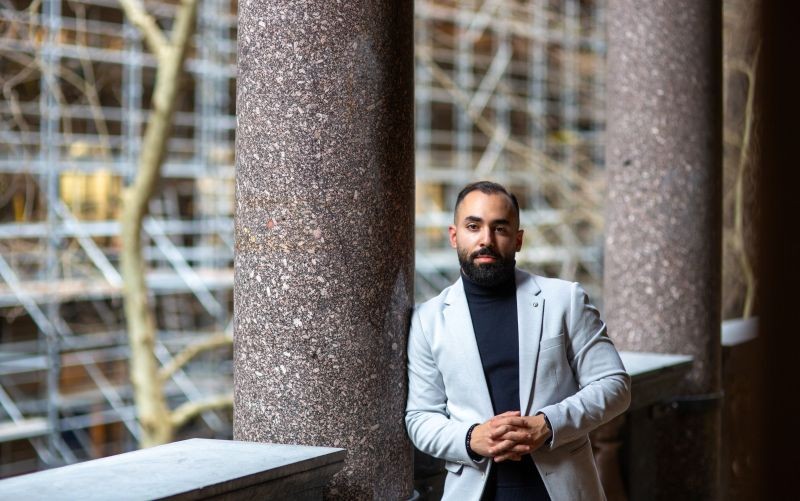
Founder: Jad Al Masri
One-liner: MuseAI is the AI-musepowered workspace empowering music creators to capture, organise, ideate, and collaborate on their musical ideas. Built by music creators. For music creators.
What’s the future of music?
In an age where AI can ‘make’ songs, what is it that makes a music creator? It’s a question which Jad, the founder of MuseAI, can easily answer with one word: “Authenticity.”
“The artist’s story, journey, identity, world, craftsmanship … these all go into the creation of a piece of music,” he said.
“Those things matter to the audience. And they matter to artists.”
As a concert violinist, composer, and producer who has performed on stages across the world, across 12 plus genres, he would know.
But Jad is also a lawyer, with a background in IP and copyright. As such, he can see clearly how much AI and copyright are colliding – indeed millions of artists have had their music used without permission and without payment – to train AI models.
“Musicians shouldn’t be afraid of using AI, but they should not be used by AI,” Jad said, going on to explain how musicians can now write and create using AI, but it still needs their talent and direction.
“If you look at how a song is created, AI is a tool that can help artists better manage their creative process, mix original ideas together in new ways, and help them collaborate with other artists. But take the human out, and you lose the authenticity,” he said.
“To make music, and to hear music, is one of the first ways humans ever connected. The future of music will remain human.”
What’s the problem and why does it matter?
To answer this question, Jad pulls out his phone and his violin.
“I come up with ideas all the time,” he said.
“A snatch of a melody, a few words of lyrics, an interesting bridge. Most of the time I grab my violin (or my voice), open the voice memos app on my phone and record it.”
Then he shows us his phone. There are 3,421 voice memos. Almost none of them are labelled.
“It’s an organisational disaster, and thousands of creative sparks are being forgotten, unfinished, or lost forever,” he said.
“That’s what I set out to solve with Muse AI.”
The global recorded music industry is valued at approximately $30 billion, but as Jad points out, “the unreleased idea economy is 100 times larger by volume.”
“These aren’t just lost files, they’re lost potential songs, lost potential albums, lost potential careers,” ,” he said.
“We’re not just solving a storage problem; we’re unlocking the creative and economic potential of the 99% of music the world never hears.”
What is the product?
MuseAI is the place where music creators can record ideas, import demos, write lyrics, share with others, export to social, and collaborate with other artists.
“While music production software exists, music ideation products don’t,” Jad said.
“First, most artists are using 16 plus tools to stitch the process together, from voice memos, to notes, to files apps, to WhatsApp, and more. Second, music production software is too heavy for quick ideation, and tools like voice memos are too light for more than just capturing ideas. MuseAI addresses this by bringing these realms together in one unified workspace.”
That’s the start.
“Then we layer on AI – as a tool for creators, not to replace creators,” he explains.
“AI will help organise your ideas for you, suggest feedback on them, help you rediscover them, find patterns in your style, power natural language search (like ‘find me that slow violin idea I recorded late at night’). And to unlock the potential of ideas, we enable what we call ‘ideation’ which includes stem splitting, remixing, and more we can’t reveal just yet.”
While Jad is an artist himself, the product has been developed in partnership with other real musicians – from emerging artists like Lihini Rose, to household-name producer Timbaland. Music executives from Spotify, Universal Music, and Abbey Road have also been involved.
Why did Techstars invest?
“One of the traits we look for in founders is that they’ve done very hard things in their life. For instance, elite sport, the special forces, making it to the top of your craft … these are all indicators that a founder has the commitment, ambition, work ethic and resilience to succeed in other hard things,” says Techstars Sydney Managing Director Christie Jenkins.
“And we all know startups are tremendously hard.”
“Jad has this unique combination of skills. He’s a world-class musician, and he’s a lawyer. When you think about who is uniquely qualified to solve this problem, it’s hard to imagine a better combination of skills.”
What’s the most important lesson Techstars taught you?
Jad feels it’s impossible to pick only one, so these are his shortlist:
- “The intensity of the accelerator taught me the importance of prioritising focus.”
- “Discerningly know what you excel at and what you don’t (and seeking help for the latter).”
- “Assemble a rockstar team.”
- “Building in public, and maintaining momentum.”
- “Underpinning all of this is the importance of checking-in with your peers and colleagues to bounce ideas and solve problems together instead of alone.”
What is the long term ambition for MuseAI?
Jad says his vision with MuseAI is to “unlock the potential of musical ideas”.
“Today, this looks like equipping music creators with the tools to capture, organise, ideate, and collaborate on their ideas. Our collaboration and ‘ideation’ features involve some of the most original tech the music industry has seen in a while.”
Looking to the future, Jad hopes to share musical creation with those who admire it the most – fans.
“Long term, we will be deepening the relationship between music creators and their fans through enabling fan access to artist processes, behind-the-scenes, and unreleased variations,” he said.
“Ultimately, we’re not just building an app – we’re building a new way of relating to musical ideas, the music process, and human artistry.”
- See MuseAI and the Techstars startups in action at Demo the Future, Monday, December 8, 5-8pm. Details here.
- Read about the other Techstars Sydney startups here.





Daily startup news and insights, delivered to your inbox.