
















The arc of a tech company’s success is often sprinkled with near death experiences.
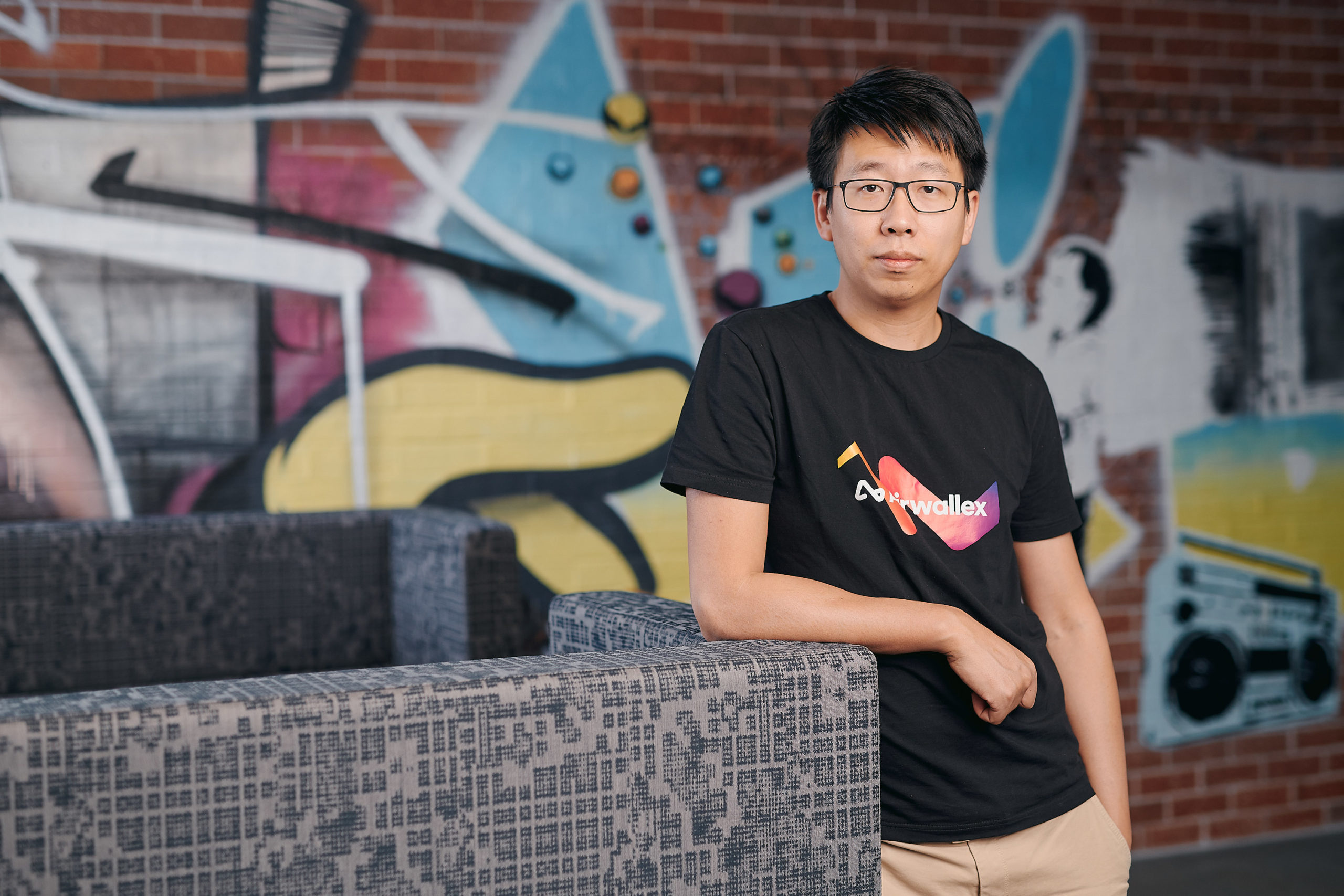
And according to Airwallex cofounder Jack Zhang, the business, which raised $498 million in a Series G this week, had so many lives in its first 10 years, it should probably be nicknamed “Catwallex”.
London-based Zhang took to social media overnight with the expat nostalgia of a Hottest 100 chart topper by The Waifs, recalling life in Australia as a teen as part of “the story I’ve never told anyone before” about how the business “could’ve died three times during this journey”.
There was also a sting in the tale, as he recounted Stripe’s attempt to buy Airwallex in 2018 for US$1.2 billion, when the Melbourne-born fintech had just $2 million in revenue.
“So Stripe was offering us a 600x multiple. I would’ve made over $2 billion [A$3bn] personally (valued by latest Stripe shares),” Zhang wrote.
“But the team said no. You see, when we were talking, Patrick said something that stuck with me: ‘I’m building Stripe for the next 20, 30, 40 years.’ I realized that’s what I wanted too. In fact, 90% people at the company wanted to keep building.”
(As an aside, this is not a new story – the Nine newspapers reported it back in 2021, saying the deal was worth $860 million for its investors plus an additional $200m for the founders.)
The piquancy in this anecdote, amid many offered, is that last week, US investor Keith Rabois, part of the PayPal mafia, and MD of VC Khosla Ventures, an investor in Stripe, took an almighty swipe at Zhang and Airwallex, alleging the company was giving the Chinese government access to the financial data of US companies, from AI to defence and healthcare.
“Maybe this wasn’t your intent when you started the company, but it’s clear you’ve allowed this to happen,” Rabois provoked.
Zhang and cofounder Lucy Liu denied it in responses, but the stoush sparked increased scrutiny of Airwallex’s data management and media reports that the fintech’s head of operations and strategy raised concerns in internal Slack conversations in 2023, flagging potential pushback from the Chinese arm of the business when it sought to lock down KYC (know your customer) files.
Now running a business worth US$8 billion (A$12bn), Shandong–born Zhang dropped his origin story on X (formerly Twitter). Within a year of arriving in Australia aged 15, Zhang’s family lost all their money and “at 16, I lost all financial support”, forcing him to try and find a way to pay $24,000 in tuition fees.
“I worked every job I could find. 12 hours a day at the Lemon factory when it was 40°C. During college, I’d bartend from 4 pm to midnight, then work overnight at the petrol station. I’d do it for 4-5 days a week while studying computer science,” he said.
A job running a cafe, Tuck & Co, in Melbourne’s Docklands, and frustrations with making international payments would become the genesis of Airwallex for the coder.
He told a customer, Lucy Liu, then aged 24, about his idea. She handed over $1 million for 20%. Airwallex was born in 2015, with Max Li and Xijing Dai as cofounders too.
Deadly moments
But 12 months later, according to Zhang, the fintech had the first of its three near-death experiences with cash flow when an unnamed VC walked away from a signed term sheet because they didn’t believe “this algorithm thing will work”.
It was the start of a pattern, after the fintech banked a $17.3 million Series A round from Chinese internet company Tencent, Sequoia Capital China (unmentioned in the tweets and now known as HongShan Capital) and Mastercard.
“Mastercard and Tencent… were supposed to be our anchor customers. They promised massive volume & we built the entire product for them. But when we launched, they delivered less than 1% of what they promised,” Zhang said.
But by the end of the year, Square Peg rocked up with another $8.7 million (US$6m) in a Series A extension, and the following year, it was off to the races with a US$80m (A$108m) Series B, with more Chinese investors joining the cap table, led once again by Tencent and Sequoia China, plus China-based Hillhouse, Hong Kong’s Horizons Ventures, Indonesia’s Central Capital Ventura and Square Peg. Gobi Partners, the investment manager of Alibaba’s VC fund, is also on the cap table. Blackbird, a recent convert, along with Airtree, in May’s $232 million Series F.
“Having already demonstrated considerable success within China, the spread of Airwallex’s funding will see them solidify connections between APAC, Europe and North America. Adding to their dedicated entities in Melbourne, Hong Kong, Singapore, London and Shanghai; Airwallex will now extend to North America, and Canada – becoming a true global force in their target industries and verticals. Tencent and Sequoia China have demonstrated a strong confidence in the company’s ability to change the way the world does business with China, again participating in Airwallex’s fundraising,” the company said in July 2018.
Airwallex lasted just three years in Australia as a Melbourne-founded business before relocating its headquarters to Beijing-controlled Hong Kong in 2018.
In 2023 it moved to Singapore and this week announced it will have a dual HQ in the US. The business itself is domiciled in the tax haven of the Cayman Islands.
Zhang skips that period, jumping to Covid, as the company was closing its $254 million Series D and they “almost died for the third time”.
“COVID hit and the US stock market crashed 30% in a single week. Our revenue dropped 40%. Everyone from tuition customers to travel customers vanished overnight,” he said.
Then “from 2021 to 2025, the business finally took off”, with revenue climbing 100x in four years to $1 billion “and we stopped ‘almost dying’,”.
The price of invisibility
Coincidentally, it was an X post about the $1b revenue achievement that sparked the attack from Rabois. And in turn, that appears to have led the Airwallex boss, tagged as “enigmatic”in media and preferring to stay in the background over the past decade, to muse on becoming a more public figure.
“For 10 years, I almost never posted and never talked about our growth. Investors would ask: “Why don’t you tell people what you’re building?” But I didn’t have a good answer. In Australia, you keep your head down and let the work speak for itself,” Zhang said.
“But being invisible has a price. Recruiting is harder, customers don’t know we exist, and competitors with half our scale get 10x the attention.”
That led to fast cars and footy – Airwallex sponsored McLaren in the F1, and the English soccer team Arsenal to raise the company’s profile.
That said, the Airwallex CEO may have had another reason to keep a low profile. During the period when revenue was skyrocketing, Airwallex had a reputation as a tough place to work, with high staff turnover and low morale amid an aggressive, high-pressure culture and accusations that the cofounder was part of the problem. His defenders say Zhang listened and worked on changing his leadership style. There were also customer complaints about suddenly being debanked by Airwallex – an issue most fintechs feared from traditional banks.
Zhang indeed let the work speak, building a $12 billion fintech with the potential to rival Stripe, seven years after knocking back its wooing.
“Airwallex isn’t just a cross border payments company anymore. We’re building the end-to-end financial operating system for global business,” he concludes.
Zhang also has the praise of Blackbird’s Niki Scevak, who added Airwallex to the VC’s pantheon of great tech companies, alongside Canva, Afterpay and Atlassian, in response to Zhang’s thread.
Australia has produced three generational companies (Atlassian, Canva and Afterpay), and a fourth has now emerged 🚀 https://t.co/mI6yCN0BPe
— Niki Scevak (@nikiscevak) December 8, 2025
With Blackbird now on the cap table, a decade on, with a $60 million investment, the VC’s keen to be part of Zhang’s next untold story.



Daily startup news and insights, delivered to your inbox.