
















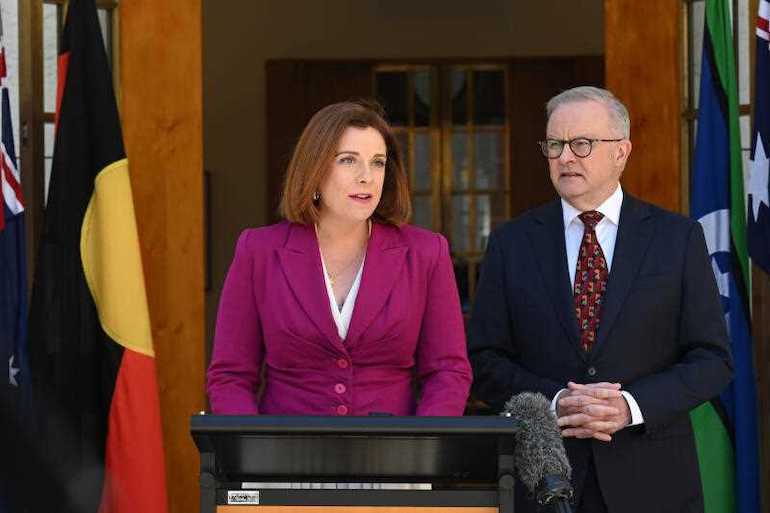
Nearly three-quarters of Australians aged 18-14, and eight in every 10 adults have backed the federal government’s social media ban for children under 16.
While support for the ban was lowest among young adults (72%), it rose to 80% for people aged 50-64 and 87% for over 65s, taking the national average to 79%.
There bipartisan agreement regardless of political affiliations, and surprisingly, the support was strongest among Conservative voters, led by Nationals supporters at 88%, then Liberal Party backers at 85% and 82% on the Labor side. Greens supporters also strongly backed the ban at 71%, and surprisingly even those identifying with the Libertarian Party were in a majority of support at 52%.
The survey found concerns about forms of influence and manipulation directed toward young people whose brains were not yet fully developed were among the key concerns of the ban’s supporters, alongside worries about mental health issues, bullying, exposure to extremist content, misinformation, and grooming by sexual predators.
While mental health was cited prominently, experts and new research suggests the opposite and cutting teenagers off from their online social networks may have a greater impact.
The ban kicked in on Wednesday, and prevents Australian children aged under 16 from having a range of social media accounts, including on Facebook and its subsidiaries, Instagram and Threads, Snapchat, TikTok, YouTube – for logged-in account features, Elon Musk’s X, Reddit, Twitch and Kick.
Meta’s WhatsApp and Messenger, YouTube Kids, Google Classroom, Roblox, and Discord are currently exempt.
United States politicians are now offering bi-partisan support for similar legislation that would ban social media companies from pushing algorithm-based targeted content to children under 17.
Professor Mark Andrejevic, chief investigator at the Monash University node of the Australian Research Council Centre of Excellence for Automated Decision-Making & Society, leads a research team that commissioned the survey.
He said the Australian ban targets “powerful, overseas platforms that profit from tracking young users” for advertising.
“These apps are flooded with loosely regulated ads and have scaled back fact-checking just as misinformation surges,” he said.
“They are using increasingly powerful algorithms to determine how best to capture and exploit young people’s attention. It’s a timely intervention in an increasingly unregulated digital environment.”
Australians against the ban in the survey cited issues such as State interference in a parental responsibility, censorship, effectiveness, and depriving young people of the benefits of online connection, as well as the consequences for marginalised communities excluded from finding likeminded people online.
Professor Andrejevic argued that while some consider the ban a blunt instrument, experience demonstrated that it was unrealistic to expect social media companies to change their behaviour when it comes to monetising their audiences, and improve user safety unless it impacts their bottom line.
“Unlike other media institutions, these platforms are not in the business of taking responsibility for the content they circulate,” he said.
“The platforms do not care about the wellbeing of our children or our democracy, that is up to us.”
The survey, of 1,598 Australian adults by Roy Morgan, was funded by the Australian Research Council.




Daily startup news and insights, delivered to your inbox.