

















The federal government will tip an additional $233 million into the national science agency the CSIRO over two years in response to budget shortfalls that have forced it to cut hundreds of research jobs, but the startup sector will pay for it with further cuts to commercialisation funding programs.
And CSIRO still plans to cut 350 jobs.
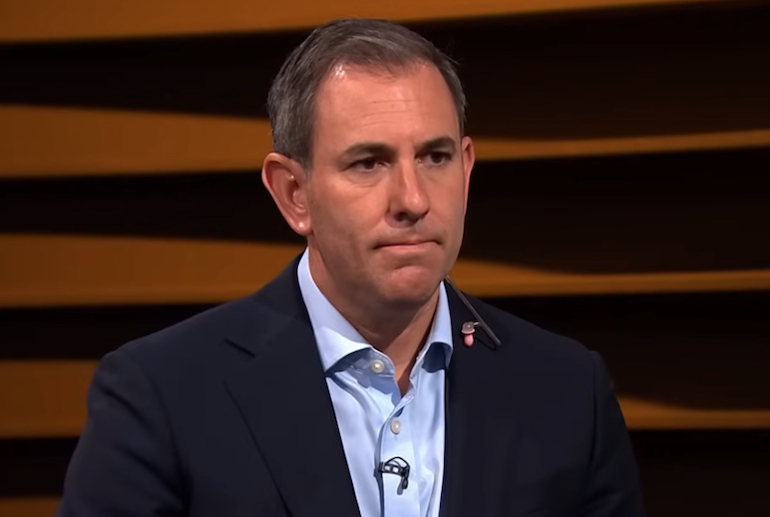
“How the CSIRO manages their budget is a matter for them,” treasurer Jim Chalmers said, releasing the Mid-Year Economic and Fiscal Outlook (MYEFO) on Wednesday.
The headline “good news” in MYEFO is a $5 billion improvement to the budget bottom line, with the FY2026 deficit reduced by $5 billion, to $37bn. But it could and should have been much larger, except for the fact that the Albanese government is also increasing spending by $9bn to $786.6bn after receiving an additional $15bn windfall in tax revenue.
Spending reaches a new post-pandemic peak this year and will continue to be around 26.5-27% of GDP over the forward estimates.
Meanwhile, the Department of Industry, Science and Resources is slashing $102 million in funding Industry Growth Program (IGP) and $147.6m in broader savings taken from industry programs as part of unspecified “reprioritisation”.
Redirected priorities
“The Government will achieve savings of $147.6 million over five years from 2025–26 (and an additional $1.1 million over seven years from 2030–31) by redirecting funding across the Industry, Science and Resources portfolio,” the MEYFO pre-election economic and fiscal outlook (PEFO) paper says.
“Savings include:
• $102 million over five years from 2025–26 by reducing uncommitted funding available under the Industry Growth program
• $31.3 million over three years from 2025–26 by reducing uncommitted funding from the Modern Manufacturing Initiative
• $12.3 million over five years from 2025–26 (and an additional $1.1 million over seven years from 2030–31) by reducing funding for the Global Science and Technology Diplomacy Fund, elements of the Inspiring All Australians in STEM program and the Entrepreneurs programme
• $2 million in 2027–28 by reducing uncommitted funding for the Australian Radioactive Waste Agency.”
The program cuts will be “redirected to other government policy priorities” in the DISR.
In sparse good news, although the government dumped plans for an AI advisory board last week, there’s $29.8 million over four years and $7.9m annually from FY30 to establish an Artificial Intelligence (AI) Safety Institute within the DISR to monitor and respond to AI risks and supporting agencies and regulators on protections.
Federal Labor has constantly tinkered with funding to the startup sector since coming to power 3.5 years ago, having cut cut $197 million from the Entrepreneurs’ Programme in November 2022, before shutting in down in May 2023. It also killed off the Boosting Female Founders grant program, with $17 million unspent.
Under former minister Ed Husic, Labor launched the IGP in November 2023, offering grants worth between $50,000 to $5 million to startups and SMEs aligned with the Tim Tam Investment Fun National Reconstruction Fund’s seven priority areas. The program was allocated $392 million over four years, the $79.2m annually in subsequent years.
Now $102 million is being shaved off that funding allocation over five years from this financial year.
The government has already killed off the Modern Manufacturing Initiative, a Morrison government initiative, and clawed back from $440m, cancelling eight grants in 2023, including for projects such as Fleet Space’s Australian Space Park in Adelaide, and the Australian Satellite Manufacturing Hub in Canberra. That’s now being banked as $31.3 million over three years.
Having delivered a tepid response to the Diversity in STEM report despite a pre-election pledge to back all 11 recommendations, the government is cutting $12.3 million from GSTDF, another Coalition initiative, and part of a program meant to inspire everyone in STEM. The Labor government scrapped the Women in STEM Ambassador program last year.
Shortsighted
Australian Academy of Science president Professor Chennupati Jagadish called the funding cut to the GSTDF shortsighted.
“It was only in September that Minister Ayres publicly expressed his enthusiasm for the fund and acknowledged Australia is stronger, smarter, safer and more resilient when it is engages in international research collaboration,” he said.
The GSTDF supports strategic international science, research and technology collaborations with Asia–Pacific partners in Australian Government priority areas including advanced manufacturing, AI, quantum computing, hydrogen production and RNA technologies.
Professor Jagadish said the cut illustrated “a profound lack of understanding of the vitality of international research–industry partnerships”.
The Academy delivered the program along with the Australian Academy of Technological Sciences and Engineering (ATSE).
ATSE acting CEO Peter Derbyshire was equally critical of the decision, saying it will “hit hard” on the main way the Australian government supports international scientific collaboration.
“Now is the time to lean into our international scientific connections, not cut back on them,” he said.
“Australia has so much to offer the world – and in return there is so much the Australian research community can get when they’re supported to collaborate internationally.”
Both Jagadish and Derbyshire welcomed the additional funding for CSIRO, but said the government needs to move from short-term thinking to a longer-term strategy.
“We know that the Government understands the significant funding challenges faced by government research agencies and are aware that more needs to be done,” Derbyshire said.
Prof Jagadish is pinning his hopes on Tesla chair and tech investor Robyn Denholm’s review of the Australian R&D system, now sitting on the desk of industry and science minister Tim Ayres as holiday reading.
“More than 10 years of decline in science funding cannot be restored in one budget. The Academy urges the Albanese Government to consider the recommendations of the Strategic Examination of R&D and commit to long-term R&D reform and investment,” Jagadish said.
“To prosper in an era of massive technological, geopolitical and environmental disruption, we have no choice but to invest in today’s currency of power and prosperity: science and technology. These are not luxury investments.






Daily startup news and insights, delivered to your inbox.