












When growth slows, every founder feels it. The pressure for bigger.
The instinct that says, “We need new products.”
So you react quickly, and it feels like progress. Yet often those fresh new products are good, but not great. And there’s a good chance that you might not be able to be the best at those new products.
In the end, those new products might only end up being mediocre. And that original instinct might quietly prevent the business from becoming great.
That’s a problem I often see in owner-led companies. We can end up in a mindset thinking that bigger, the endless pursuit of more, is the answer to a question we might not even be certain of.
The more we succumb to the bigger mindset, rather than the better mindset, the more we stretch our teams doing many things instead of focusing on what really matters.
The discipline to stop
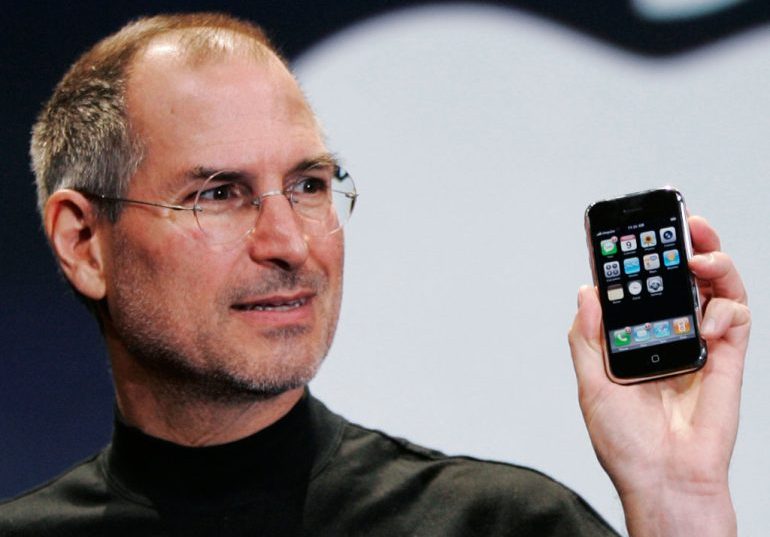
By the mid-1980s, Mike Markkula, Apple’s original angel investor, first chairman and second CEO, was becoming frustrated with Steve Jobs’ behaviour.
While Jobs was undoubtedly a genius, Markkula famously once commented that he required “adult supervision” and that he “lacked the discipline and temperament needed to run Apple on a daily basis.”
At the time, Jobs was what I call an ‘impulsive risk taker’: undisciplined and impatient.
He experienced the situation many entrepreneurs find themselves in – keep chasing the next big thing, hoping for a breakthrough. Impulsive risk takers bet on revolutions, quick wins and headline-grabbing launches instead of consistent evolutions around a central, compounding strategy.
Markkula believed Apple needed corporate-style management to balance Jobs’ intensity, so he and Jobs decided to bring in John Sculley from Pepsi.
Under Sculley, Apple adopted the corporate philosophy that bigger is better, and consequently, product lines ballooned.
He was chasing a bigger range of products, which might make sense in a corporation, but doesn’t build a compounding, better owner-led company.
Apple became competent at many things but great at none. The offering drifted toward mediocrity.
When Jobs returned to Apple years later, he came back as a Strategic Executor. He’d learned the power of patience and discipline. He learned that a bigger offering, adding more and more products, only results in a bigger offering.
It doesn’t make a better business. In fact, it often makes a company substantially weaker.
In a meeting after his return, he stood up and yelled, “STOP!” And proceeded to draw a 2 × 2 grid on the whiteboard, cutting the range down to four core products: one desktop and one portable model for each of consumer and pro customers.
Jobs reflected on that moment years later: “There were 15 product platforms and a zillion variants of each one. I couldn’t even figure this out myself. If we had four great products, that is all we need. And if we only had four, we could put the A-team on every single one of them.”
Jobs’ decision was to drop everything and build a better offering.
Everyone at Apple, designers, engineers, and marketers, was redirected to focus on making just four exceptional products.
Jobs later described the focus this way: “Focus is about saying no. I am as proud of the things we haven’t done as the things we have done. Innovation is saying no to 1,000 things.”
The previous leadership had done the opposite. They chased bigger instead of better and created a company that was competent at many things but great at none. They followed the corporate playbook: add product breadth, chase markets and hit quarterly targets.
It worked for a while, but eventually it failed. The result was a company bloated with complexity, shrinking margins and eroding customer trust.
Under Sculley, Apple was competent at 70 products but not the best at any of them. Product competence became a cover for mediocrity. A bigger offering, but not a better one.
The bigger offering doom loop
Under Sculley, with a ‘bigger is better’ mindset, Apple fell into what I call the Bigger Offering Doom Loop, where leaders continue to launch new products they are competent at but can’t truly be the best at. Over time, as the company continues to focus on bigger rather than better, the business spirals down the Doom Loop, which follows this sequence:
- Invest to sell more products that you can’t be the best at
- Poor execution
- Disappointing results
- Profit drops per fixed cost
- Response with bigger growth plans
- Invest to sell more products that you can’t be the best at
And the cycle continues. Each turn consumes more energy and delivers less return.
The path to becoming uncopyable
Your offering is what your business is ultimately judged by. It’s the value you create, and how well you deliver it, that determines whether customers stay, leave or tell others.
Too often, owner-led companies chase growth by adding more “me-too” products. But every new thing that isn’t better just makes your offering harder to manage and easier to ignore.
A better offering doesn’t come from doing more. It comes from improving what you already do, so that quarter after quarter, it becomes more valuable, more trusted and harder to copy. It’s not about getting bigger.
It’s about getting better.
- Brad Giles is a leadership team coaches and author of Bigger Isn’t Better, Better Is Better.





Daily startup news and insights, delivered to your inbox.