

















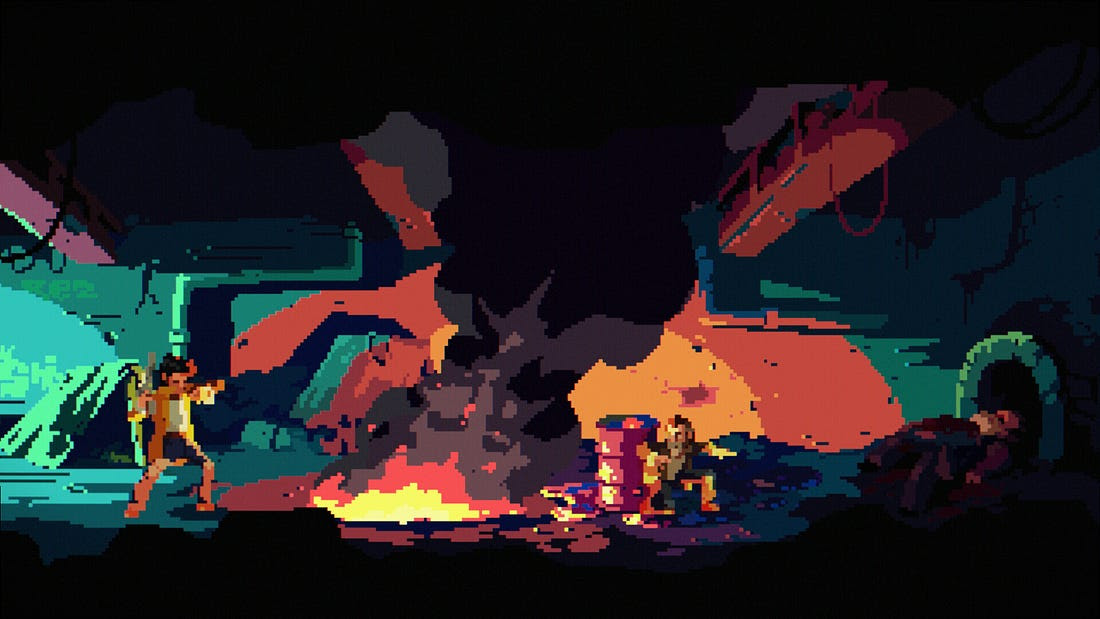
Powerhoof’s Dave Lloyd has a new rule for his next project: never spend six years on a game again.
His latest game, The Drifter, a dark point-and-click adventure, took more time to pull together than the studio’s two prior games, and one year shy of the extended development time we saw with Hollow Knight: Silksong.
But, it paid off. Excluding developer salaries, the game covered its entire development cost – around US $220,000 – within its first week on sale, selling 28,000 copies in its first month. Recently, it swept three major trophies at the Australian Game Developer Awards, including Game of the Year. Sales from The Drifter are now funding the salaries of Lloyd and his co-founder, artist and animator Barney Cumming, as they move on to new projects.
Yet, remarkably, the pair were already paying themselves full-time, senior developer wages throughout most of the game’s long development – a rarity in the Australian indie world. That stability came from the enduring success of Powerhoof’s debut, Crawl, which has generated more than $US2.5 million on Steam and sold over 475,000 copies in nearly a decade.
The studio is a fascinating outlier in an industry that spends plenty of energy debating whether sustainable indie development is even possible; where launching a successful game is often compared to winning the lottery.
Powerhoof has quietly built what many Australian studios are still chasing: a business stable enough to let its creative ideas breathe.
While winning awards for its games, its commercial achievements are perhaps undersung. Its games haven’t shot the lights out like Hollow Knight, nor turned Lloyd or Cumming into poster children for the sector. But what they’ve built is arguably rarer: a self-funded, two-person studio that has outlasted the boom-and-bust cycles defining modern game development.
How Powerhoof found its footing
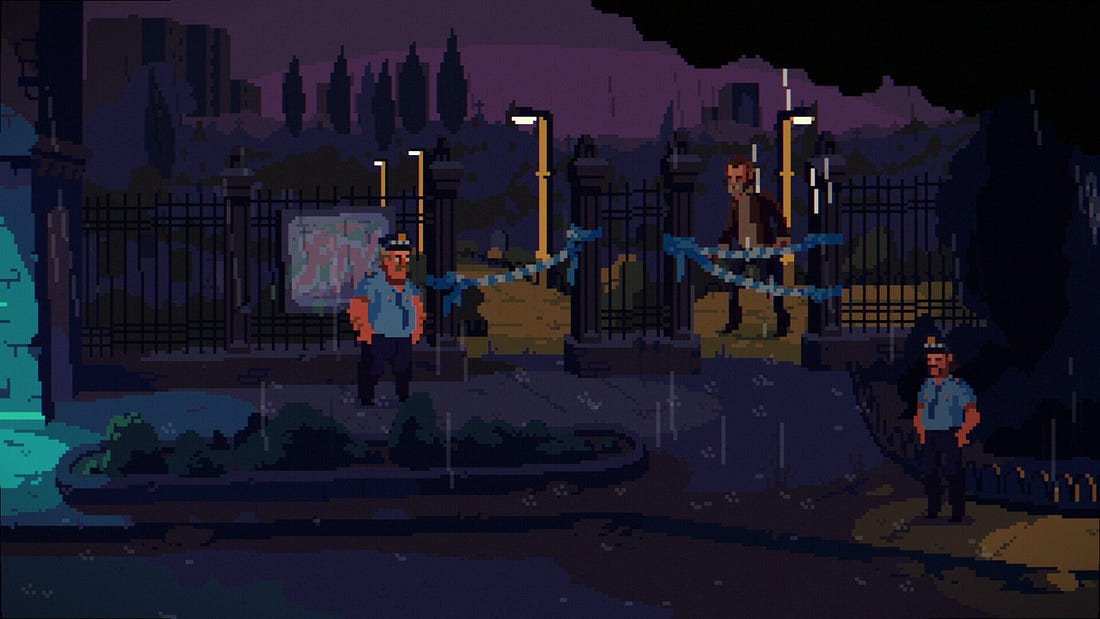
While it’s not screaming that its Australian, most here will recognise those uniforms. Source: Steam.
Powerhoof’s roots go back to 2013, when Lloyd and Cumming left their jobs at EA Firemonkeys to go independent. The pair met at a prior job, working for the studio Redtribe.
As Lloyd puts it, they’d spent years watching the industry shift from making “cool, quirky iPhone games” to designing around microtransactions and retention curves. The fun had gone out of it, so they left.
With some savings and ideas sparked by earlier game jams, they began building Crawl, a local multiplayer brawler that pitted heroes against friends controlling the dungeon’s monsters. A Film Victoria grant helped get it off the ground. “It wasn’t huge, but it was validating. Someone believed in us,” Lloyd said.
“It made a practical difference too — Unity licences, paying musicians, exhibiting at PAX — without it all coming from our pockets.”
Crawl launched in Early Access in 2014, with a full release in 2017, and went on to fund the studio for the next decade. After that success, the pair faced a choice: scale up or stay small. The answer was obvious. “We just wanted to keep making what we wanted,” Lloyd explains.
Their next release, Regular Human Basketball – a game about giant mechs playing basketball — didn’t reach Crawl’s heights but still covered its costs. “It was a palate cleanser,” Lloyd said, noting it took only nine months to complete.
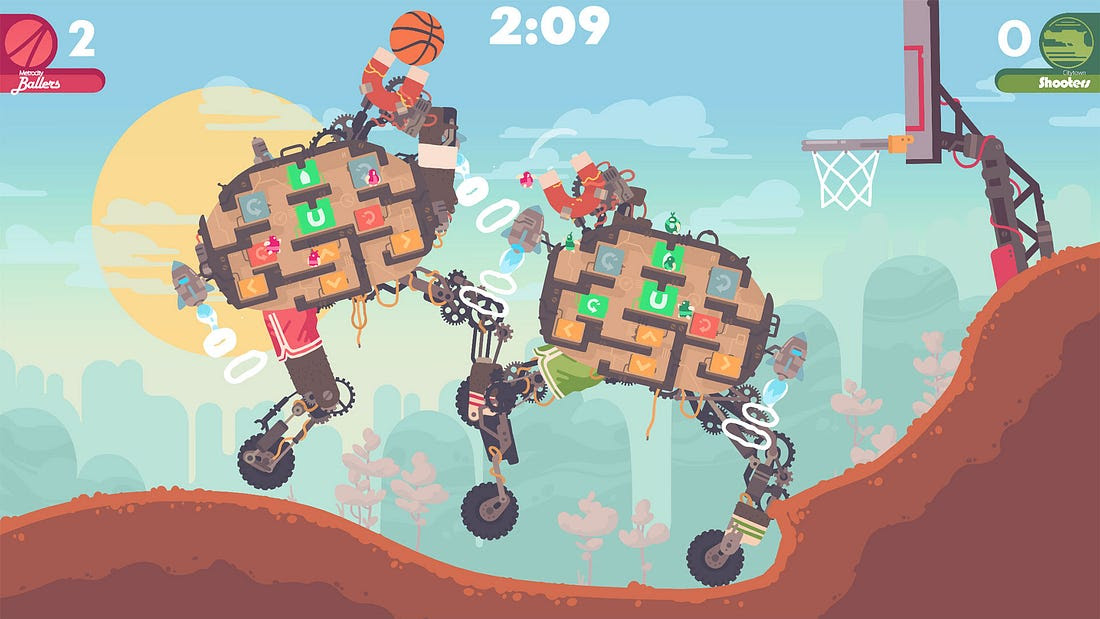
Regular Human Basketball: The palate cleanser. Source: Steam.
That brief detour gave Lloyd space to think about something darker. The result was Peridium, a game jam prototype from 2017 that would become the seed of The Drifter.
“Watching people play it, I was struck by how invested they got in a story I’d basically typed up in a day, and how some scenes made players panic – frantically clicking – even though it’s a point-and-click with no timers,” Lloyd said. “The layering of music, setting and tone really worked.”
The concept also became a showcase for the voice work of long-time collaborator Adrian Vaughan, who had worked with the pair at RedTribe. He voices the games main character, Mick. “It wasn’t one ‘big idea’ – more a bunch of little decisions that grew into a project,” Lloyd said.
Despite a long development cycle, Lloyd describes The Drifter’s debut as “the perfect launch”. “Incredibly stressful, but the outcome was great,” he adds.
“Launch strategy always feels like guesses. You try something – if it works, you write the blog about ‘the way’, and then it doesn’t work next time,” he admits.
This time, Powerhoof invested its modest marketing budget into PR, hiring a small agency to drive reviews and coverage. It worked: the game landed hundreds of articles globally for its distinctive 90s-inspired art style and fresh take on the point-and-click genre.
“Nobody notices tiny releases”
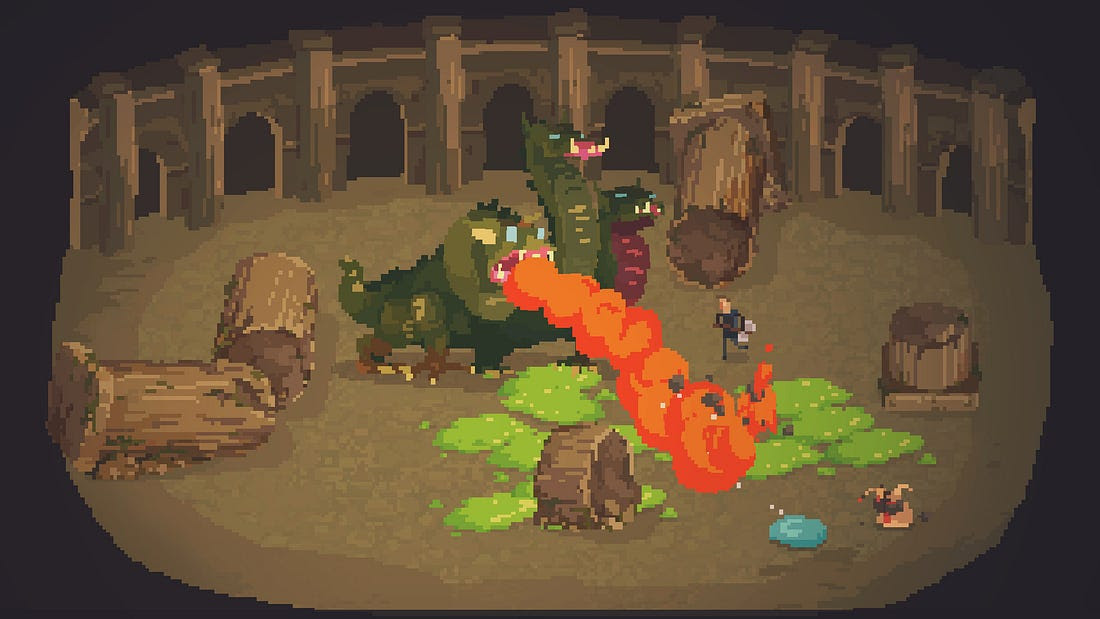
Powerhoof’s first game, Crawl, which fuelled the rest of their success. Source: Steam.
Lloyd’s crystal ball is as hazy as anyone’s when it comes to the future of Australia’s games industry.
“It feels a bit like the GFC years — around 2010 — when a lot of Melbourne studios shuttered because they relied on US contract work,” he says. “What grew out of that were studios making their own games, not dependent on external money.”
He’s cautious about the current talk in local developer circles that success lies in releasing multiple smaller games to test the market. “We actually started Powerhoof with that ‘small-games’ mindset,” Lloyd says. “This was peak iPhone era — ship three small games in a year and see what sticks. A lot of people will try that and still get nowhere because nobody notices tiny releases.”
His focus instead is on using game jams to “find the fun” – to test a concept’s hook before investing heavily in it. “If you’re still finding the fun after a few years on a big project, that’s rough,” he says. “With a jam, after three days, you know whether people like it.”
“My final advice: make things you think are good. Don’t make something you don’t like just because you think it’s what everyone wants.”
With The Drifter less than six months old, it feels premature to ask what’s next. More games are almost certainly on the horizon – likely sparked by another jam – but first comes a well-earned break.
One point is certain, though: we won’t have to wait six years for the next Powerhoof release. At least, that’s the hope.
Have you played The Drifter, Crawl or Regular Human Basketball? What are your thoughts on the games. Also any thoughts on Powerhoof’s success? Let me know in the comments.
- Harrison Polites writes the Infinite Lives newsletter. Follow him here.
Sign up for his newsletter below:
- Infinite Lives is a reader-supported publication. It’s free to sign up and read the latest piece, but as of July a subscription will be required to read Harrison’s backlog of over 70 unique articles. Each subscription goes towards improving his Substack, supporting the broader Substack gaming community and funding more independent games journalism in Australia.



Daily startup news and insights, delivered to your inbox.