


















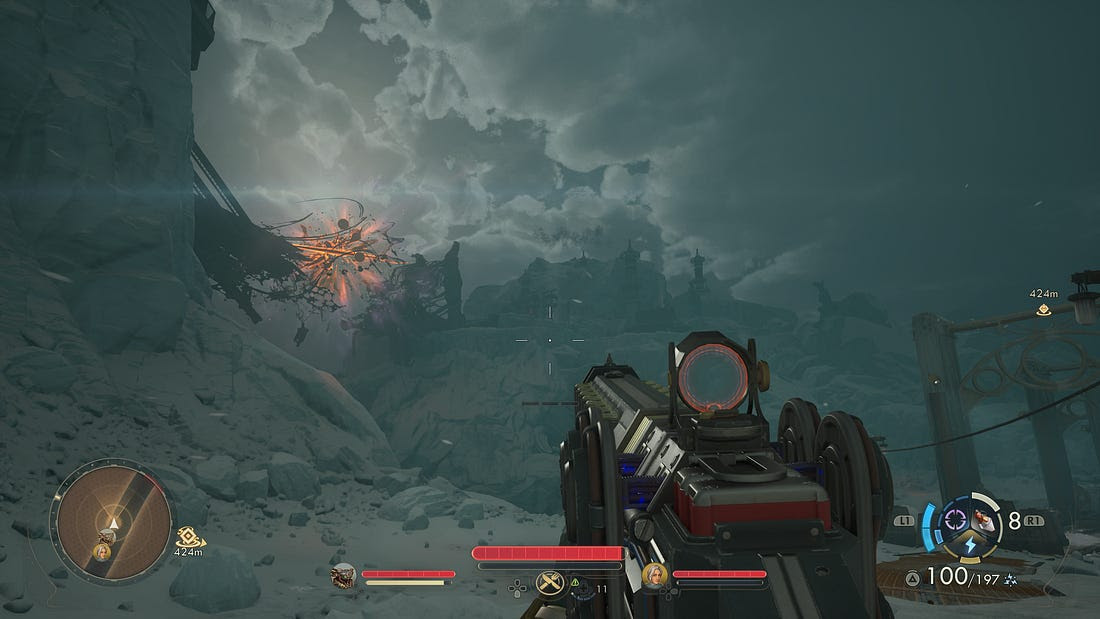
Watching the credits roll on The Outer Worlds 2, it dawned on me: I had beaten this game in a single long weekend.
Purchased on Friday, finished on Cup Tuesday night. All while fitting in family and friend commitments, too.
It wasn’t a short title either, taking around 20 hours to complete to a level where I feel like I’d seen most of what the game had to offer. Or at least had my fill of capitalism jokes.
It’s the first time in a long time that this has happened. And given I’m turning 35 this week, it got me thinking …
When I was younger
Clocking a game within a few days was a more regular occurrence in my youth. I would rent games from the local video store and try to beat them within a weekend to avoid late fees. Now, I’m lucky to find time to play games each day. And if I have a quiet weekend, I find I can only physically play in bursts.
So for something a bit different, I wanted to note down my thoughts and feelings about gaming in my mid-30s. It’s a little bit more stream of consciousness than my usual posts – but hey, it’s a short week here in Melbourne! Still, I have a hunch they will resonate.
Life in review
I’m more cognisant of games wasting my time: The padder content that I used to tolerate (and perhaps even enjoy?) now grates on me so much more than it used to. When I see a game that has a whole extra area that I didn’t see coming, I tend to eye-roll rather than get excited. Imagine if your favourite book had an extra 100 pages that added no value to the plot, or a Netflix show had 10 extra episodes on pointless subplots? It’s the same feeling.
I’m fine with shorter games: Playing two open-world games back to back now leaves me a bit drained. I feel that of all the genres, survival horror games tend to get this right. The remakes of Silent Hill 2 or Dead Space were great in terms of length. They come in, tell a story, get to the point, then end. Usually around the 16-hour mark?
If I’m unsure on something I’ll just look it up: Perhaps I’ve gone full circle here. When I was six, I racked up a $100 phone bill for my parents calling the Nintendo Hotline for tips on games. Then I hit an era where I’d just figure it out for myself no matter what. Now, I don’t treat each game as an intelligence test.
I tend to play on normal, but easy mode is fine: I still like difficult games in moderation and undertake challenging modes, like savage raiding in Final Fantasy XIV. But I have found they occasionally affect my mood outside of gaming, compounding other stressors I have. If I’m given the choice, the regular difficulty option is fine, and feels fairest? No judgement on easy mode though; life is stressful enough.
I’m a lot more critical of game design than I am of player capabilities: Being critical on games in the past 18 months has perhaps made me re-evaluate what players should be able to figure out and what developers make too obscure? Striking that balance is hard.
My aching thumbs: The longest solo gaming session I can muster without a break these days is around two hours. After that, well, my hands begin to hurt. You know you’re ageing when you start to look up: “Hand exercises for gamers” on Google.
I care a lot less about what others think of my gaming: I mean I’ve started this Substack, so I’m really wearing it on my sleeve. It’s a digital tattoo at this stage. It’s a hill I’ll die on, but I still find it a touch silly that gaming is occasionally considered indicative of someone’s personality. Largely because something like reading or watching Netflix isn’t?
I won’t trade real-life experiences for gaming time. I can have both: I made this deal with myself back when I turned 21. I knew I had it in me to spend every weekend gaming without interruption, especially as I became an adult and gained agency over my own time. Not because I was addicted or anything insidious, but because it was comfortable. So I basically promised myself that every weekend I would at least catch up with one friend or do one thing that got me out of the house. I’ve kept that up for over a decade now, and I’m a much better person for it.
Gaming with my friends is changing and that’s OK: Monthly Smash Bros nights now happen when they can. Getting a group together to raid on Final Fantasy XIV? Unlikely. Board games with friends and partners: more likely. Hanging out when we can is more important than the medium we choose for it. Sometimes, that’s no games and just a good chat and a bottle of wine.
Will design catch up?
So, let’s tie this all back to something a little more meaningful. While this is all a collection of deeply personal preferences, I think it’s fascinating more broadly as the gaming population is ageing. In Australia, recent studies say the average gamer is 35 years old. In the US, it’s 41. Globally, this age is increasing as our populations age. The more I play, the more I wonder whether game design has kept up with this trend?
Some titles really know their audience and hone in on that. Whereas others I play hark back to the good old days of 2010 to 2015, where games were more expansive and threw more and more at the player. More side quests. Bigger maps. Expansive world-building. From 2025 onwards: I don’t think bigger is better? Dense worlds are better than broad ones. And perhaps, some titles that didn’t do well back then, like Final Fantasy XIII — notoriously panned for being too linear for a JRPG — may perform better today for the exact same reason?
It’s hard to say, and hard to know how I feel about this all 10 years on from now.
- Harrison Polites writes the Infinite Lives newsletter. Follow him here.
Sign up for his newsletter below:
- Infinite Lives is a reader-supported publication. It’s free to sign up and read the latest piece, but as of July a subscription will be required to read Harrison’s backlog of over 80 unique articles. Each subscription goes towards improving his Substack, supporting the broader Substack gaming community and funding more independent games journalism in Australia.




Daily startup news and insights, delivered to your inbox.