


















If only I’d waited. A year on from purchasing a Steam Deck, and it now seems like Valve has launched a device specifically targeted at gamers like me.
This time last year, caught up in the hype, I purchased a Steam Deck OLED. I was elated when it arrived in the mail; finally, a device I could use to play all of these amazing Australian indie games I keep hearing about! Yet a few of my friends were confused, and honestly thought I had more money than sense. Some went as far as to say as much.
Knowing I was primarily a console gamer and this was my one and only step into PC gaming, they questioned whether I’d really get full use of the device.
I shrugged it off at the time. But a year on, and while I hate to admit it, they weren’t wrong.
Despite everything I’d heard from YouTubers, podcasters and other journalists about how this is the greatest gaming device we’ve ever seen, how it’s changed how they game forever, how they can’t go back, I’d wager as a console-only player, I’m getting about two-thirds of the benefit of it.
With no gaming PC to stream from, I’m reliant of the specs of the actual device. If I have a choice between buying a game on my Steam Deck and the PlayStation 5, I’ll almost always opt for the PS5. Despite each game costing more, it’s just able to run games much more seamlessly, and crucially, I don’t have to spend time in menus optimising each and every title to maximise the battery life. Growing up in a household with more TVs than people, I also prefer to play games on a larger screen where I can. And while the Steam Deck can enable this, again it’s not quite as user-friendly as the PS5.
I’ve really just used my Steam Deck to play unique indie games that I can’t access on any other device. And the odd retro PC game—which it runs incredibly well.
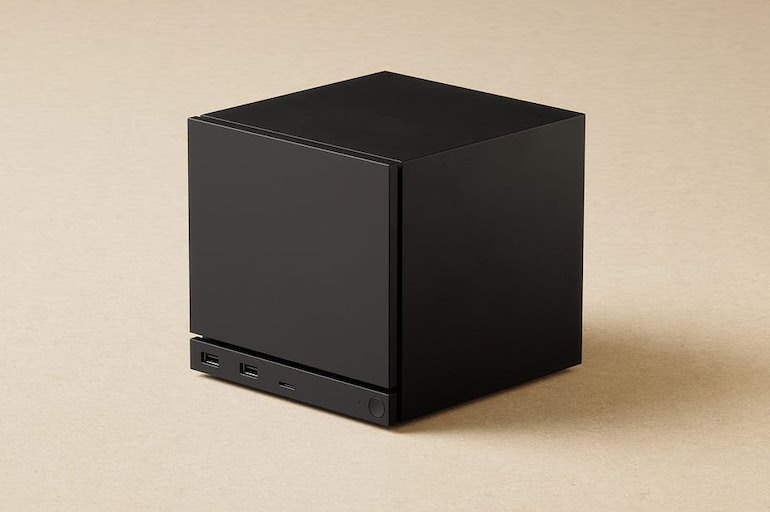
This all sets the scene for Valve’s recent announcement of its new Steam Machine. It’s a device aimed at rivalling the PS5 and Xbox Series X, providing a gateway for console gamers, such as myself, into their ecosystem. Early spec videos suggest that its power falls somewhere just short of the PS5, but not by much.
It’s a step back in time for Valve, which attempted, and failed, to launch its own console almost a decade ago, at the peak of Sony and Microsoft’s power over the gaming market. Much has changed since then.
Microsoft appears rudderless, unable to articulate its strategy as either a device maker or game publisher. Sony’s also hit a hitch: its AAA games can’t hit enough market share on PlayStation alone, and the gap between PS5 launches and Steam releases keeps shrinking. Both companies are now talking about ‘premium’ priced consoles after years of selling hardware at a loss. Meanwhile, Nintendo continues running its own profitable race, unbothered by everyone else.
Steam, by contrast, has hit a stride. It’s become the go-to platform for indie gaming and, arguably, gaming in general. Just about every Australian developer I’ve talked to this year benchmarks their success off Steam Store placement and reviews, despite other shopfronts like the Epic having more users. Valve’s also built out global distribution networks for physical products. An advantage incumbents held that’s easy to underestimate.
NOW READ: Explainer: Why is Steam the centre of the gaming universe
Yet while Microsoft and Sony are hitting their ceilings, Steam still has room to grow, especially in Australia. According to the latest Australia Plays study, 87% of Australian gamers own a console compared to 58% who own a PC. That suggests — albeit not definitively — that a significant portion of gamers in this market aren’t active on Steam. It represents a real opportunity for Valve.
Globally, by comparison, PC gaming and console adoption, as ranked by the recent Power of Play study, are neck and neck. That may go some way to explaining why the Steam Box is launching in Australia at the same time as other markets this time around.
Success though isn’t guaranteed. As my experience with the Steam Deck has shown, there’s a needle to thread here. Call me a pleb, but I don’t want to spend hours tweaking settings before booting up a game, fiddling around with frame rate or looking up ideal graphical settings for each game. Nor do I want to spend hours looking up Youtube guides on how to access the console’s best, but hidden, features. The fact that Sony’s moved slightly in this direction with the PS5 Pro release isn’t a good sign, in my eyes.
As a lifelong console gamer, I just want to buy a game, boot it up, and play it. But at the same time, there needs to be a point of difference to my existing go-to, my PS5. I want to dip my toes into what makes PC gaming special: the mods, emulation and extensive library of games. I just don’t want to have to learn how to code to do it.
If Valve’s console can do this, connect seamlessly with the Steam Deck, and allow some more curious players to dip their toes easily into customisation, then they may be onto a winner. But as a console-native who invested in the Steam Deck as my PC gateway gaming drug, I’ll just be a bit more wary about throwing my money at Valve this time around.
- Harrison Polites writes the Infinite Lives newsletter. Follow him here.
Sign up for his newsletter below:
- Infinite Lives is a reader-supported publication. It’s free to sign up and read the latest piece, but as of July a subscription will be required to read Harrison’s backlog of over 80 unique articles. Each subscription goes towards improving his Substack, supporting the broader Substack gaming community and funding more independent games journalism in Australia.









Daily startup news and insights, delivered to your inbox.