


















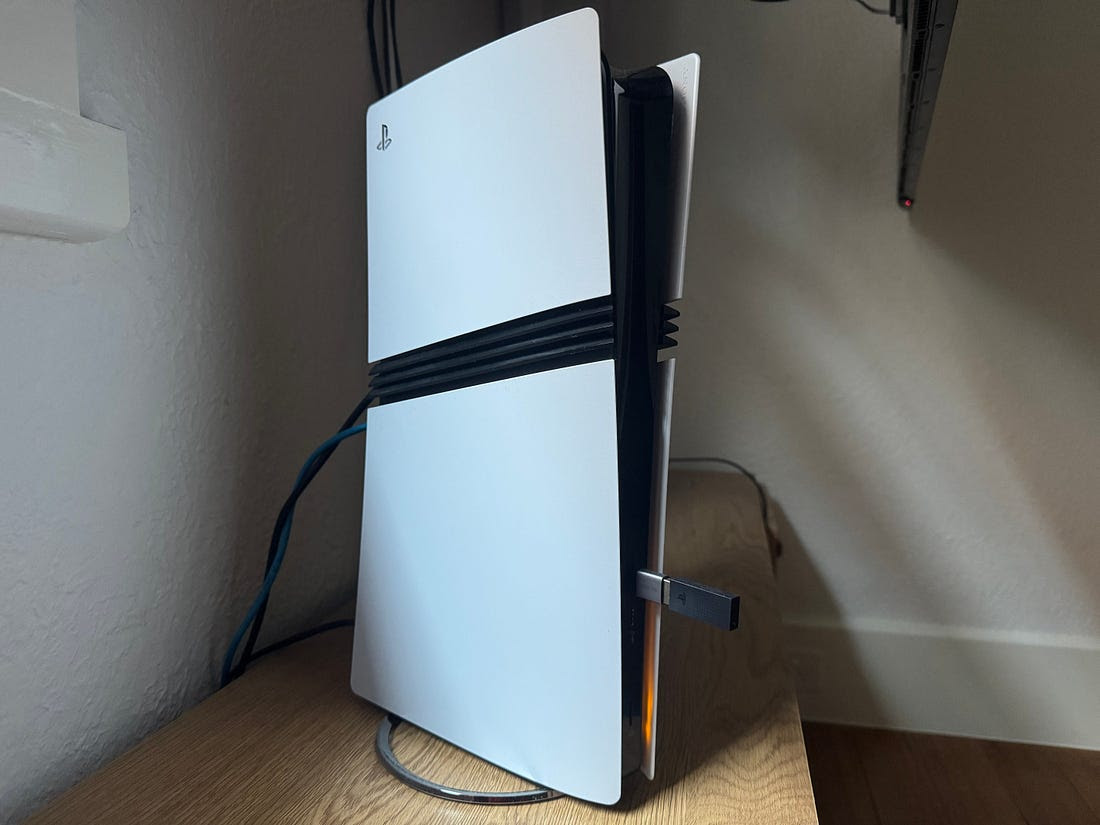
When enhanced graphics just aren’t enough. And why that’s now an issue for Sony.
Let it be known: I’m a sucker for a tech upgrade. I’m one of those weirdos who tries to update their phone every two years. I swapped out my PlayStation 4 for a PlayStation 4 Pro. My original Switch for the OLED version. My preorder was down within minutes of launch for a Switch 2.
Usually, I’m so happy with the newer version that my only remorse is not capitalising on the upgrade sooner. So when the opportunity came around to upgrade my PlayStation 5 to the PlayStation 5 Pro, I leapt at it. Sold my old PlayStation 5 on Facebook Marketplace for around $500 AUD and made the switch to the Pro.
When it first launched, I argued that Sony had not done enough to justify the price jump and really make the product feel premium. Six months in, not only do I still feel the same way, but I’d struggle to find a reason to justify the spend more broadly to my other friends who own a PlayStation 5. I don’t think I’m alone in my experience, and thanks to the ever-shifting gaming industry, that’s now a broader issue for Sony too.
You can read my analysis of What Sony can learn from Apple: Three ways to make the PS5 Pro feel more premium here.
When graphics are your only point of difference
Part of the challenge here is that the main selling point for the PS5 Pro is its enhanced graphical capabilities. As Sony outlined at launch, with a PS5 Pro, gamers won’t have to choose between performance and quality modes. They’ll be able to play on the highest graphical settings with no downsides.
While I am no expert, I just haven’t really found this to be the case. Nor when it is, have I cared too much about the difference. Some games have been optimised to enhance their ray tracing, or offer 4K resolution at a higher frame rate. But these games already look good. It feels like the performance update is marginal at best, and more often than not the graphical upgrade still chips away at the frame rate. I’ve found this to be the case with plenty of newer titles including: Assassin’s Creed Shadows, Doom: The Dark Ages, and Clair Obscura: Expedition 33.
All are fantastic looking games in their own right. But moreover, this change now has me delving into menus to tweak the graphical settings of the game. I held a debate with GameDev relay writer Alex Stasenko last year on PC gaming vs Console gaming. One of the main points in favour of consoles was the set-and-forget nature of them. I don’t have to check the specs of every game to see whether it will run; I can just plug and play. Yet with every new title on the PS5 Pro, I’m still checking to see if it will run in quality mode without any hitches, and more often than not, it won’t. That’s also not to mention that perhaps I may not have the right TV for these settings. Or the correct cables. But again, this is beside the point. If I’m not the target market for this device, who is?
I understand this dynamic for the Steam Deck and for other PC-oriented peripherals. This is a norm for PC gaming, and one that I’ll have to learn to accept if I’m going to better engage with this platform. But it’s not for console gaming, and it feels like it’s being heaped on its users.
Visionary marketing half-truths
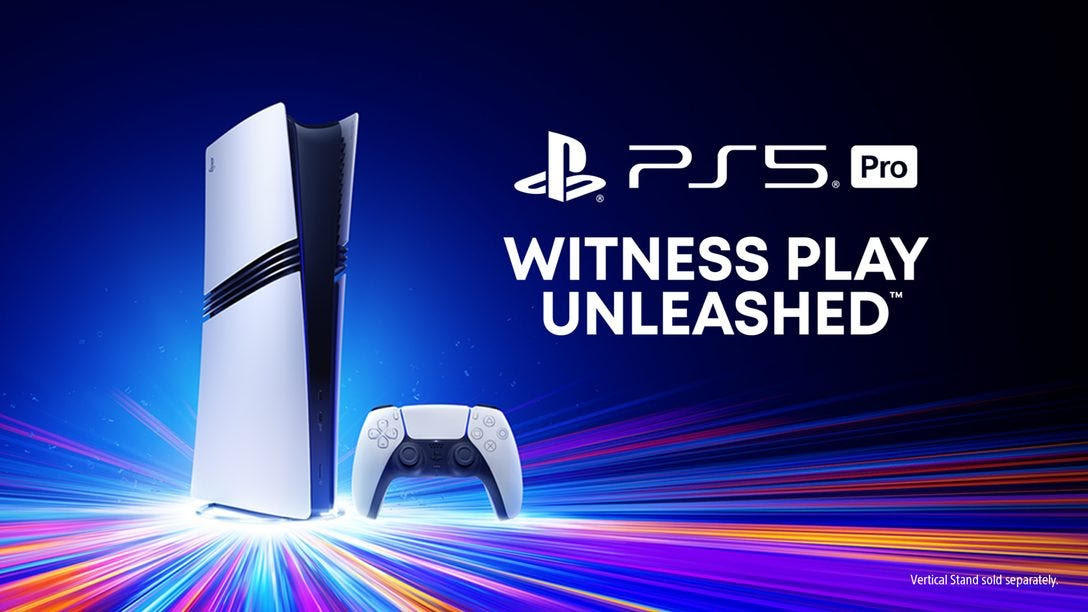
On the contrary, I’m quite leashed to Settings screens. Source: Sony.
PlayStation has arguably won the console war against Xbox, now that the Microsoft is pivoting hard towards software and subscriptions. But not without some collateral damage. Following the launch of the PS5 Pro, I feel like Sony now has a track record of making half-true claims about its products.
Five years since launch, this is now even with the base PS5. Yes, the PS5’s solid state drive helps with load times of games. But no, despite what was said at launch in 2020, load screens still exist in PlayStation games to this day. They are quicker, but they aren’t gone.
Only a handful of premium Sony first-party games feel like they make full use of the console’s solid state drive, such as the latest Spider-Man game with its instant fast travel capabilities or how you can quickly respawn in Ratchet & Clank: Rift Apart and AstroBot.
It’s not entirely Sony’s fault. For all intents and purposes, the capabilities are there. They just aren’t being utilised. As analyst Matthew Ball pointed out earlier this year, the gaming market has hit a ceiling, and games are now being designed to run on as many devices as possible to maximise their market. This includes older consoles, such as the PS4. Fewer are capitalising on the PlayStation 5’s SSD capabilities, because it’s the only mainstream gaming device that has them.
Why this now matters

Grand Theft Auto 6 is broadly tipped to boost console sales. Source: Rockstar.
The delayed launch of Grand Theft Auto 6 to May 2026 has put this issue back in the spotlight. Sony actually had a bumper year for console sales as a result of the PS5 Pro launch—despite its results not breaking out how many Pro units it sold. But analysts now predict fewer console sales overall this year, as GTA 6’s delay removes a major incentive for Christmas purchases.
The PS5 Pro is well positioned to buck against this call, given it can target two markets: new adopters and also those willing to upgrade. But I don’t believe Sony has done enough here to warrant the extra spend, even if it has increased the price of the base PS5 console and narrowed the price gap between the two units. It’s hard to point to one killer feature.
That wasn’t the case with the PS4 Pro, I could feel the power difference. One of the games I was playing at the time, Final Fantasy XVI Online, released a patch dedicated to the new console, slashing some of the load times in the process. Given how much you move around in that game, it was a material difference to gameplay. Among my friends, I could see—based on load times—which players were using the new PS4 Pro, and which were not.
I should be clear: The PS5 Pro is not a bad device. I use it daily, and love it. It does run cooler and quieter than the older model, and the extra internal storage is handy. I also don’t mind losing the disc drive.
But it’s beyond me why Sony hasn’t done more from an experience perspective to solidify this premium tier of gaming that I assume its trying to establish. Use software updates and unique functionality to carve a stronger line in the sand between its base model and the PS5 Pro.
Give us something that gamers, like myself, can latch onto when talking about my upgrade with friends. I want to be proud of my purchase, rather than slink off to the side whenever it comes up in conversation.
- Harrison Polites writes the Infinite Lives newsletter. Follow him here.
Sign up for his newsletter below:








Daily startup news and insights, delivered to your inbox.