














FinTech startup Afterpay allows online consumers to try before they buy their items. Will PayPal catch on?
Sydney-based FinTech startup Afterpay allows online consumers to pay for their purchase after they’ve received it and decided to keep it.


Do you remember that Beyonce Superbowl Halftime Show where she killed it so hard that she literally broke the power in the New Orleans Superdome, leaving tens of thousands of football fans in the dark for the 17 minutes following her kick-ass performance. That is the closest thing I have to compare Mike Cannon-Brookes’ panel presentation at Slattery IT’s Rewind/FastForward event this past Wednesday. Mike is the Beyonce of tech events.
In October 2013, Sydney-based entrepreneur Garrick Charter launched an online adult luxury boutique, Salon De Venus, selling sex toys and lingerie. Little did he know at the time that tech providers would be so ill-accommodating of such a business concept.
BakeBox partners with the best, and often obscure, patisseries in Sydney, and delivers baked food items to the customer’s desired location within 48 hours.
Ping pong has become somewhat synonymous with global startup ‘culture’ today, in fact entire movements have been launched because of the deep connection between the startup world and our love of the game.
Although the differences between small businesses and startups have been subject to ongoing debate, there are many who don’t quite understand why these differences necessitate different policies.
The healthcare industry is heavily regulated in order to take care of consumers. However, all those regulations also mean that things are slowed down on the administrative side. A new startup wants to help at least one aspect of the time consuming administrative side through HealthcareLink, a job search platform built specifically for healthcare professionals.
On Sunday, CUZIN went into public beta, a strategic move for the Sydney-based startup, given Australians are flocking to shopping centres, departments stores and ecommerce websites to take advantage of discounts in the lead up to Christmas. According to a recent National Retail Association report, Australians are expected to spend $43 billion in the pre-Christmas trading period.
A new Melbourne startup Kini Swimwear claims to be on a mission “to change the way women see their bodies in swimwear, one bikini at a time”. How? By allowing women to design their own swimwear “to perfectly match their body shape” via Kini Swimwear’s online store.
The company’s first proposition Crossy Road was downloaded 2.5 million times in less than a week, dominating the Family category charts and claiming the number one position on the iPad App Store in Australia, US, UK, Canada, France, Italy, Switzerland, Russia, South Korea and the Netherlands.
One such person who was affected by the Jill Meagher case is humble Sydney-based entrepreneur Christian Beck who, as the founder of LEAP Legal Software, isn’t unfamiliar with what it takes to build a profitable technology company. It was this incident that motivated Beck to create a solution that would help reduce unexpected deaths that like of Jill Meagher occurring in the future.
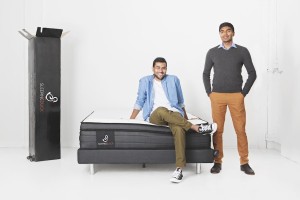
Wijeyeratne and Sinnappan claim that Sleeping Duck has generated more than $1 million in revenue since January 2014 by selling 1,000 mattress via sleepingduck.com.au. This is an outstanding number for any startup – almost too good to be true.
I’m pretty skeptical when it comes to startups who claim they are trying to ‘disrupt’ the Australian postal system.
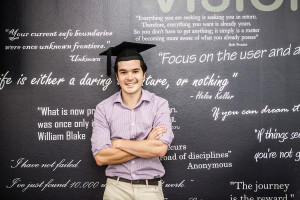
After graduating from the University of New South Wales, Kearney decided to do something about this ‘expensive gown situation’. He roped in his friend from uni to create GownTown, a startup that sells graduation sets for $99.
In ancient times, foot messengers ran miles to deliver messages. And then there were homing pigeons and horseback riders. Today, not only is a short drive inconvenient, we’re also impatient about delivery timeframes – especially when compared to the instant nature of information exchange. This is the basis of a recently launched Sydney-based startup Sherpa, founded by Frenchmen Mathieu Cornillon and Bastien Vetault who migrated to Australia four and six years ago, respectively.