

















Sydney venture fund EVP’s Federal Court battle to recover $10.4 million it invested in StrongRoom AI just weeks before it was placed in administration will potentially have new revelations next week when the company’s failure is examined in court by its liquidator.
The legal action, begun in March this year, when EVP successfully applied to freeze the assets of more than a dozen parties involved including five directors, saw a notice of discontinuance against another of the defendants dropped in the Federal Court this week.
EVP declined to comment on the terms for agreeing to drop its case against another of more than a dozen original defendants when contacted by Startup Daily.
But the matter is not over for many of the key players in the saga as the former company’s liquidation – the business itself lives on as StrongRoom – is finalised.
Divesh Sanghvi, a key beneficiary of the investment funds after selling his business, Member Benefits Australia, to StrongRoom, where he was also a director, is among those appearing in public examinations in the Supreme Court in Sydney on November 10-11 to answer questions on behalf of liquidator HLB Mann Judd.
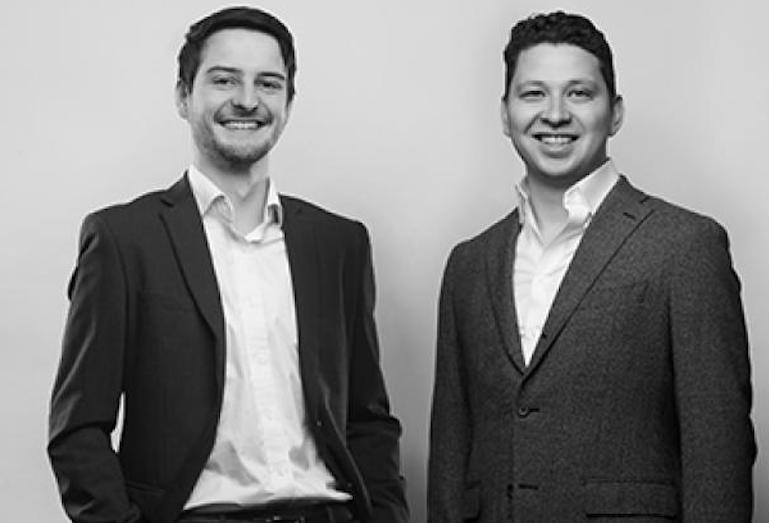
StrongRoom was founded in Melbourne 2017 by university colleagues Max Mito, Christopher Durre and Kieran Start. Its software streamlines medication tracking, dosage management, and patient adherence.
The startup raised $17 million raise, led by EVP in March this year, at a $70 million. Within weeks it was in voluntary liquidation amid allegations by EVP that CEO Max Mito admitted to fraud using fake revenue numbers, a claim Mito denied.
The assets of the business were sold to Queensland pharmaceutical entrepreneur Joe Zhou for $3 million in June. Zhou subsequently sold the sold Member Benefits Australia to the Pharmacy Guild of Australia.
Last week Zhou raised $1.2 million from industry investors, including pharmacy owners, aged care operators and hospitals, for StrongRoom’s reboot, having restructured the business and retained a number of key staff.
EVP remains among the company’s stakeholders, along with early investor Artesian, but did not participate in the latest raise. Startup Daily understands they’re both supportive of the healthtech platform continued growth under Zhou.
A recent major software release has delivered substantial improvements to usability and stability for Strongroom with further upgrades set to expand functionality across drug databases.
Bones laid bare
In the ongoing Federal Court litigation by EVP, defence documents lodged by Max Mito and others sought to blame EVP for failing to do thorough due diligence (DD) on its decision to invest and denied defrauding investors but did concede there were financial “discrepancies” in the company’s accounts.
“The DD Information was provided to EVP for the purpose of permitting it to undertake its own enquiries as to whether or not it wished to make an investment,” Mito’s defence said.
Former director Divesh Sanghvi’s defence said his companies were paid $7.5 million for StrongRoom’s acquisition of Members Benefits Australia “under existing and enforceable contractual rights” and claimed that while EVP knew about “alleged wrongdoing” at StrongRoom AI circa March 19, it continued to exercise its rights to investment.
Liquidator questions
Meanwhile, those involved in the original StrongRoom business prior to its demise are set to face questions with serious consequences in the wake of HLB Mann Judd administrator Todd Gammel, now liquidator, forming the view during his earlier investigations that StrongRoom may have been insolvent around October 28 (if not earlier) in 2024, when quarterly superannuation payments were due but not paid.
“It appears until the major recent equity raising in late 2024 and into 2025, many historical liabilities were overdue and unpaid until funds raised were used to retire the historical debts,” Gammel wrote before creditors voted to liquidate the business.
“Our initial estimate of a potential insolvent trading claim for SRT is circa $3.0m to $3.4m based on our assessment of the increase in liabilities during from the end of October 2024 to appointment. This assessment may not necessarily reflect the new debts incurred in that time; however, it is indicative of the potential gravity of any such claim.”
The administrator found that:
In FY2024, management accounts record a negative EBITDA of $3.404m and net loss after tax of $3.514m.
In the 9 months of FY25 before the voluntary administrators were called in by the board, there was a negative EBITDA of $5.211m and net loss after tax of $5.265m.
StrongRoom AI’s combined net losses after tax since the 2020 financial year exceed $18.5 million.
Gammel also concluded that the company incorrectly allocated the receipt of loans totalling $2.1m in FY25 against sales invoices, with trade debtors understated by $2.1m understated; and loans and equity understated by $2.1m.
“In summary, invoicing for the FY24 and YTD 25 periods have been overstated by a total of $1.9m being $0.6m in FY24 and $1.3m in YTD 25,” he wrote.
How and why that happened could potentially form part of the questioning and the public examination of StrongRoom’s liquidation next week.




Daily startup news and insights, delivered to your inbox.