

















Funding from the federal government’s new $392 million Industry Growth Program (IGP) has begun to flow, with $7.4 million in grants awarded to give startups spanning biotech, robotics, renewable energy, cybersecurity and medtech.
IGP was announced in the 2023 federal budget, replacing the former Entrepreneurs Program, which had the same level of funding, but was shut down in the wake of a highly critical National Audit Office report.
The recipients are:
- Cauldron Molecules, granted $4.3 million to support a world-first, fully automated hyper-fermentation technology to make food, animal feed, fibre and fuel.
- Li– S Energy, granted $1.7 million to support its high-tolerance lithium foil battery manufacturing process to produce next generation, ultra-light batteries.
- Electrogenics Laboratories, granted $1 million for its “MOSkin” patient radiation dose measurement system to reduce exposure risk during radiotherapy treatments.
- Brandsec, granted $231,000 for its Unphish software tool, which can remove malicious phishing content from the internet, including from compromised websites and fake social media accounts.
- Forager Automation, granted $157,943 for the development of its robotic blueberry picking device, which will tackle labour costs and increase yield efficiency for farmers.
IGP is designed to complement the $15 billion National Reconstruction Fund (NRF) for later-stage manufacturers, as grant funding for emerging small and medium manufacturers to help them scale. The IGP grants echo the seven priority areas of the NRF: resources; transport; medical science; defence capability; renewables and low emission technologies; agriculture, forestry and fisheries and; enabling capabilities.
It has two funding streams: Early-Stage Commercialisation grants offering matched funding of $50,000 to $250,000 to help establish the commercial viability of an innovative product, process, or service; and Commercialisation and Growth grants of $100,000 to $5 million in matched funding to help push ideas from prototyping through to market readiness stages.
Industry and science Ed Husic revealed the first round of grants 15 months on, linking them to the government’s Future Made in Australia policy.
“Today’s a milestone because now innovative small businesses can see the support starting to flow, helping them grow into bigger businesses,” he said.
“The Albanese Government established the Industry Growth Program to work in conjunction with the NRF to help propel SMEs into a solid growth trajectory, with this important avenue to grow our manufacturing capabilities using the cutting edge ideas of younger firms.”
Dr Lee Finniear, CEO of Li-S Energy. said the grant will allow them to build Australia’s first lithium metal foil manufacturing line.
“Essential for advanced batteries including our own and adding value to Australia’s own vast lithium reserves, the global lithium foil market is primed for massive growth in the coming years,” he said.
“With Australia mining 52% of the world’s lithium ore, this new sovereign manufacturing capability for lithium foil gives Australia an opportunity to position itself as a leading player in this growth market.”
Shares in Li-S Energy (ASX:LIS), which floated in 2021, rose up to 25% in the wake for the funding news, from $0.12 cents on Friday to a high of $0.15 cents in lunchtime trade on Monday, regaining some of the fall of more than 50% in the battery tech company’s share price over the last 12 months.
Li-S Energy is a joint venture between PPK Group (ASX: PPK), Deakin University and manufacturer BNNT Technology.
The funding for Cauldron, which last week announced David Weiner as Chief Technology Officer, is nearly have the value of a $9.5 million in Series A in April. and counts Horizons Ventures and Main Sequence, SOSV and In-Q-Tel among its backers.
Cauldron’s continuous fermentation technology, dubbed “hyper-fermentation”, improves the economics of large-scale fermentation production to transform how new foods and fibres are developed.
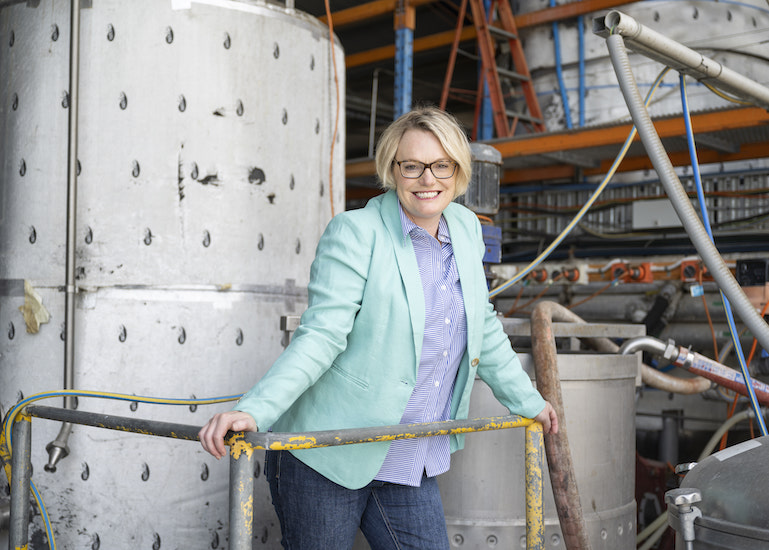
Founder and CEO Michele Stansfield said the IGP grant will see them scale up their regional NSW production.
“This funding will support the expansion of our commercial demo facility in Orange, enabling us to prove our hyper-fermentation platform at an industrially relevant scale and in the process commercialise the technology of both Cauldron and its customers,” she said.
“We are proud to partner with Minister Ed Husic and the Department of Industry to advance Australia’s biomanufacturing capabilities,
Applications for the Industry Growth Program are open on an ongoing basis at business.gov.au/grants-and-programs/industry-growth-program




Daily startup news and insights, delivered to your inbox.