















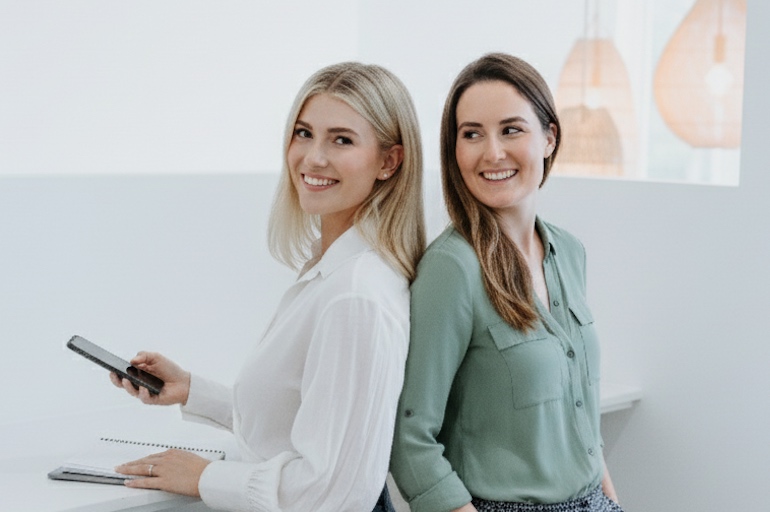
When Chelsea McCallum and Alison Williams launched Tummily, they weren’t just creating another wellness platform.
They were redesigning how people experience – and take ownership of – their gut health.
Within 24 hours of launch, Tummily had broken into Apple’s Top 100 Medical Apps, downloaded in over 40 countries.
No massive ad campaign. No investor blitz. Just two women on a mission to make digestive health tools that feel human, empowering, and accessible to everyone.
“Tummily’s mission is to help people with IBS and digestive challenges better understand and improve their health through intuitive, evidence-based, and personalised tools,” says Alison.
And the response proved what they already knew: there’s an enormous appetite for consumer-led health innovation – tools that don’t just sit in clinics, but live in people’s hands.
Built from two worlds: clinical insight meets design intuition
Tummily wasn’t dreamed up in a lab. It was born out of frustration, empathy, and a shared vision from two very different disciplines.
Alison had watched her partner struggle with IBS for years, battling the complexity of the low FODMAP diet.
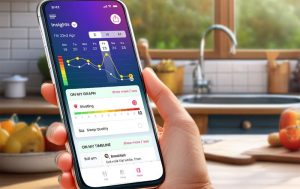
The Tummily app
“Every app we tried was clunky and confusing,” she says. “As a designer, I couldn’t help thinking there had to be a simpler, more human way.”
Chelsea, a dietitian, had seen the same issue daily in her practice.
“For years, I’d get screenshots, food diaries, and random notes from clients – nothing that helped me give better care,” she recalls.
“There wasn’t a single platform that connected food, symptoms, and lifestyle. When I met Alison, it was like all the missing pieces finally fit.”
Together, they merged clinical expertise with creative design thinking – and Tummily was born.
A partnership that clicked
The pair met at the Free From Allergy Show, and within minutes realised they were chasing the same vision.
“When we met, I shared my frustrations, and Chelsea immediately recognised them,” says Alison. “She’d heard the same from her patients. We had the right mix of skills to actually build something meaningful.”
Their partnership was seamless from the start. “We stayed in touch, got along well, and before long, Tummily began to take shape,” Alison says. “It all felt easy and organic.”
A consumer health app that broke the charts
Tummily’s launch was proof that healthcare doesn’t need to feel clinical – or complicated – to make an impact.
“It shows the scale of unmet need in this space,” says Alison. “IBS affects millions globally, and two-thirds are women. Yet most still struggle in silence.”
Chelsea’s 270,000-strong digital community became the springboard for launch – but not through marketing. Through co-creation.
“I took my community along for the ride,” she says. “They helped test the beta, shape the features, and even weigh in on the design. It felt like a shared mission.”
Within a day of release, Tummily was ranking in the Top 100 globally – proof that consumer empowerment in health isn’t just a trend – it’s a movement.
Two launches in one week
The week Tummily launched, Alison also gave birth – to her first child.
“When I found out I was pregnant, we’d just finalised our engineering team,” she says.
“We decided the app had to launch before the baby. But it didn’t quite work out that way!”
She ended up editing final app changes from her hospital bed minutes before her C-section.
“We launched two days after Julian was born. I was breastfeeding and bug-fixing at the same time,” she laughs. “It’s chaotic, but it’s real. Building something that supports my partner’s health feels even more meaningful now that I’m a mum.”
What makes Tummily different
The consumer health app space is crowded and let’s be honest, is wildly underfunded. Tummily stands out by being both scientifically credible and emotionally intelligent.
“We built Tummily out of frustration with the other apps,” says Alison. “They’re often clinical, clunky, and intimidating. We wanted something people actually enjoy using.”
Unlike traditional symptom trackers, Tummily’s interface is calm, hopeful, and beautifully designed. Its features are deeply customisable, letting users track what matters to them – from food and sleep to stress and travel.
“It’s not just about collecting data,” says Chelsea. “It’s about connecting dots and finding patterns that make sense in real life.”
The result is a platform that feels more like wellness and self-care than medicine – and that’s exactly the point.
Design that empowers, not diagnoses
At its heart, Tummily is about empowerment, not prescription.
“IBS can be isolating,” says Alison. “We wanted people to feel supported, not defined by their condition.”
That philosophy extends through every detail -from the app’s calming tones to its motivational streaks and gentle reminders.

Alison Williams with her other product launch
“Having IBS is crap,” Alison says, “but managing it doesn’t have to be.”
And as a brand, Tummily’s design language avoids sterile cues entirely.
“One user said it feels more like wellness than medical – and that’s exactly what we wanted.”
Turning science into something usable
Chelsea believes that evidence-based health shouldn’t be locked behind paywalls or jargon.
“So many scientific breakthroughs are inaccessible to everyday people,” she says. “We translate that research into practical, intuitive tools people can use daily.”
That’s what makes Tummily so powerful as a consumer product: it puts control, understanding, and confidence back in the user’s hands.
Lessons in leadership and risk
When asked about pivotal moments, Alison doesn’t hesitate:
“Giving 50% of my company to someone I’d only met twice in person. It felt risky – but it’s the best decision I ever made.”
They’ve learned plenty along the way – especially about partners.
“We lost $15,000 on agencies who talked big but didn’t deliver,” Alison says. “It hurt, but it taught us to trust action, not promises.”
Their advice for other women building medical or wellness businesses?
“Do the groundwork,” says Chelsea. “Get the support, do your research, listen to your users. Once you start building, move quickly – but make sure your foundations are solid.”
What’s next for Tummily
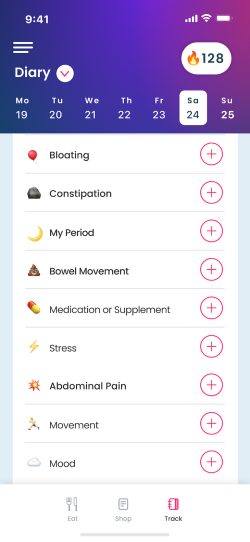
Diary symptoms on Tummily
Up next: a feature that users have been waiting for – personalised FODMAP meal planning, built directly into the app.
“Even after designing a low FODMAP meal planning app, I still struggle to plan meals my whole family enjoys”, said Alison.
The long-term goal? To evolve Tummily into a TGA and FDA-approved digital therapeutic.
But for now, the focus remains the same: keeping it simple, personal, and consumer-first.
The bigger picture
What Chelsea McCallum and Alison Williams have built goes beyond gut health.
It’s a case study in what happens when women design for real-world needs – and do it with empathy, intelligence, and boldness.
Because in the end, Tummily isn’t just about digestion.
It’s about reclaiming control, normalising taboo health conversations, and showing that world-class innovation can live right in the palm of your hand.
It’s proof that the future of healthcare isn’t top-down.
It’s consumer-first.
And it’s being built – one platform, one insight, one (or in this case, two) women at a time.
- Tracey Warren is CEO & Bree Kirkham, COO, of venture capital firm F5 Collective.





Daily startup news and insights, delivered to your inbox.